Monday, 03 December 2012 17:32

Philippines secures access to IRRI’s cutting-edge rice technology

Fast facts

  • Philippine Agriculture Secretary Proceso J. Alcala signed an agreement with Director General Robert Zeigler of the International Rice Research Institute (IRRI) to support the country's move toward rice self-sufficiency.
  • Apart from being cutting-edge, IRRI's rice science provides crucial support to rice-sector strategy and planning with its country partners.
  • Under the program, IRRI and the DA will collaborate on several projects, which include a range of research and capacity-building activities.

Contacts:

IRRI - Paula Bianca Z. Ferrer
b.ferrer@irri.org
+63 2 580 5600 ext 2587


Philippine Department of Agriculture - Solita Onquit 
telephone numbers: 9288762 to 65 local 2137; mobile - 09065875242


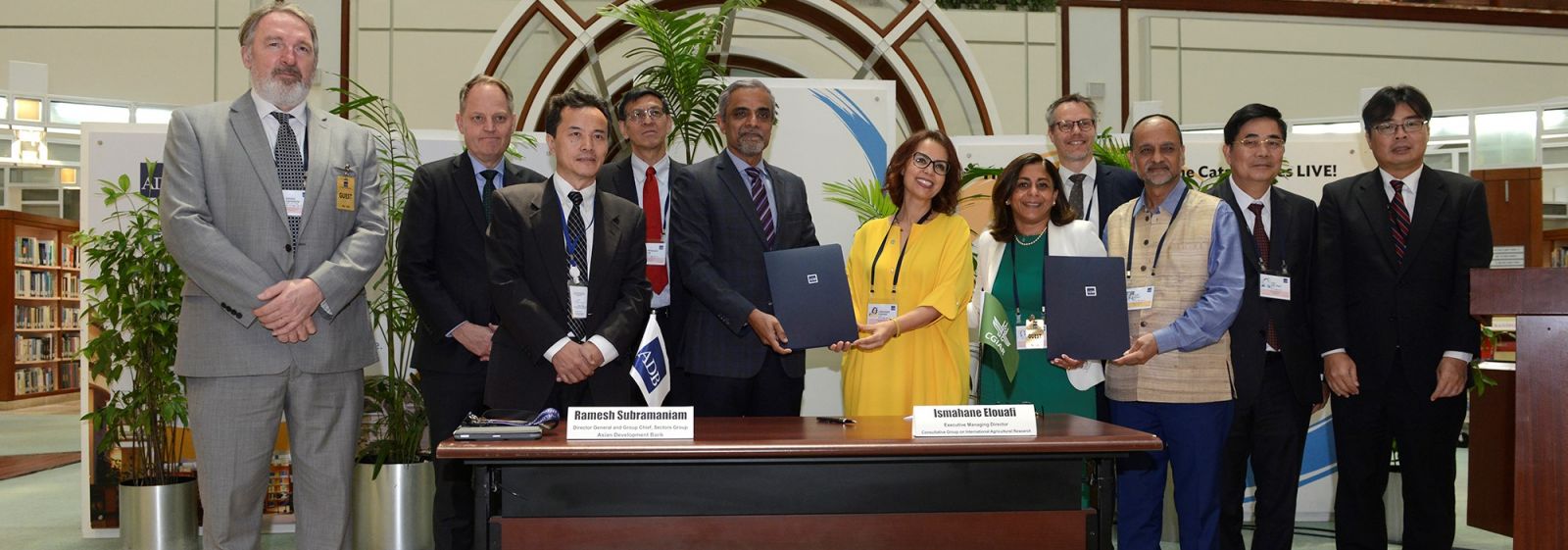
DA and IRRI signing

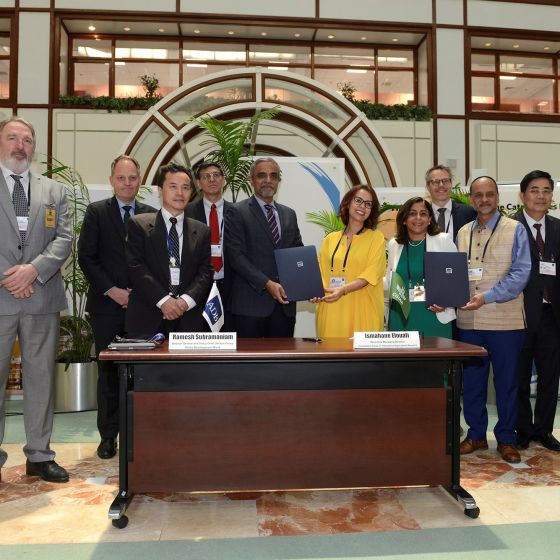
Philippine Agriculture Secretary Proceso J. Alcala (left) and director general Robert Zeigler (right) of the International Rice Research Institute signed the agreement for the country's Food Staples Sufficiency Program.


An agreement to help Filipino rice farmers produce more rice under the Philippines’ Food Staples Sufficiency Program was signed yesterday morning by Philippine Agriculture Secretary Proceso J. Alcala and Director General Robert Zeigler of the International Rice Research Institute (IRRI). The FSSP is aimed at the country achieving self-sufficiency in rice and other food staples by 2013 – the National Year of Rice.

“Indeed, this is an opportune time to renew our partnership with IRRI, which has been a strong ally and supporter since 1960, as we are nearing our goal of rice sufficiency,” said Agriculture Secretary Alcala at the signing of this memorandum of agreement (MOA).

Backed with full support from the Department of Agriculture, the 5-year agreement – “Sustaining rice self-sufficiency and food security in the Philippines” – outlines areas of collaboration to support, extend, and fast-track the delivery of the Philippines’ Food Staples Sufficiency Program.

These include producing and distributing high-quality and improved rice seeds; developing varieties that are able to withstand salinity, flooding, and drought; using geographic information systems to monitor rice crops; and exploring new and modern farming systems or technologies that would help expand current areas of production.

Moreover, best agricultural practices and support tools are going to be developed and disseminated, which will include skills training for extension and field workers.

"IRRI provides technical assistance crucial for rice-sector strategy and planning," said Zeigler. "IRRI's key contributions help improve farm productivity and profitability while keeping in mind sustainability.”

He added that the best IRRI science has been openly and freely available to public and private Philippine stakeholders since the Institute was established in the country in 1960.

Through the signing of the agreement, IRRI and the DA will renew their commitment and will work together toward reducing poverty and hunger, improving the health of both farmers and consumers, and ensuring food and environmental sustainability in the Philippines.

The MOA was signed at the Agribusiness Development Center, DA in Quezon City and, immediately after its signing, the DA, Philippine Rice Research Institute (PhilRice), and IRRI came together for a series of planning and budget workshops on its implementation. The resulting budget is expected to be significantly larger than that of previous agreements between the DA and IRRI.

Related links