Thailand Rice Research Partnership Takes Root in Fields of Innovation
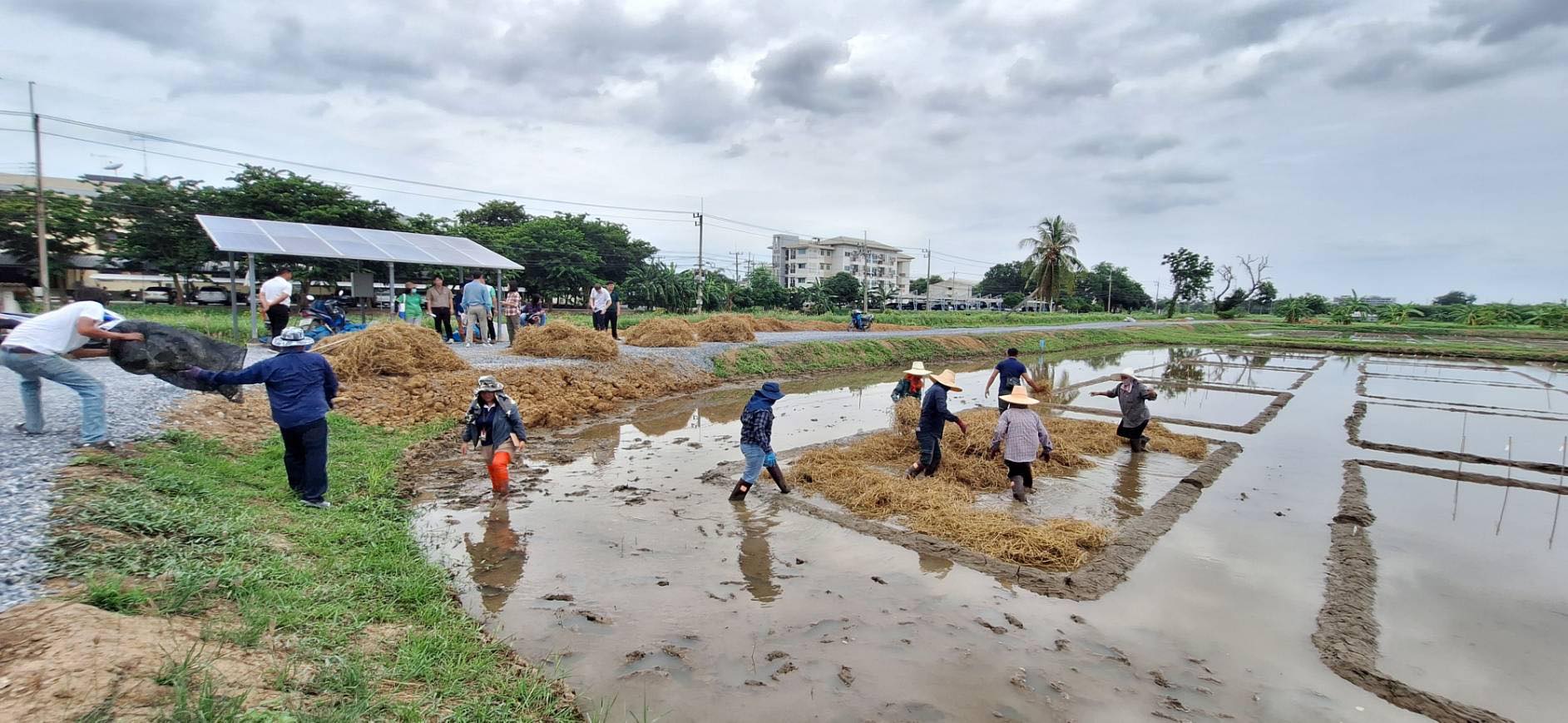
30 July 2025, Kamphaeng Saen, Thailand – Under cloudy skies, a group of researchers rolled up their sleeves and stepped into the muddy waters of flooded, experimental rice paddies at Kasetsart University. They spread and mixed a pile of rice straw into the soil, their deep footprints visible in the mud around them as they work methodically to ensure even distribution.
On July 30, the International Rice Research Institute (IRRI) in Thailand and the Rice Science Center of Kasetsart University embarked on setting up a new field experiment analyzing greenhouse gas emissions from various ways of managing rice fields. The scene represented the continuation of a long-standing partnership between Thailand's premier agricultural university and IRRI that seeks to reshape how the world grows rice in an era of climate change.
Led by Associate Professor Dr. Siwaret Areekit, Director of the Rice Science Center, together with Dr. Siriphat Rueangpayak, researcher at the Rice Science Center, Mr. Noppol Rasmijunpen, Dr. Jonaliza L. Siangliw from the National Science and Technology Development Agency (NSTDA), and their research personnel quite literally laid the groundwork, weighed measured portions of rice straw, and began incorporating them into the waterlogged soil. These scenes captured the labor-intensive reality behind the scientific collaboration. This is where theory meets practice.
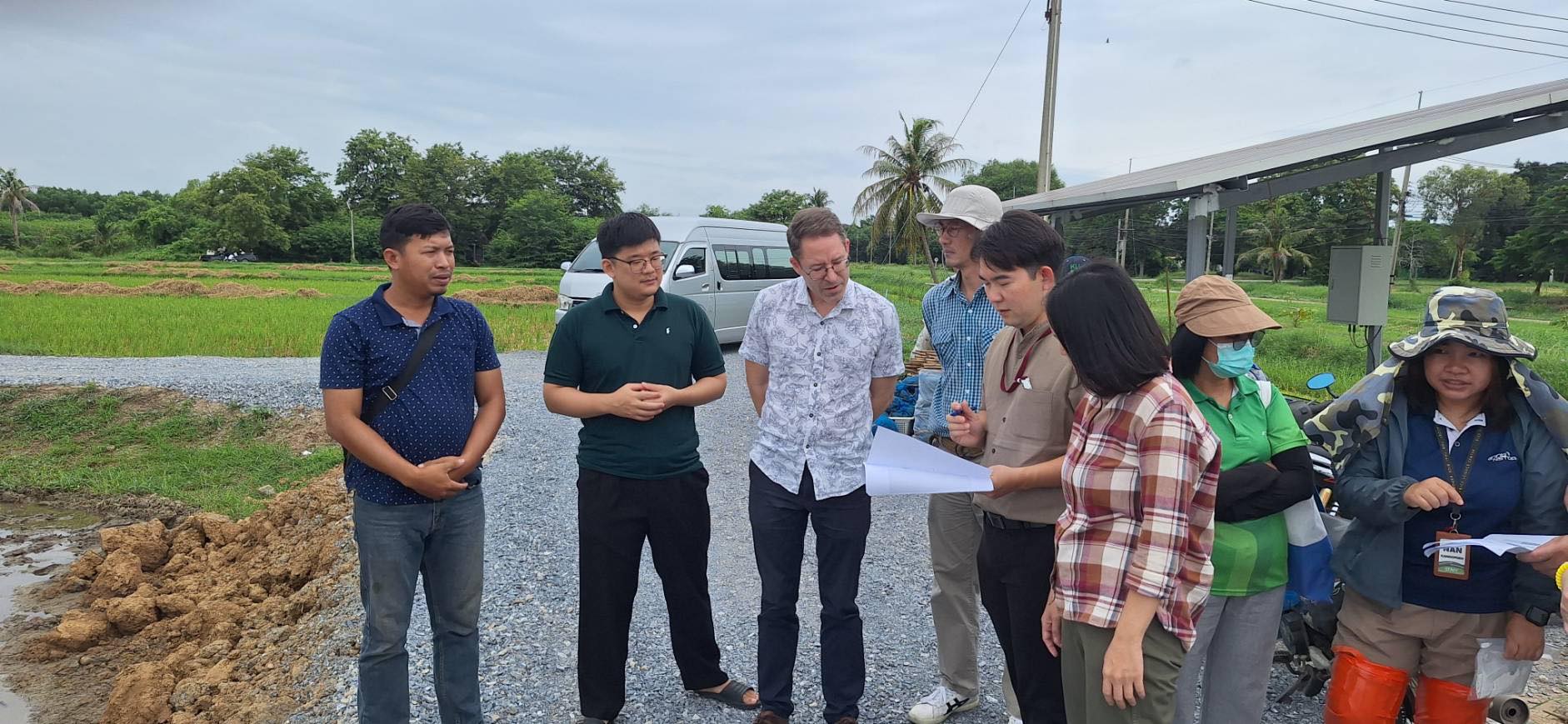
Rice feeds more than half the world's population, but traditional farming practices contribute significantly to methane emissions, a greenhouse gas a multitude of times more potent than carbon dioxide. The challenge of the task is finding ways to maintain – if not improve – yields while reducing rice agriculture's environmental footprint. This task has become a puzzle that requires both cutting-edge technology and traditional farming wisdom. The project being setup on campus combines manual field observation with drone technology for water level monitoring. Innovation is best applied by bridging old and new rather than replacing one with the other overnight.
The research project entitled "Long-term Experiments for Evaluating the Impacts of Different Crop Management Practices on GHG Emissions and Soil Health" will track environmental impacts over multiple growing seasons and directly supports the ov`rarching project “Thai Rice: Strengthening Climate-Smart Rice Farming”, funded by the Green Climate Fund.
Every handful of straw that is added here will help understand how to reduce greenhouse gas emissions while keeping our soils healthy for future generations. The IRRI Thailand team observed the meticulous process of land preparation – a key to sustainable rice production. And as the collaboration goes beyond simple observation, IRRI researchers provided technical guidance on data collection methods and drone applications for monitoring crop health – technologies that will allow scientists and policymakers to track changes across large areas with unprecedented precision. Meanwhile, the researcher of the Rice Science Center and NSTDA contribute deep knowledge of local growing conditions and traditional practices that have sustained rice production in the region for centuries.
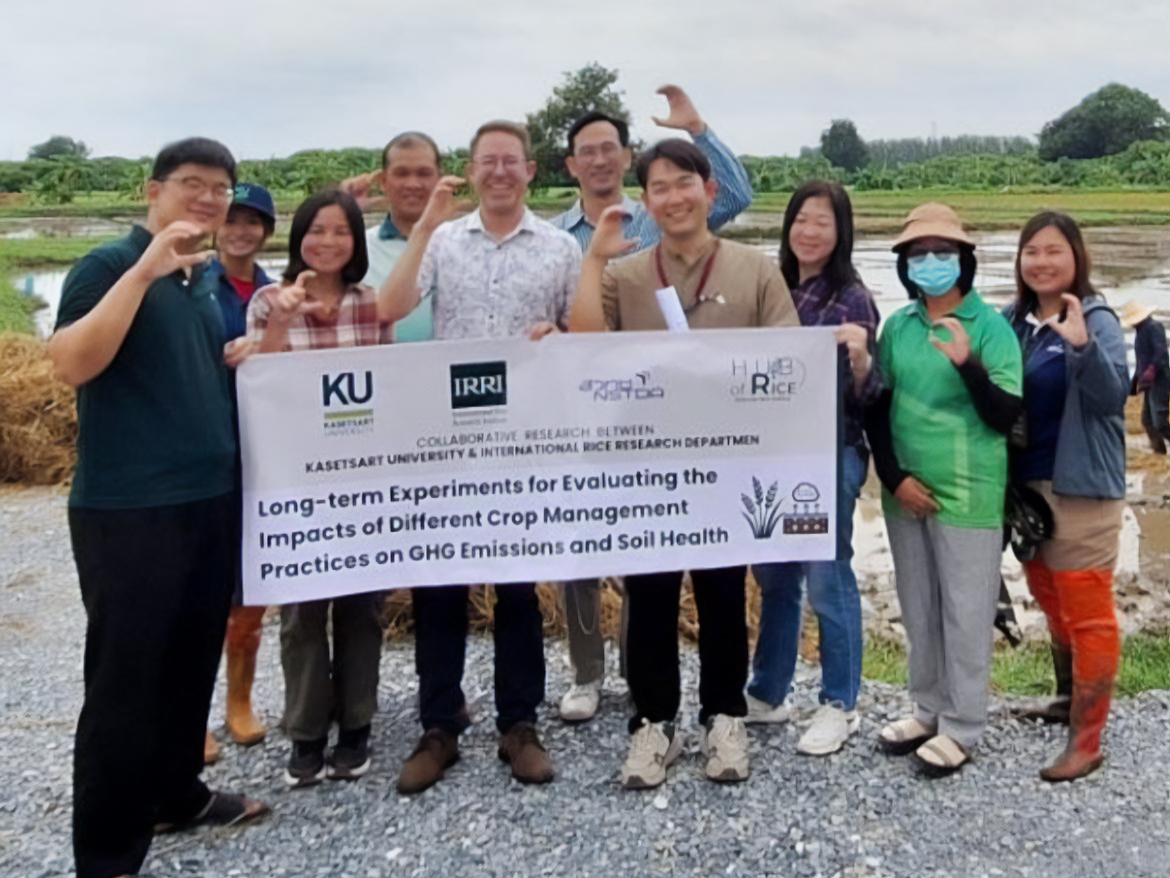
As the team finished their work for the day, muddy boots and satisfied expressions told the story of science in action. The real test of their collaboration won't come from conference presentations or published papers, but from rice fields like these – where innovative partnerships between institutions and nations are literally taking root in the soil that feeds the world.