Bangladesh and IRRI strengthen extension leadership to scale climate-resilient rice production
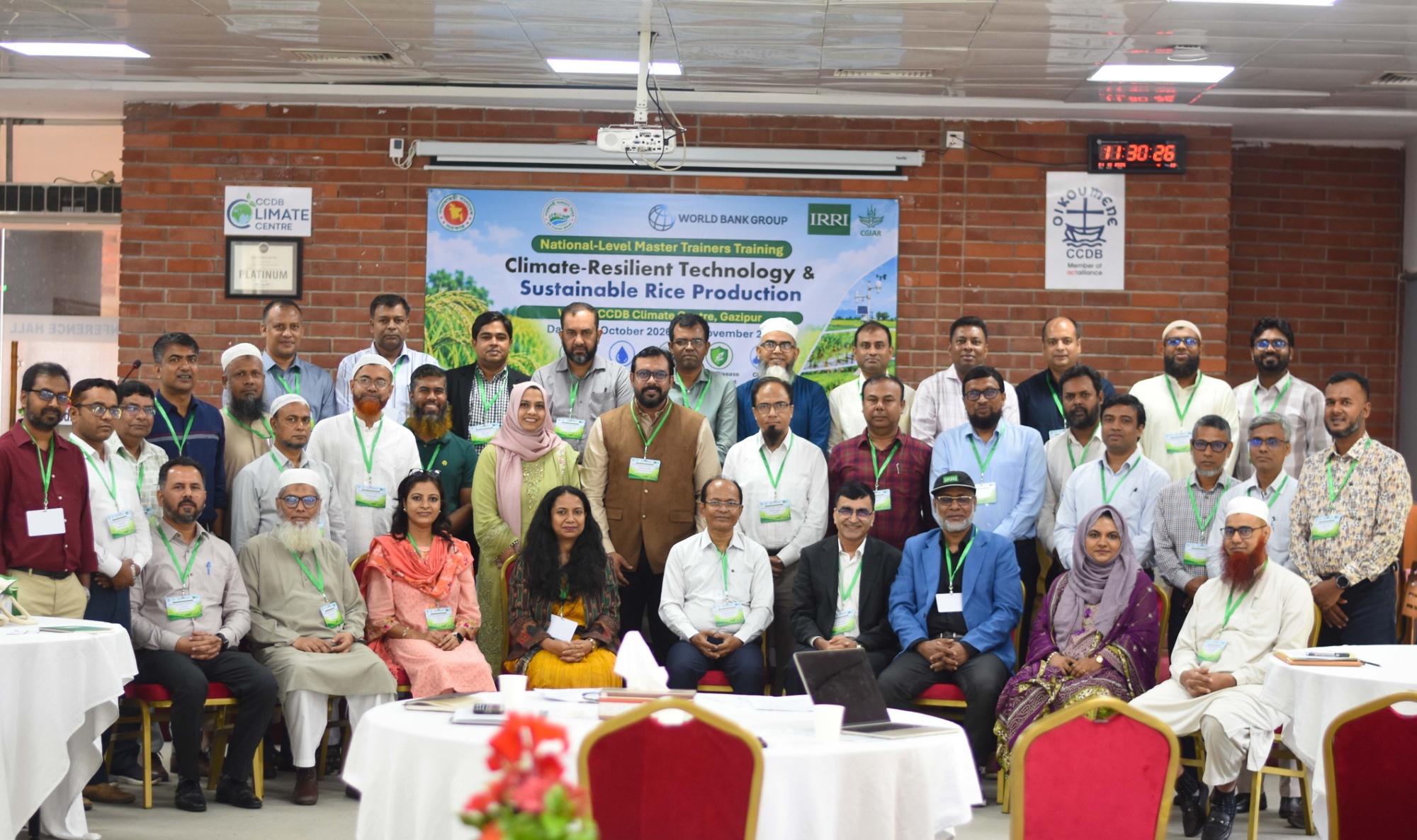
GAZIPUR, Bangladesh (1 November 2026) – Bangladesh's Department of Agricultural Extension (DAE) and the International Rice Research Institute (IRRI) are strengthening the capacity of agricultural extension leaders to promote climate-resilient technologies and sustainable rice production.
Through the TARAPS project, the two organizations held a two-day National-Level Master Trainers Training on Climate-Resilient Technology and Sustainable Rice Production at the CCDB Climate Center, bringing together 18 senior agricultural extension officials from TARAPS project clusters. The training combined scientific learning and practical discussions to help participants translate climate-smart innovations into solutions that farmers can adopt in their fields. Participants are expected to cascade the training to district and subdistrict levels, extending knowledge and promoting wider adoption among farming communities.
The initiative builds on TARAPS research across five district clusters: Bogura, Cumilla, Pirojpur, Rajbari, and Tangail. The research generated evidence on technology adoption, farmers' perceptions, and opportunities for scaling climate-smart agricultural interventions.
Building a bridge between research and extension
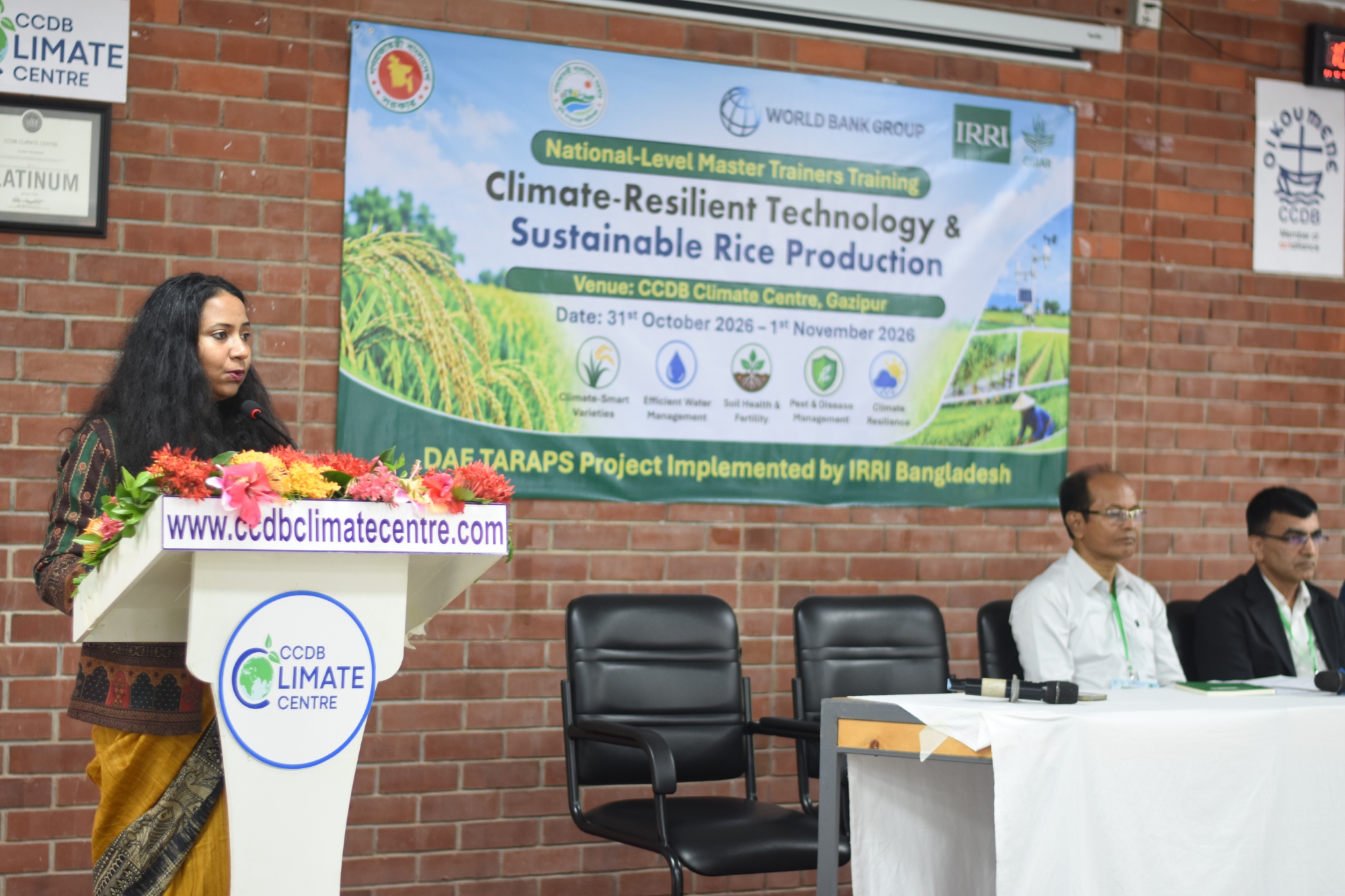
In her welcome remarks, Dr. Swati Nayak, IRRI Scientist and Principal Investigator of the IRRI–TARAPS initiative, emphasized the importance of using research evidence to shape extension strategies that respond to farmers' needs, local conditions, and the factors influencing their adoption of new technologies.
"We need to understand why farmers adopt certain technologies, what prevents them from adopting others, and what support they need to make these practices work in their fields. Research provides important evidence, but extension systems are key to translating that evidence into practical recommendations and reaching more farmers."
Reaffirming IRRI's longstanding collaboration with Bangladesh, Dr. Humnath Bhandari, IRRI Country Representative for Bangladesh and Nepal, highlighted the potential of technologies that improve resource-use efficiency and environmental sustainability while maintaining rice production.
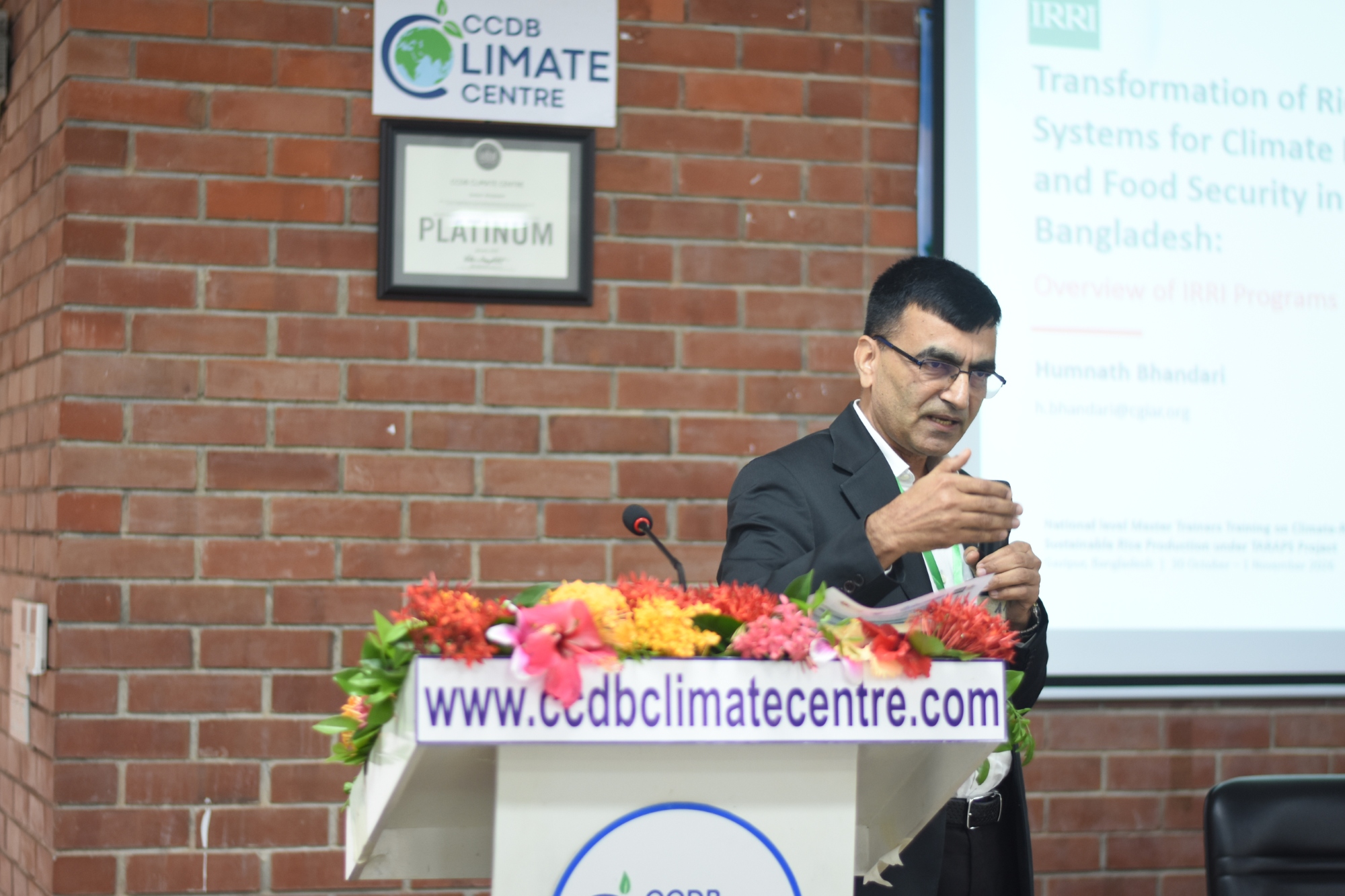
"Technologies such as Alternate Wetting and Drying offer opportunities to use water more efficiently and reduce greenhouse gas emissions while sustaining rice production. Strong collaboration and effective extension services are essential to bringing these benefits to farmers."
Building on these messages, Md. Abdur Rahim, Director General of DAE and Chief Guest, emphasized the importance of coordinated extension services and practical knowledge sharing in supporting farmers. He acknowledged IRRI's efforts in organizing the program and expressed confidence that participants would apply their learning to strengthen extension support in farming communities.
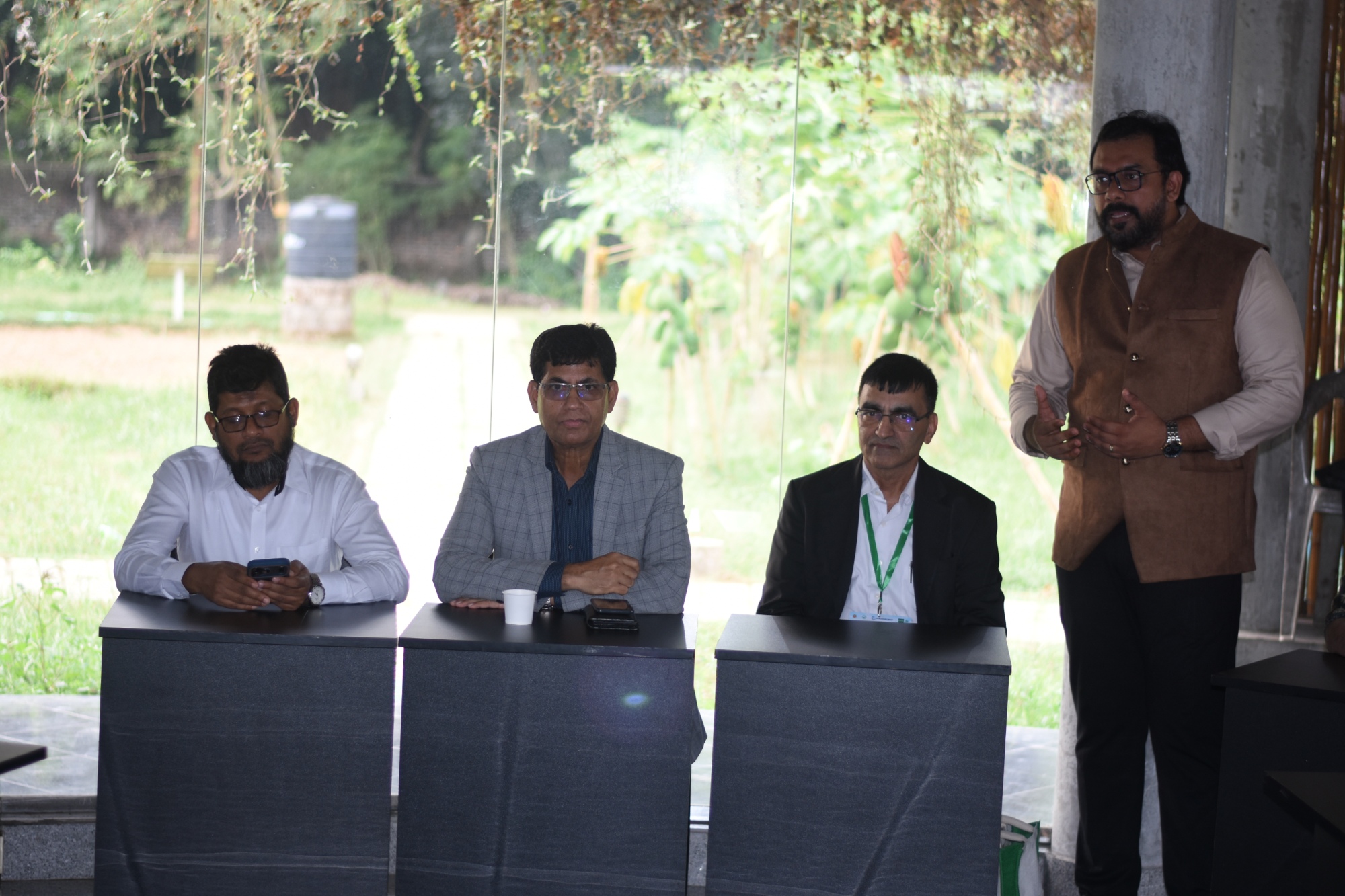
The program also featured Dr. Md. Shakhawat Hossain Shorif, Project Director of TARAPS, and Md. Obaidur Rahman Mondol, Director of the DAE Field Service Wing. DAE officials highlighted the importance of promoting integrated technology packages rather than isolated practices to help farmers improve overall farm performance and narrow the yield gap between research stations and farmers' fields.
Learning, exchange, and practical innovation
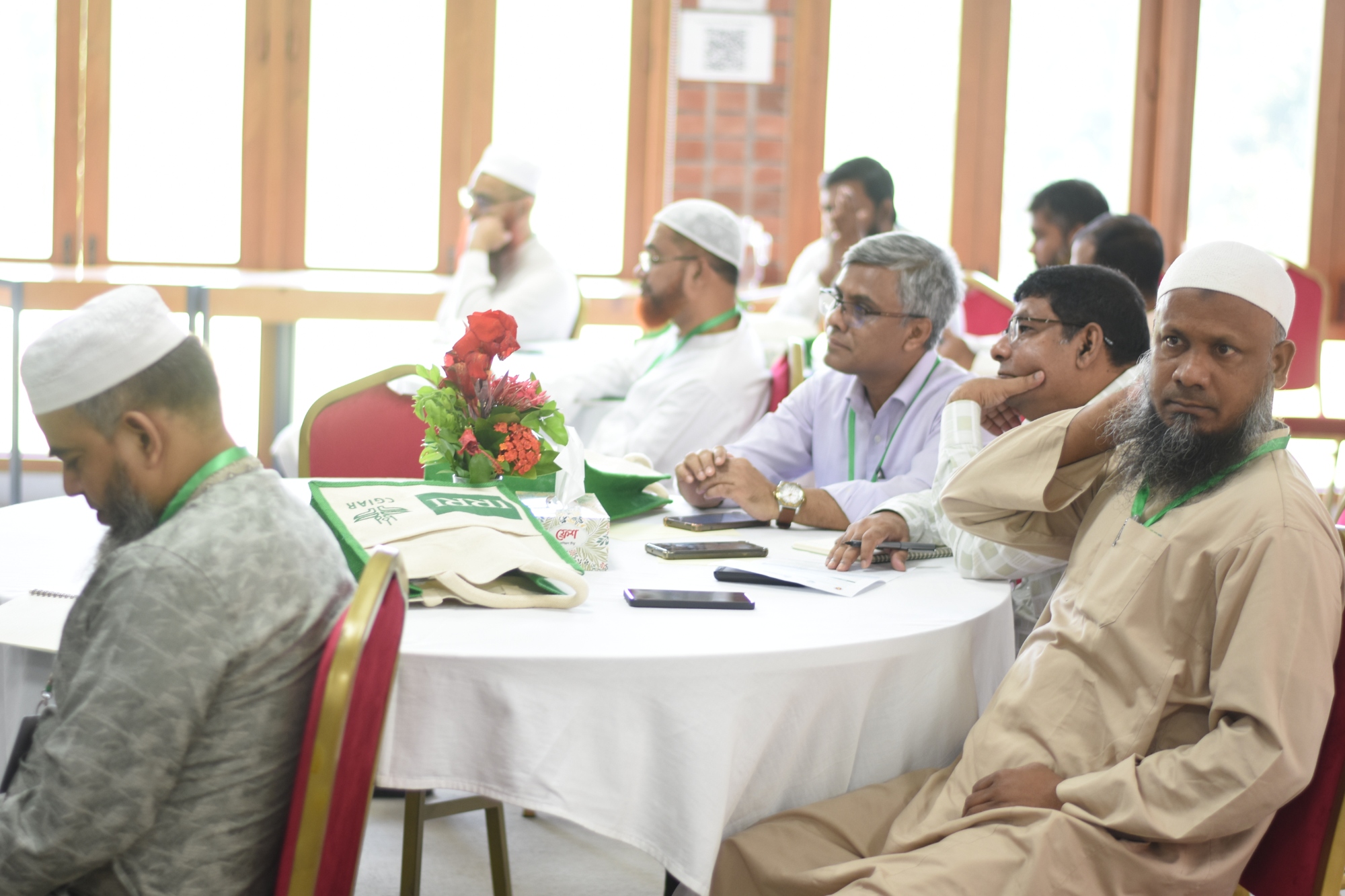
Reflecting these priorities, the sessions explored how different climate-smart agricultural practices can work together to improve productivity, profitability, and climate resilience while reducing production costs and environmental impacts. Rather than focusing on individual technologies, discussions emphasized the value of combining complementary practices to address the interconnected challenges farmers face in rice production.
- Climate-smart rice varieties and seed systems: Participants examined the deployment of climate-resilient varieties, strategies for accelerating varietal adoption, and the importance of strengthening seed systems. Discussions emphasized that access to suitable varieties and quality seed is essential to ensuring that the benefits of research reach farmers.
- Efficient water and nutrient management: Sessions on AWD, urea deep placement, and emerging fertilizer technologies explore opportunities to improve resource-use efficiency, reduce input losses, and support sustainable crop management.
- Direct-Seeded Rice and mechanization: Experts discussed how Direct-Seeded Rice (DSR), appropriate machinery, and improved crop establishment methods could help address labor constraints, reduce cultivation costs, and improve resource efficiency. Discussions also highlighted the importance of matching technologies with suitable varieties, farming conditions, and accessible mechanization services.
- Low-carbon rice farming and climate finance: Dedicated sessions examined greenhouse gas mitigation, low-emission production systems, and emerging climate finance opportunities. Participants discussed the role of scientific measurement, reporting, and verification in supporting future climate-related incentive mechanisms.
- Gender, markets, and farmer resilience: The program extended beyond agronomic technologies to examine gender-responsive agricultural development, women's empowerment through seed systems, rice price volatility, and the economic factors that influence technology adoption.
Looking ahead: Putting knowledge into practice.
A key takeaway from the program was that successful technology adoption requires more than developing improved practices. Farmers need access to quality seeds and inputs, reliable technical advice, and extension services that respond to their local conditions. At the same time, feedback from farmers can help researchers refine technologies and identify areas for further research.
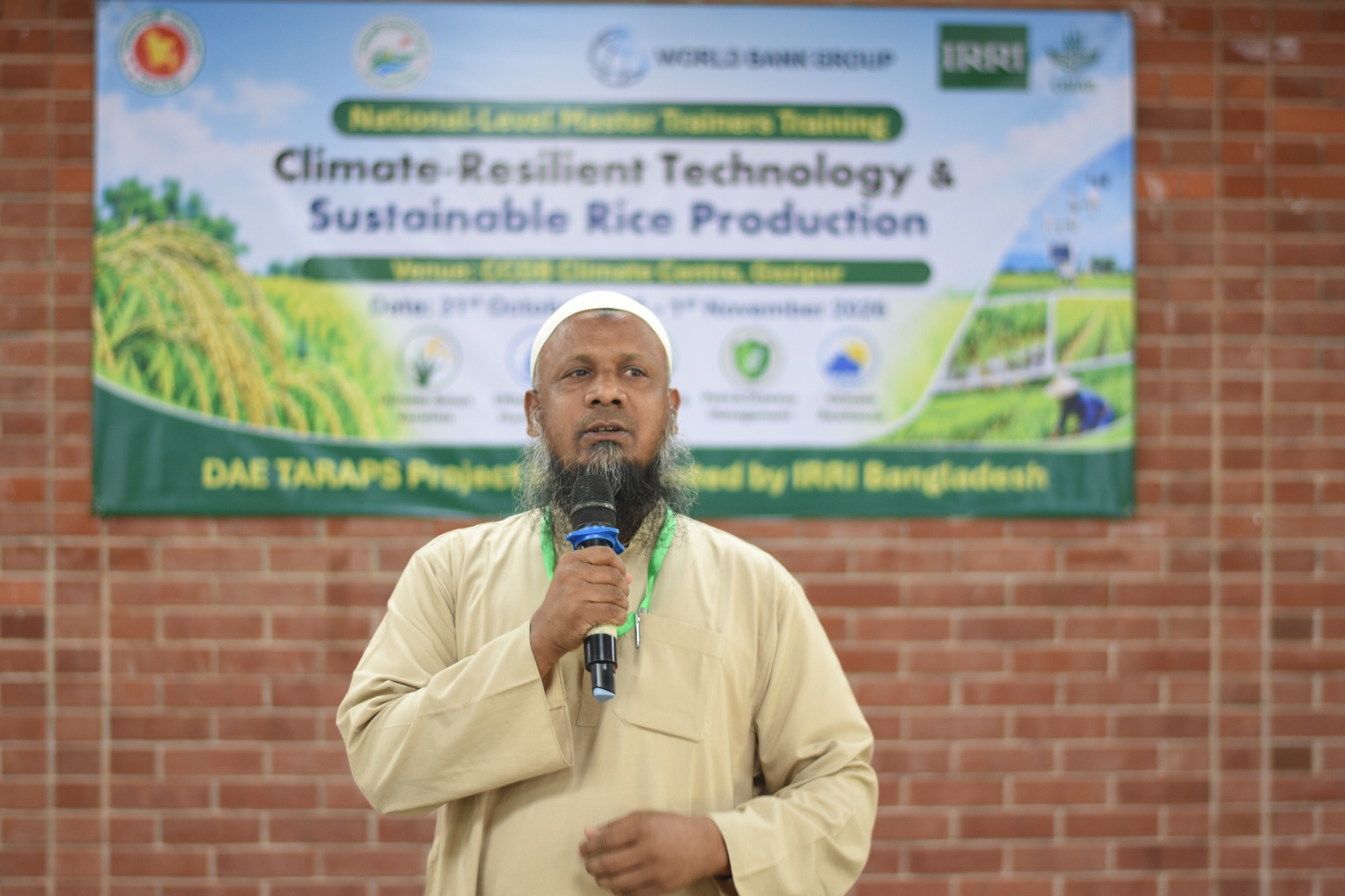
For Enamul Haque, Deputy Director of DAE in Rajbari, the training provided him with knowledge he intends to share with farmers in his area, helping to translate the discussions into practical improvements in rice production.
"The training has provided us with beneficial knowledge that we can share with farmers to help improve rice productivity and strengthen their resilience with climate-related challenges. Investing in people and strengthening institutional capacity are important to ensure that agricultural innovations reach more farmers."
A partnership for sustained agricultural transformation
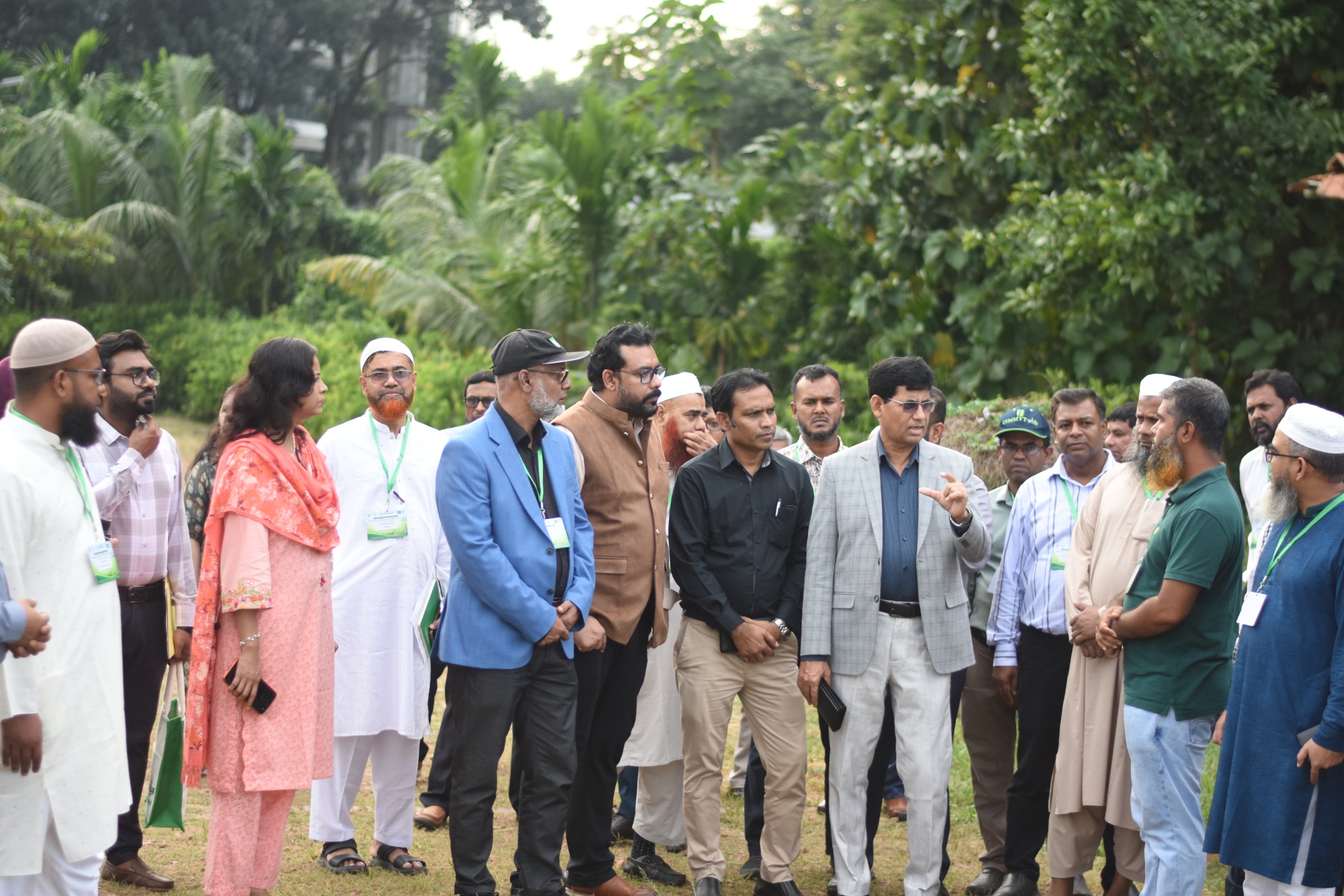
The National-Level Master Trainers Training forms part of a wider capacity-development strategy under the DAE–IRRI collaboration, designed to strengthen technical knowledge across national institutions, community-level extension networks, and farming households.
The program comprises 32 training events over 12 weeks, from October to November 2026, including:
- Five upazila-level hands-on training events.
- One National-Level Master Trainers Training.
- Sixteen community-level Training of Trainers events.
- Five farmers' practical training events focusing on DSR, AWD, nutrient management, and mechanization.
- Five gender- and youth-inclusive training events.
This decentralized approach aims to ensure that scientific knowledge does not remain concentrated among national-level specialists but becomes accessible to frontline extension personnel and farming communities. It also enables trained professionals to adapt technical recommendations to local agroecological conditions, farming practices, and socioeconomic realities.
Through this collaboration, DAE and IRRI aim to strengthen the link between research, extension, and farmers, supporting wider adoption of climate-resilient and sustainable rice production practices across Bangladesh.