Bangladesh Farmers Evaluate Climate-Smart Rice Technologies Under TARAPS Project
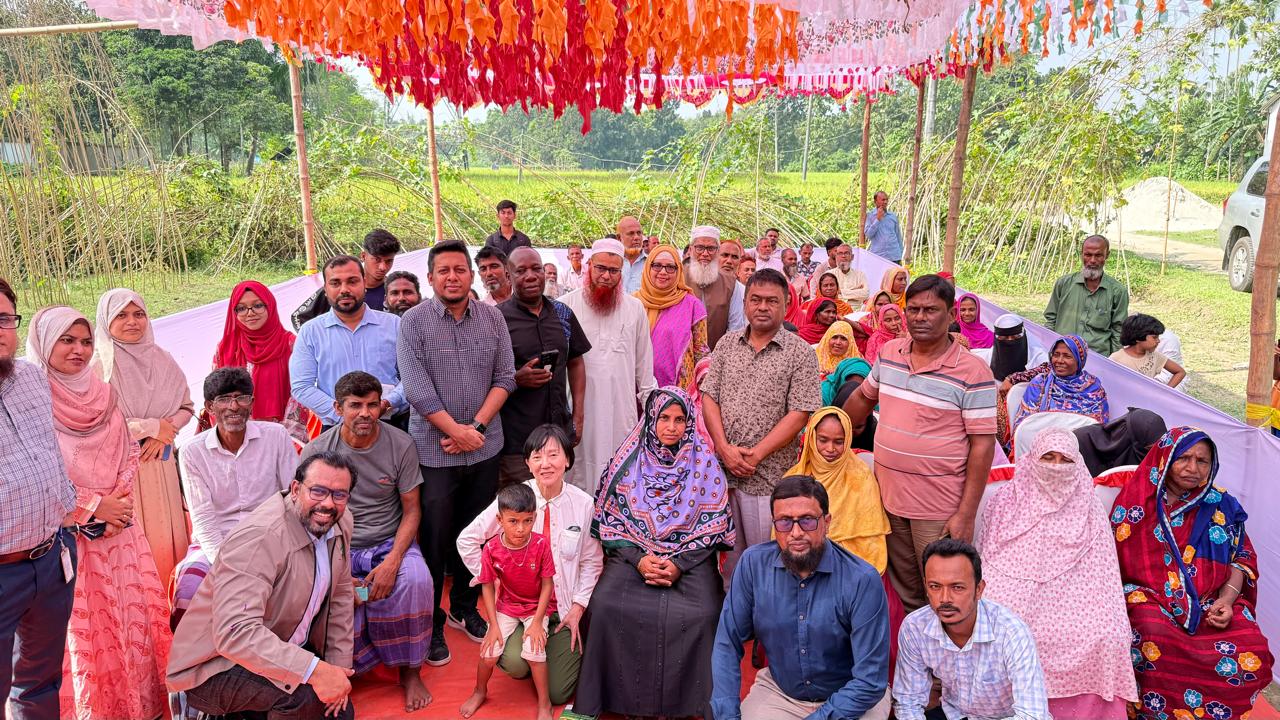
World Bank, DAE, and IRRI delegation visits farmer-led technology trials and community seed production groups in Tangail
TANGAIL, Bangladesh (6 November 2026) – Farmers in Tangail are taking an active role in evaluating climate-smart rice technologies and strengthening community-based seed production, helping identify practices suited to local farming conditions and improve access to quality seeds.
These efforts were highlighted during a visit by a delegation from the World Bank, Bangladesh's Department of Agricultural Extension (DAE), and the International Rice Research Institute (IRRI) to project sites in the Tangail Cluster on 6 November. The delegation assessed progress under the Technical Assistance for Re-structuring Agricultural Public Support for Transitioning to a Sustainable Food System (TARAPS) Project, including farmers' experiences with new technologies and local seed production initiatives.
The delegation observed four technology trials: Triadic Comparison of Technologies (TRICOT), Urea Deep Placement (UDP), wet direct-seeded rice (Wet DSR), and Dealer-Customer Demonstrations. The trials introduce farmers to different approaches to rice production. TRICOT allows farmers to compare rice varieties under their own field conditions, while UDP promotes more efficient fertilizer use, and Wet DSR offers an alternative to conventional transplanting. Dealer-Customer Demonstrations extend technical information through local agricultural input dealers.
Farmers assess the benefits of new rice technologies
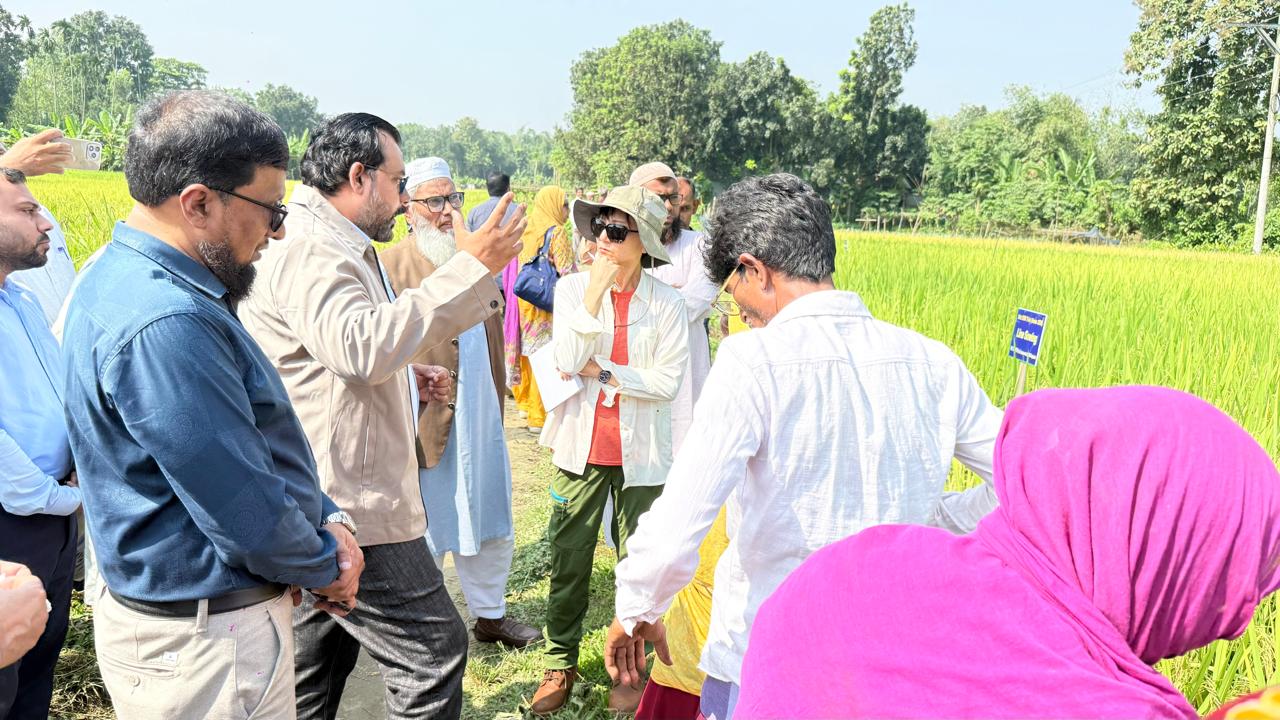
Farmers shared how the technologies could address practical challenges in rice production, from improving grain quality and reducing input costs to shortening crop duration. Their experiences also help researchers and extension workers assess the suitability of these practices to local conditions and identify areas where further support is needed.
For Md. Kalam, a farmer participating in the TRICOT trials, BRRI dhan103 offers both market and production advantages. “Among the three varieties we tested, I prefer BRRI dhan103. Its slender grains could fetch a better market price, and I expect a higher yield. It also allows us to grow another crop, such as mustard, after rice harvesting.”
Muhammad Ali Hussain, who tested Urea Deep Placement (UDP), pointed to savings in fertilizer and labour. “With UDP, the rice crop looks just as healthy, but we spend less on fertilizer and labour. Unlike broadcasting, where fertilizer is often wasted, UDP requires only one application. We expect similar yields at a lower production cost.”
For Arjina Akter, a Direct-Seeded Rice (DSR) farmer, the main advantage is lower cultivation costs and an earlier harvest. “Direct seeding can reduce our cultivation costs by almost half compared to transplanting, as we do not need to prepare a separate seedbed and require less labour. The rice also matures about 10 days earlier, allowing us to grow another crop.”
The discussions also highlighted the need for continued technical support as farmers test and apply the technologies. Dr. Mohammad Rakibuzzaman Khan, TARAPS Component Director at DAE, emphasized the importance of sustained engagement to address implementation challenges and support wider adoption.
"Our priority is to ensure that improved agricultural technologies reach farmers in ways that respond to their actual needs and farming conditions. Through field demonstrations and direct engagement, we can strengthen farmers' understanding of these practices, address implementation challenges, and build the confidence needed for wider adoption," he said.
Strengthening community-based seed production
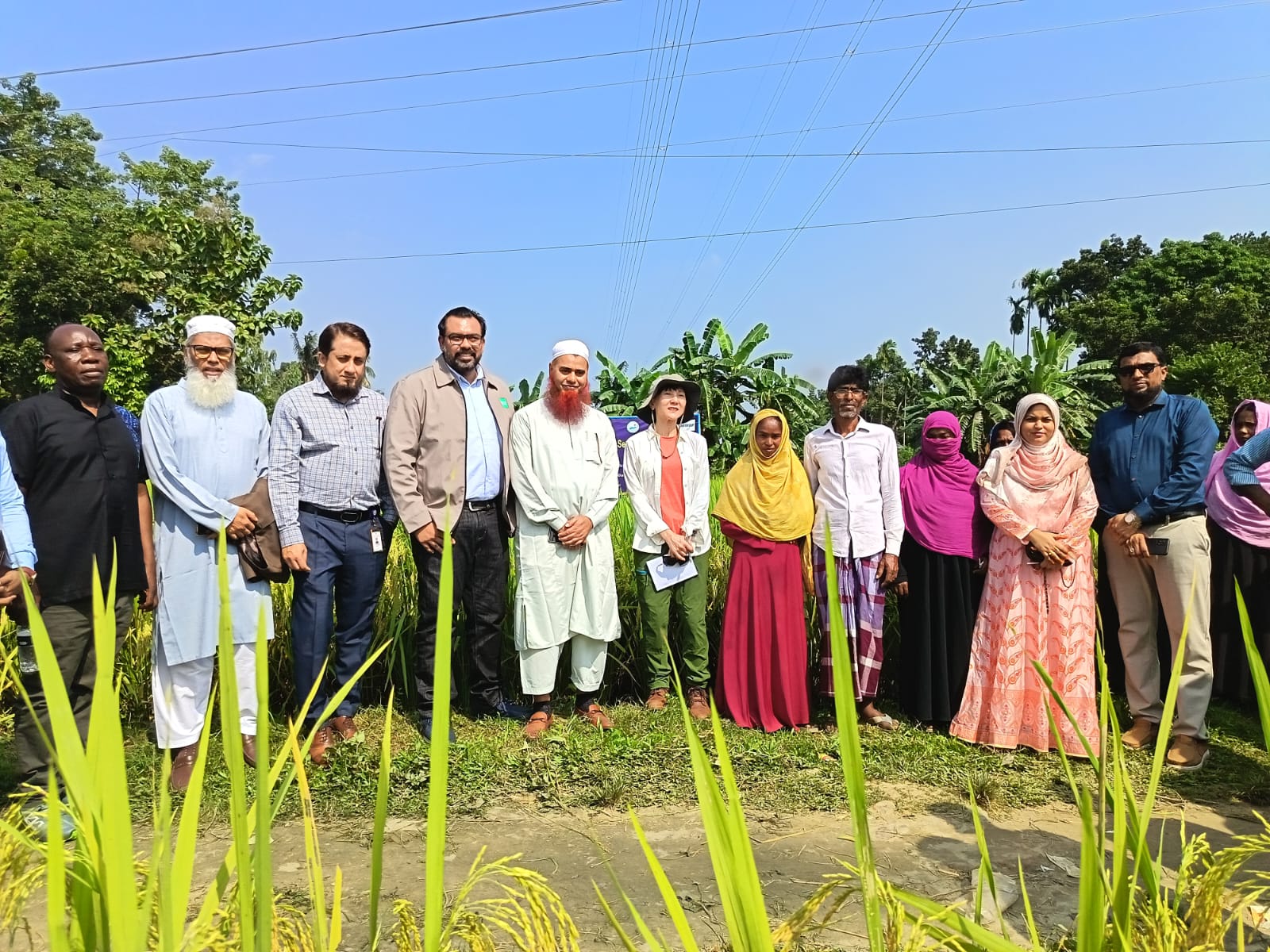
Access to quality seeds is another important factor in helping farmers benefit from improved production technologies. The delegation visited community-based seed production groups established in Tangail with technical support from IRRI Bangladesh.
Women members of these groups shared their experiences in seed production, the training they had received, and the technical skills they had developed. They also discussed challenges in maintaining seed quality and ensuring a reliable local supply. The groups help bring quality seeds closer to farming communities while strengthening local production and distribution. Women's participation also builds their technical capacity and creates opportunities for greater involvement in seed production and agricultural development.
Mosammat Sahara Begum, Seed Producer Group Member, Bangladesh, said, “We can produce rice seeds on our own land and sell them easily in the local market. Through our seed producer group, we can also supply seeds of newly introduced rice varieties that are not yet available through local agricultural offices. This creates income opportunities for us while helping other farmers access new and improved rice varieties.”
The visits highlighted the importance of linking technology demonstrations with the local systems that support their adoption. Farmers need both practical production options and access to quality seeds, alongside technical guidance to put these innovations into practice.
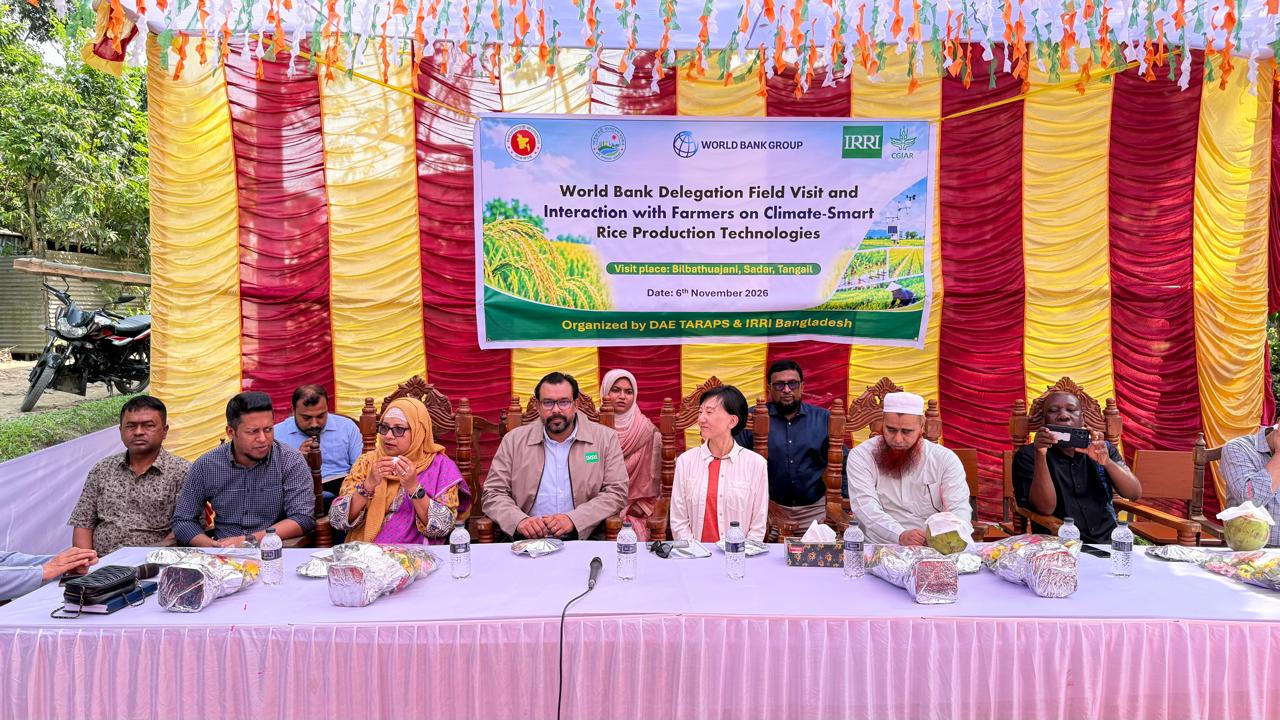
Building partnerships for climate-smart agriculture
For the World Bank, these efforts are important to ensure that climate-smart agriculture delivers benefits at the farm level. Ashoka Okumura, TARAPS Task Team Leader at the World Bank, said:
"The value of climate-smart agriculture lies in its ability to deliver practical benefits to farmers. Seeing these technologies in farmers' fields and hearing directly from them allows us to assess what works, understand the challenges, and identify where project interventions can make a difference."
For IRRI, connecting farmer-led technology evaluation with stronger community-based seed production is central to making agricultural innovations more accessible and sustainable. Dr. Muhammad Ashraful Habib, Lead Specialist of Seeds Systems, said:
"Agricultural innovations create an impact when farmers are actively involved in evaluating them and when the systems needed to sustain their adoption are in place. Through our work with partners, we aim to make climate smart rice technologies and quality seeds more accessible to farming communities. Women's participation is equally important in strengthening inclusive and resilient local seed systems."
The World Bank delegation was led by Ashoka Okumura, TARAPS Task Team Leader, and Samina Yasmin, Co-Task Team Leader, accompanied by consultants Boniface Okello Akuku and Naibur Rahman.
DAE representatives included Dr. Mohammad Rakibuzzaman Khan, TARAPS Component Director; Abu Mohammad Enayet Ullah, Climate-Smart Specialist; Mohammad Ashek Parvez, Deputy Director for Tangail; and Rumana Akter, Upazila Agriculture Officer for Tangail Sadar.
The IRRI Bangladesh team included Dr. Muhammad Ashraful Habib, Lead Specialist for Seed System and Product Management; Dr. Sharif Ahmed, Postdoctoral Fellow for Agri-Food Systems; and Dr. Saidul Islam, Consultant for Seed System and Product Management.
The TARAPS Project supports the Government of Bangladesh's efforts to promote climate-smart agriculture and transition toward a more sustainable food system. DAE leads project implementation, while IRRI contributes research-based knowledge and technical expertise in rice production and seed systems.