Bangladesh’s Haor Farmers Test Climate-Resilient Rice Varieties
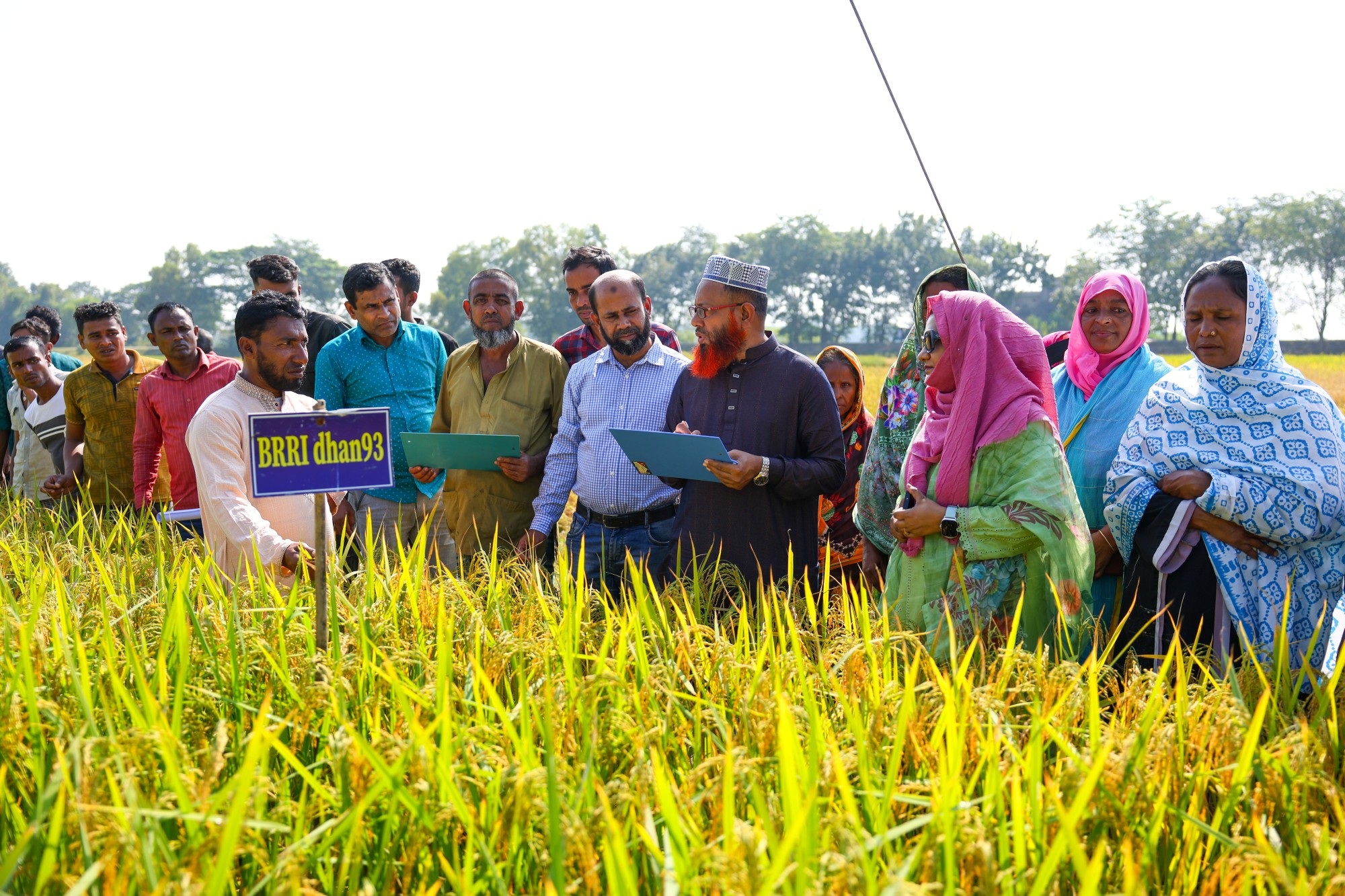
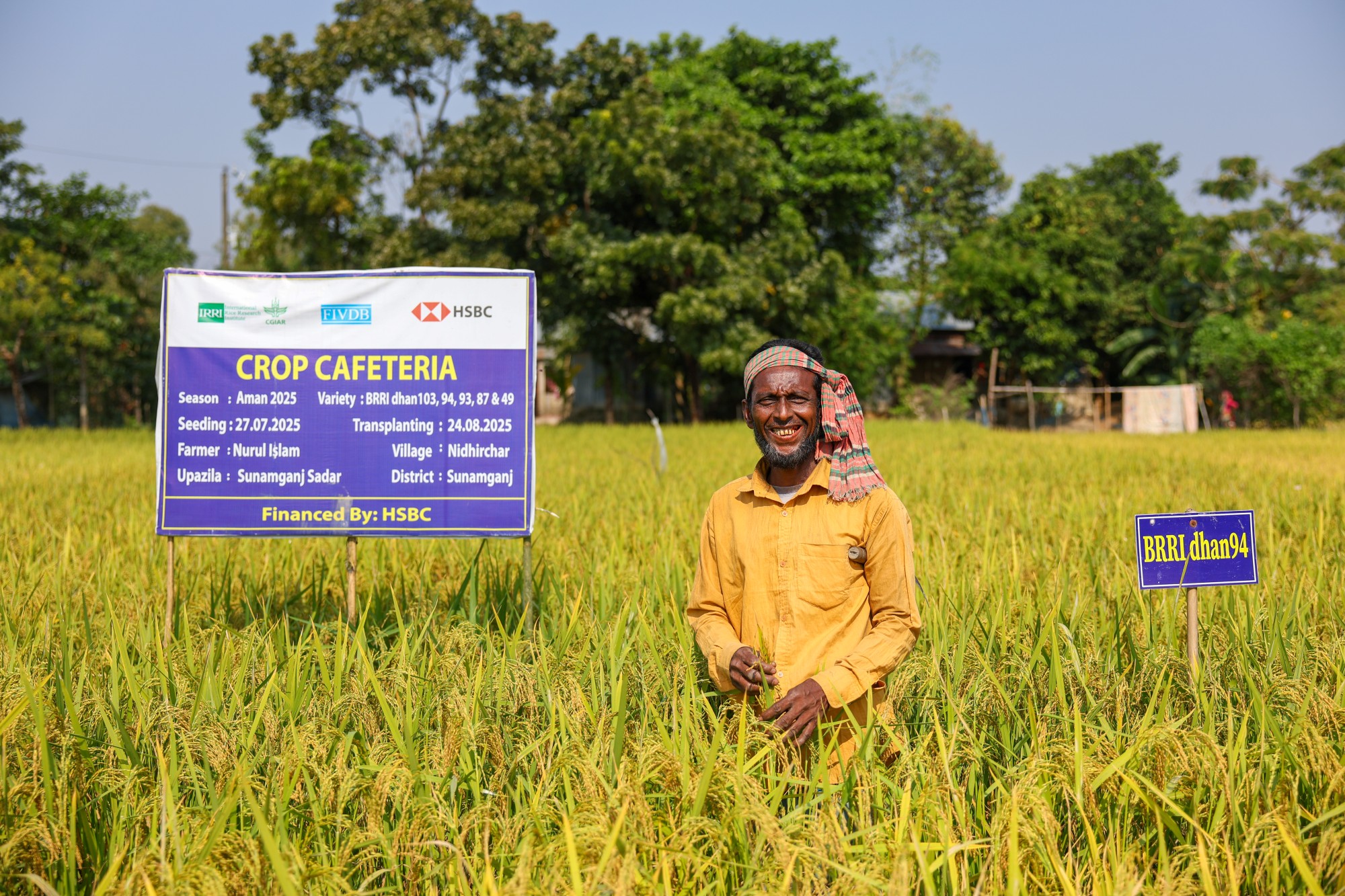
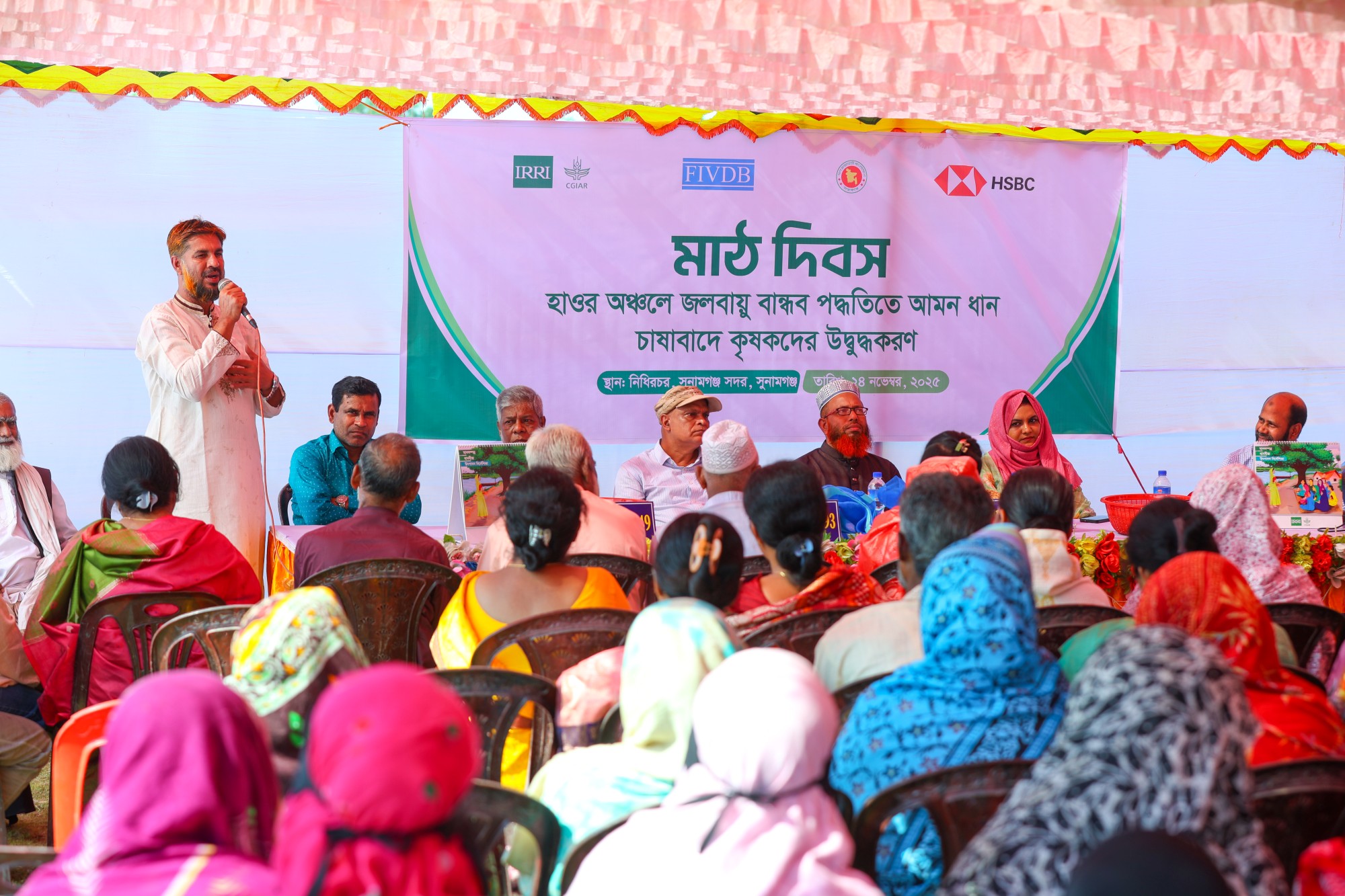
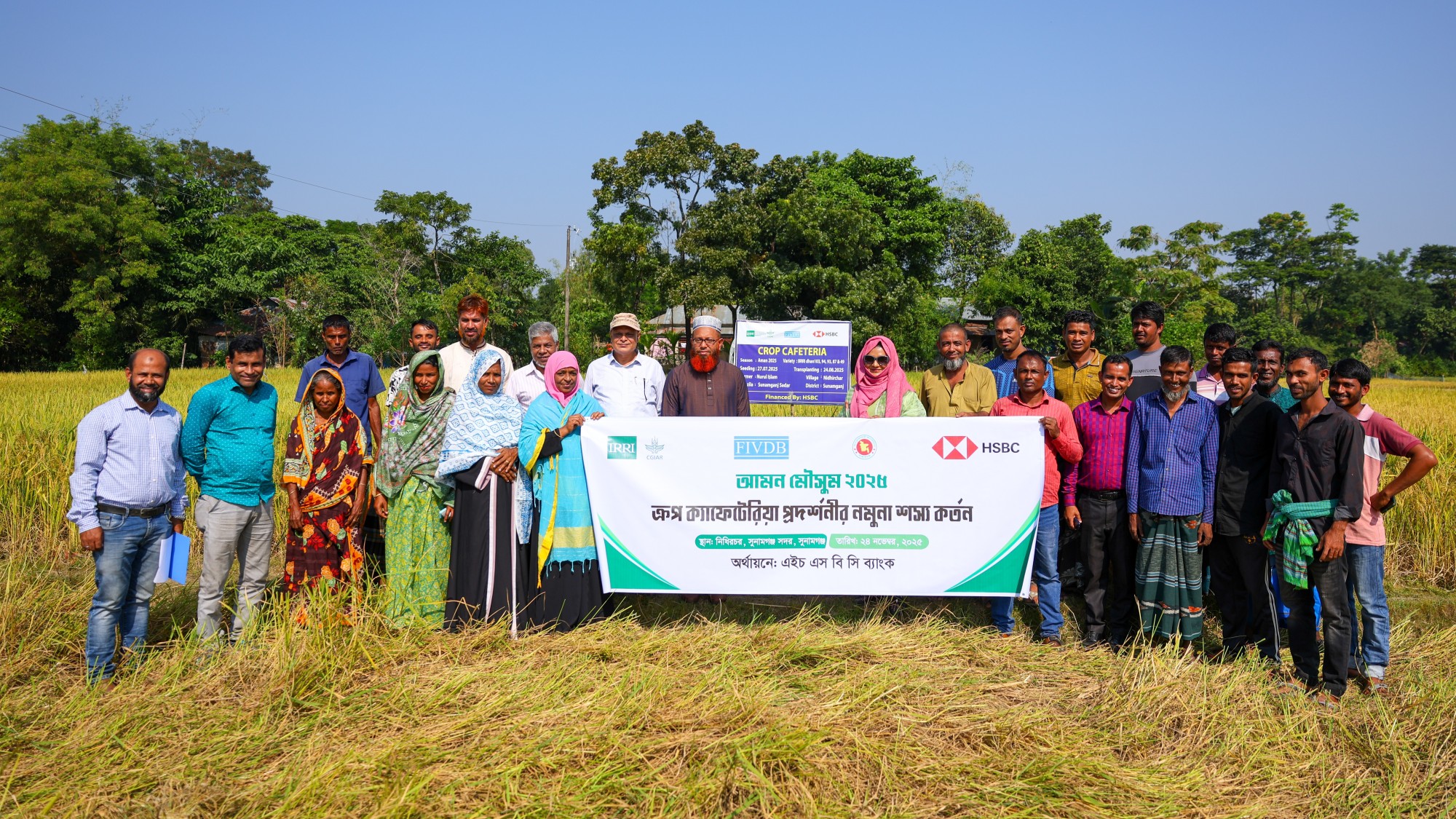
Kishoreganj and Sunamganj, Bangladesh (20, 24, 25 November 2025) – Farmers in Bangladesh’s flood-prone haor (wetlands) region are testing new rice varieties designed to withstand floods, short planting windows, and unpredictable weather. The International Rice Research Institute (IRRI), in partnership with Friends in Village Development Bangladesh (FIVDB), organized field days using a “crop cafeteria” approach, where farmers could see multiple varieties grown side by side and compare their performance under the same conditions.
Around 500 participants, including farmers, seed dealers, millers, and government officials, attended the events. The new varieties included BRRI dhan49, BRRI dhan87, BRRI dhan93, BRRI dhan94, BRRI dhan103, and the newly introduced BRRI dhan111. Among these, BRRI dhan94 and BRRI dhan103 were ranked highest by both farmers and stakeholders for yield, resilience, and overall performance.
BRRI Dhan111, tested in the Haor region for the first time, survived up to seven days of flooding and showed strong growth. The Department of Agricultural Extension welcomed the variety, highlighting its potential to improve resilience in flood-prone areas. This variety was developed by the Bangladesh Rice Research Institute (BRRI) to address water inundation challenges common in the haor areas.
Kohinur Begum, a farmer from Sunamganj Sadar, said, “These short-duration, high-yielding rice varieties are a game-changer for us. With unpredictable weather, we need crops that can survive floods and cold spells.”
Supporting her message, local seed dealer Hafizur Rahman said, “Good seed is the foundation of a good harvest. Having certified seeds available locally will lower costs and improve yields.”
The crop cafeteria approach also allowed hands-on learning, with sessions on seed production, mechanization, post-harvest practices, and interactive discussions with researchers and extension agents.
Rehana Noor, IRRI Project Manager of the Climate-Smart Rice Value Chain (CS-RVC) project, said, “Participatory approaches like these are essential to ensure research translates into practical solutions farmers can adopt at scale.”
Supported by HSBC, the initiative aims to improve productivity, profitability, and climate resilience for smallholder rice farmers.