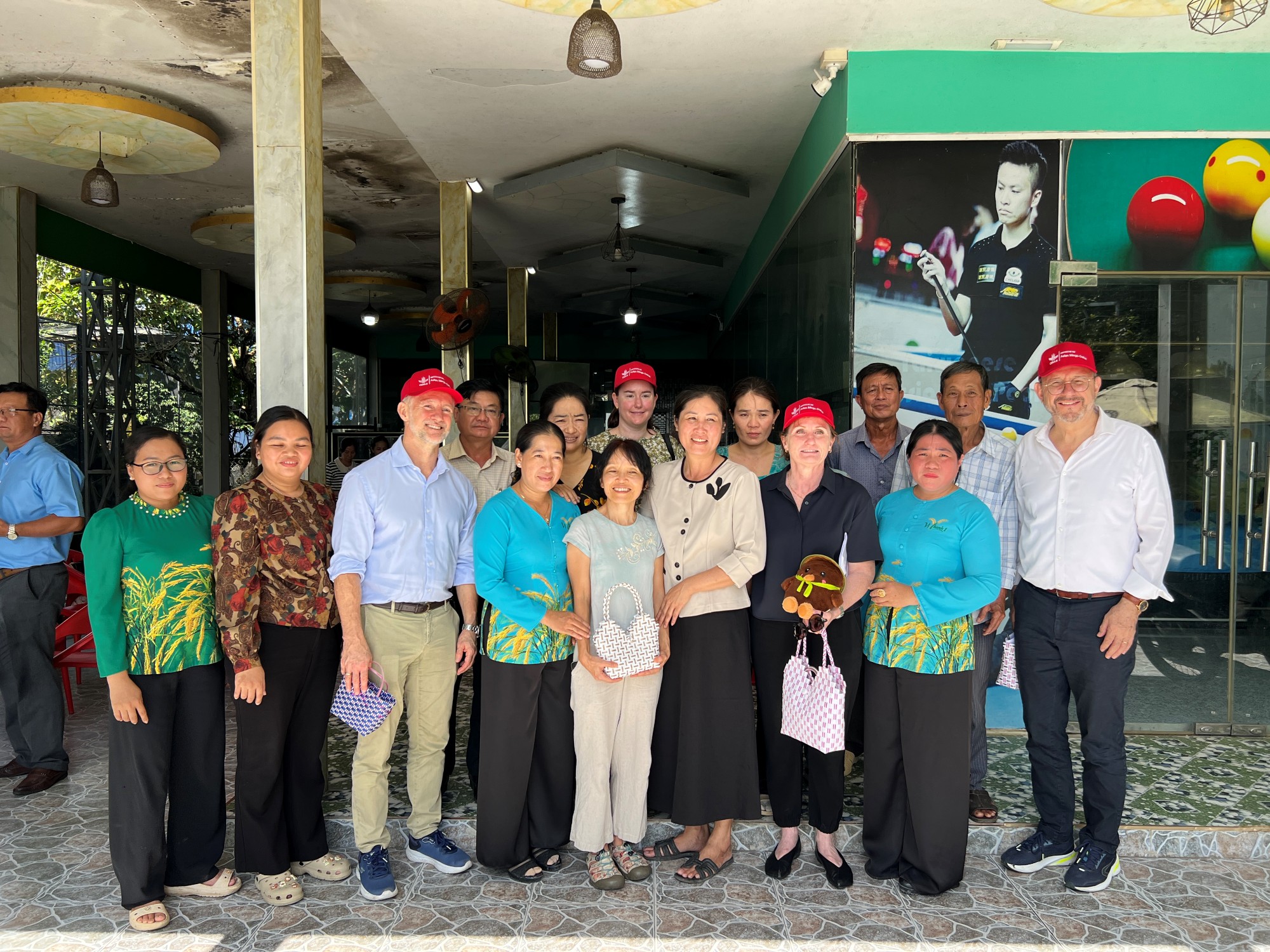
G4 diplomats meet Mekong Delta farmers empowering women in agriculture and promoting low-emission rice production
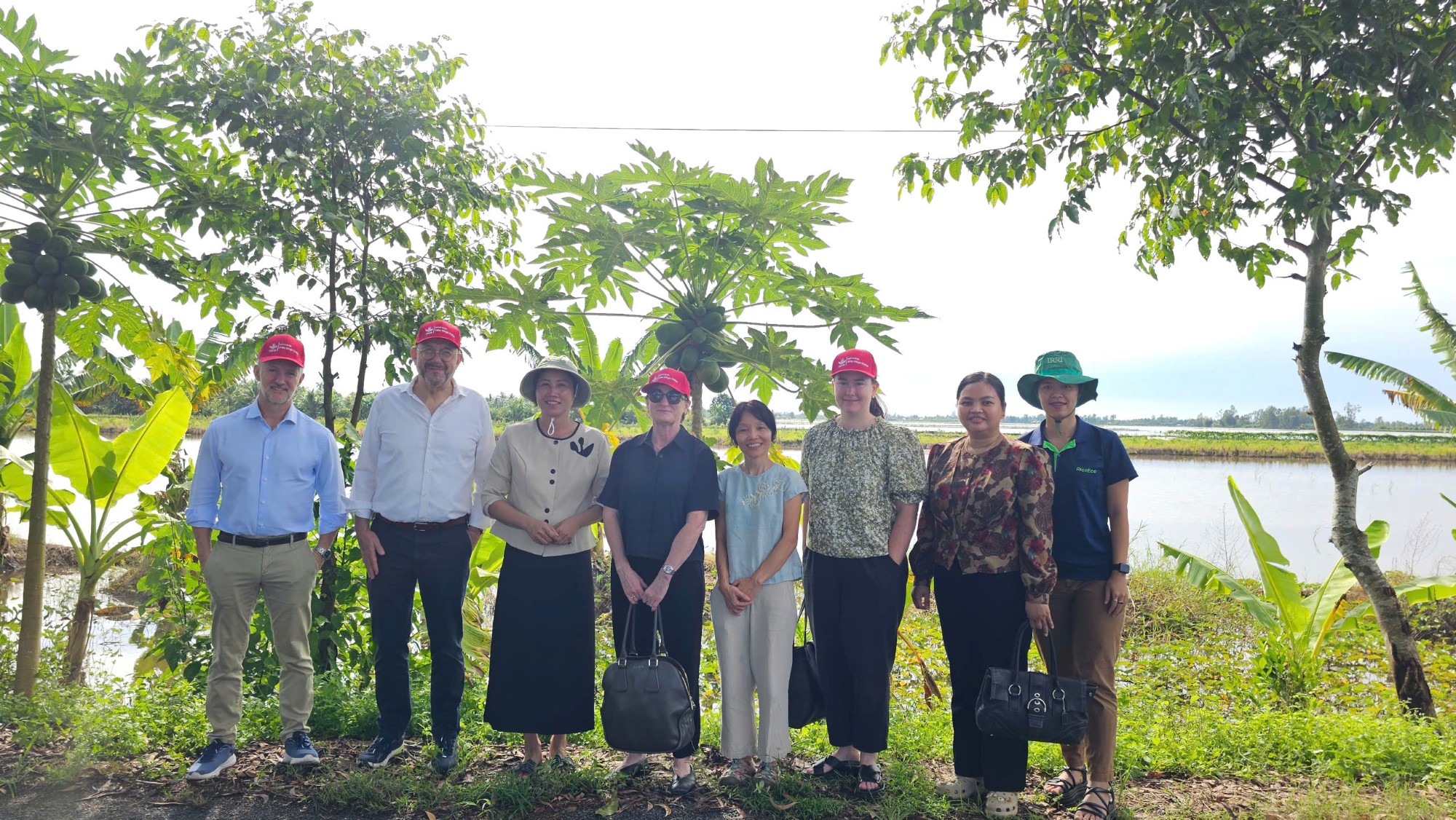
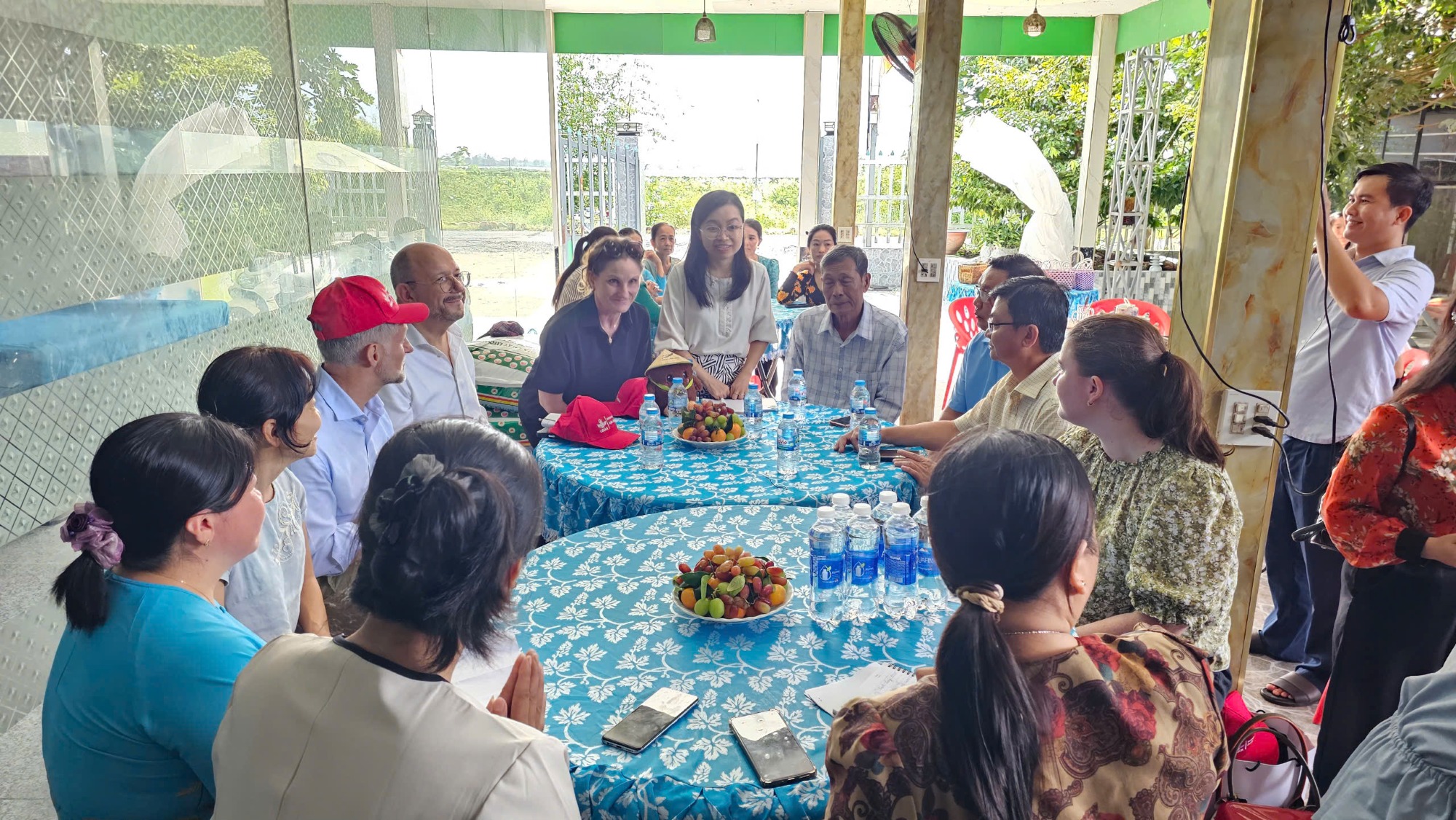
CAN THO, Viet Nam (23 October 2026) - Diplomats from the embassies of New Zealand, Norway, and Switzerland, known as the Group of Four (G4), visited the Kien Thanh Agricultural and Services Cooperative in Viet Nam’s Mekong Delta to see how women farmers are advancing Vietnam’s One-Million Hectare High-Quality and Low-Emission Rice Program.
The G4 delegation met with farmers, cooperative leaders, and researchers to discuss how women’s leadership roles contribute to mitigating climate risks that affect rice production and rural livelihoods. The delegation was particularly interested in how these risks affect women farmers and other vulnerable groups, and what support communities need to adapt.
Ms. Phan Thi Thao Suong, the cooperative director, described how Kien Thanh has grown since its establishment in 2011. It now has 273 members, including 120 official members and 153 associate members. The cooperative helps farmers organize collectively, access technical services, and connect with markets.
As the only female cooperative director in the commune, Suong said that training and support from the International Rice Research Institute (IRRI) and the International Potato Center (CIP) had given her greater confidence in leading the cooperative and reaching women farmers, who have been underrepresented in low-emission rice initiatives. Her experience showed the importance of gender-responsive project design and training in strengthening women’s leadership in agriculture.
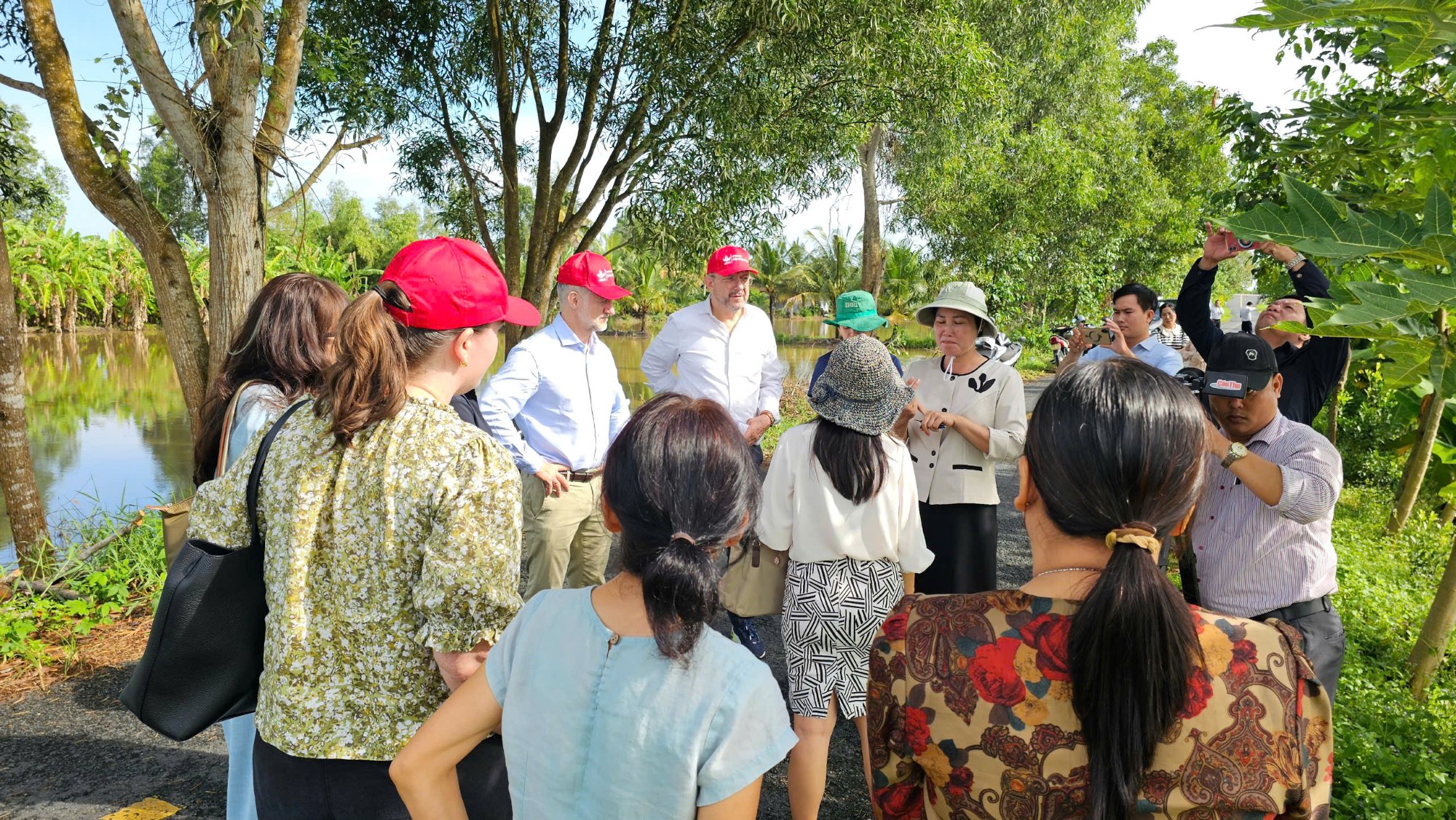
IRRI shared results from eight 50-hectare pilots that applied the national program's technical guidelines, including improved crop establishment and nutrient management. Compared with conventional practices, the pilots used approximately 50% less seed, 30% less nitrogen fertilizer, and 20% less pesticide. Yields rose by about 5% and profits by about 10%, while greenhouse gas emissions fell by more than 20%.
For farmers weighing whether to change how they grow rice, the results show how lower input use can go hand in hand with higher yields and profits. G4 representatives highlighted the role of local efforts in improving farmers’ livelihoods while contributing to Viet Nam’s goal of reaching net-zero emissions by 2050.
The visit also highlighted how the New Zealand-supported Asian Mega-Deltas Initiative complements the 1Mha Program by bringing researchers, local institutions, farming communities, and development partners together to address climate risks across delta regions.
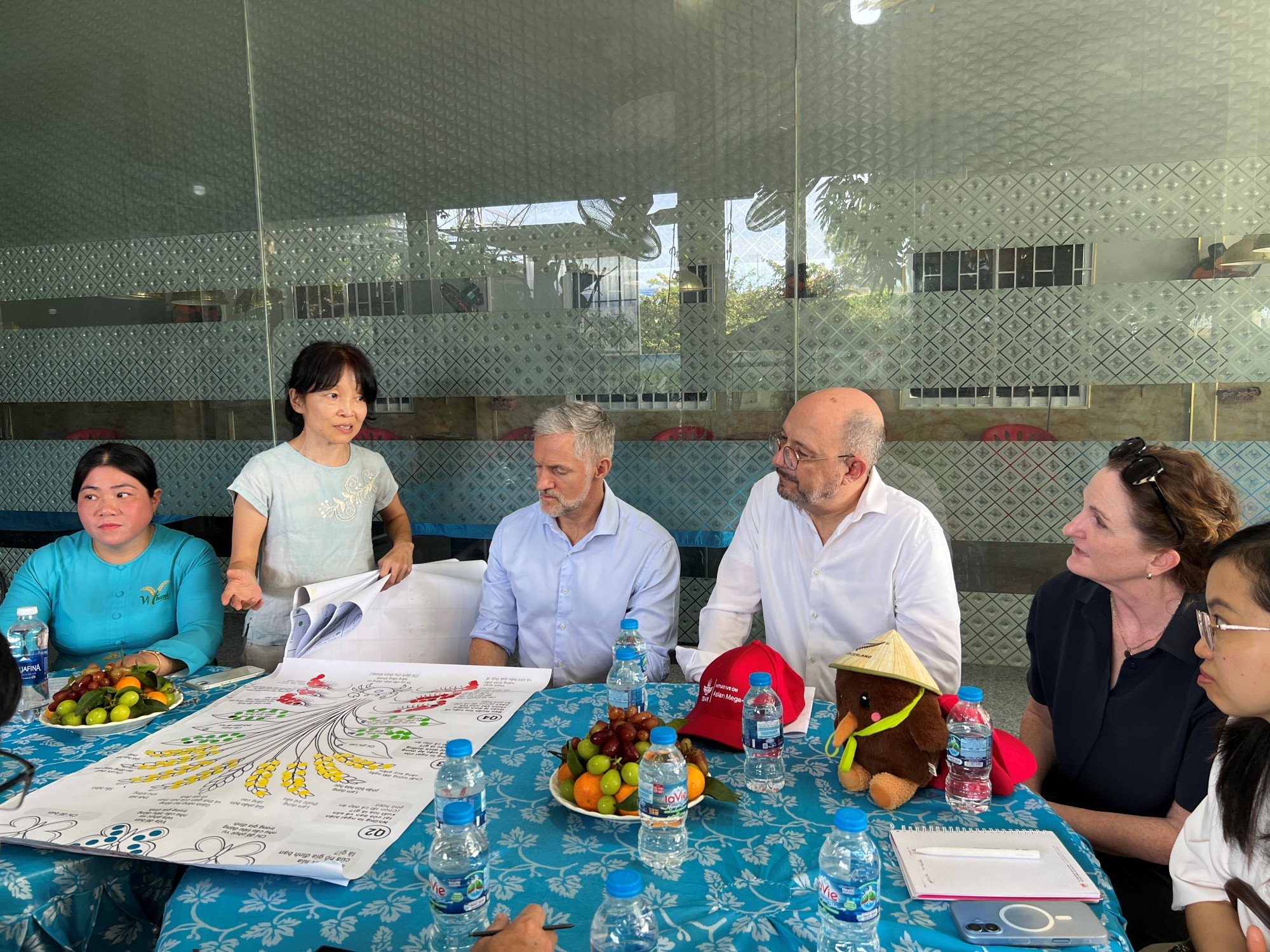
Dr. Nozomi Kawarazuka, a scientist at the International Potato Center (CIP), drew attention to a gap between who attends agricultural training and who helps make farming decisions at home. When training is delivered mainly through cooperatives led by men, it can miss women who already play a role in managing farms and making decisions about production. Reaching women directly through women-led cooperatives can give more household members access to the technical knowledge they need to decide which practices to adopt.
The delegation also heard how rural women contribute to environmental efforts through activities such as sorting household waste and turning water hyacinth into handicrafts. Making handicrafts from water hyacinth, for example, puts a local material to use and can create income for women. G4 representatives emphasized that women should also have a voice in decisions about the transition to low-emission agriculture, including those that affect their livelihoods.
As the 1Mha Program expands, cooperatives like Kien Thanh can help farmers assess which practices suit their fields and get the technical support to adopt them. Bringing women into those conversations from the start gives more of the people who manage farms a say in how low-emission rice production takes shape in the Mekong Delta.