International Delegates Explore High-Quality, Low-Emission Rice Production and Circular Economy Models in Can Tho, Viet Nam
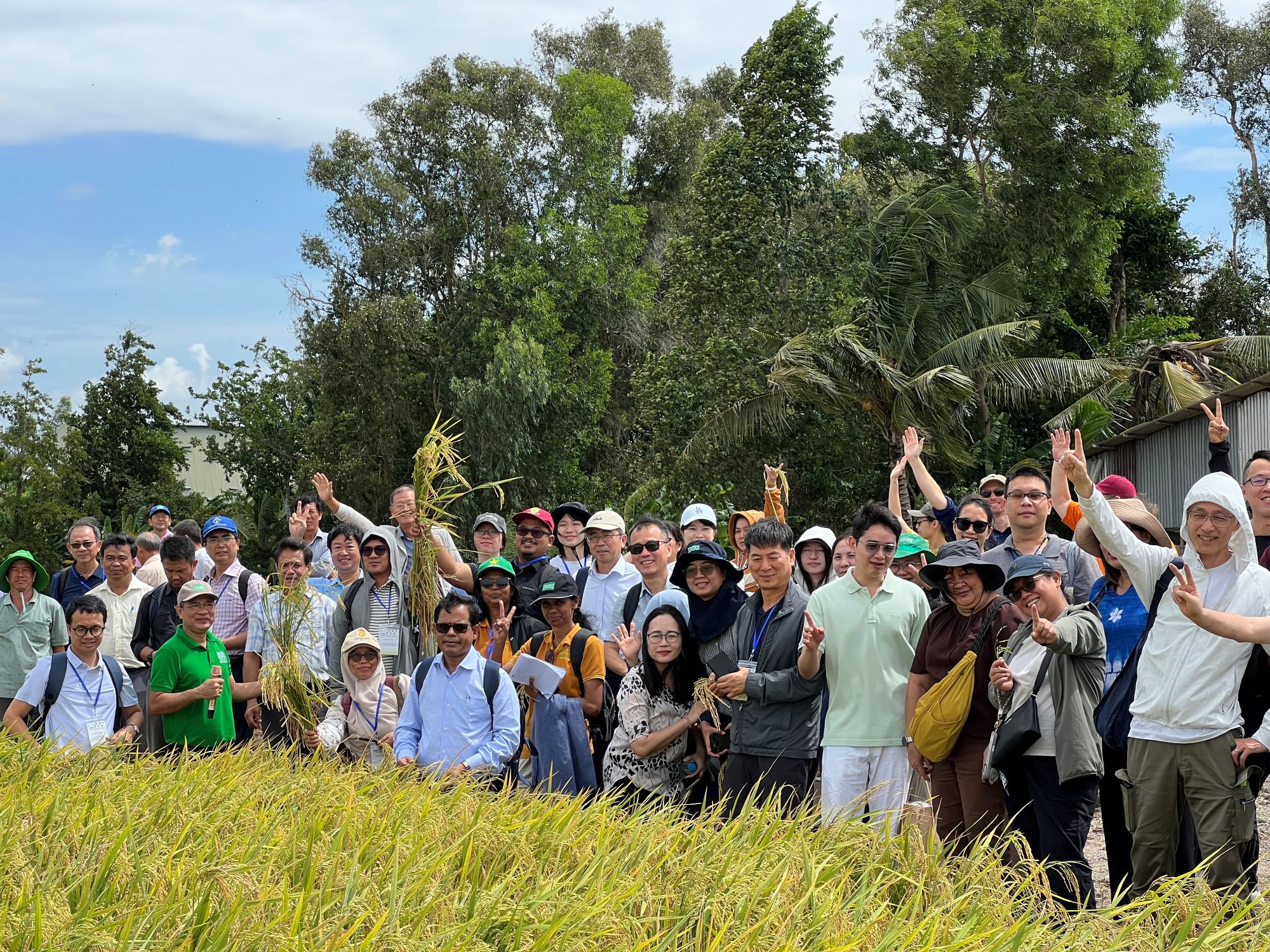
Can Tho, Vietnam (24 July 2026) — As nations across Asia and the Pacific race to align food security with global climate commitments, Viet Nam’s Mekong Delta is emerging as a critical proving ground for scalable, low-emission agriculture.
The recent gathering of international delegates from 15 countries at the Tien Thuan Agricultural Cooperative in Can Tho City underscored a growing global momentum: transforming sustainable rice production from localized pilot projects into large-scale, country-led strategic initiatives.
The field visit showcased two key national initiatives: the One Million Hectares (1Mha) High-Quality, Low-Emission Rice Production Model and the Rice Straw-Based Circular Economy Model.
The event was co-organized by the International Rice Research Institute (IRRI), the Viet Nam Academy of Agricultural Sciences (VAAS), the Asian Food and Agriculture Cooperation Initiative (AFACI), the Cuu Long Delta Rice Research Institute (CLRRI), the Rural Development Administration–AFACI Program (Republic of Korea), and the Food and Fertilizer Technology Center for the Asian and Pacific Region (FFTC-ASPAC).
The visit highlighted Can Tho City as a flagship region for low-emission farming while providing a platform for international researchers, policymakers, and development partners to exchange knowledge on greenhouse gas mitigation and climate-smart technologies.
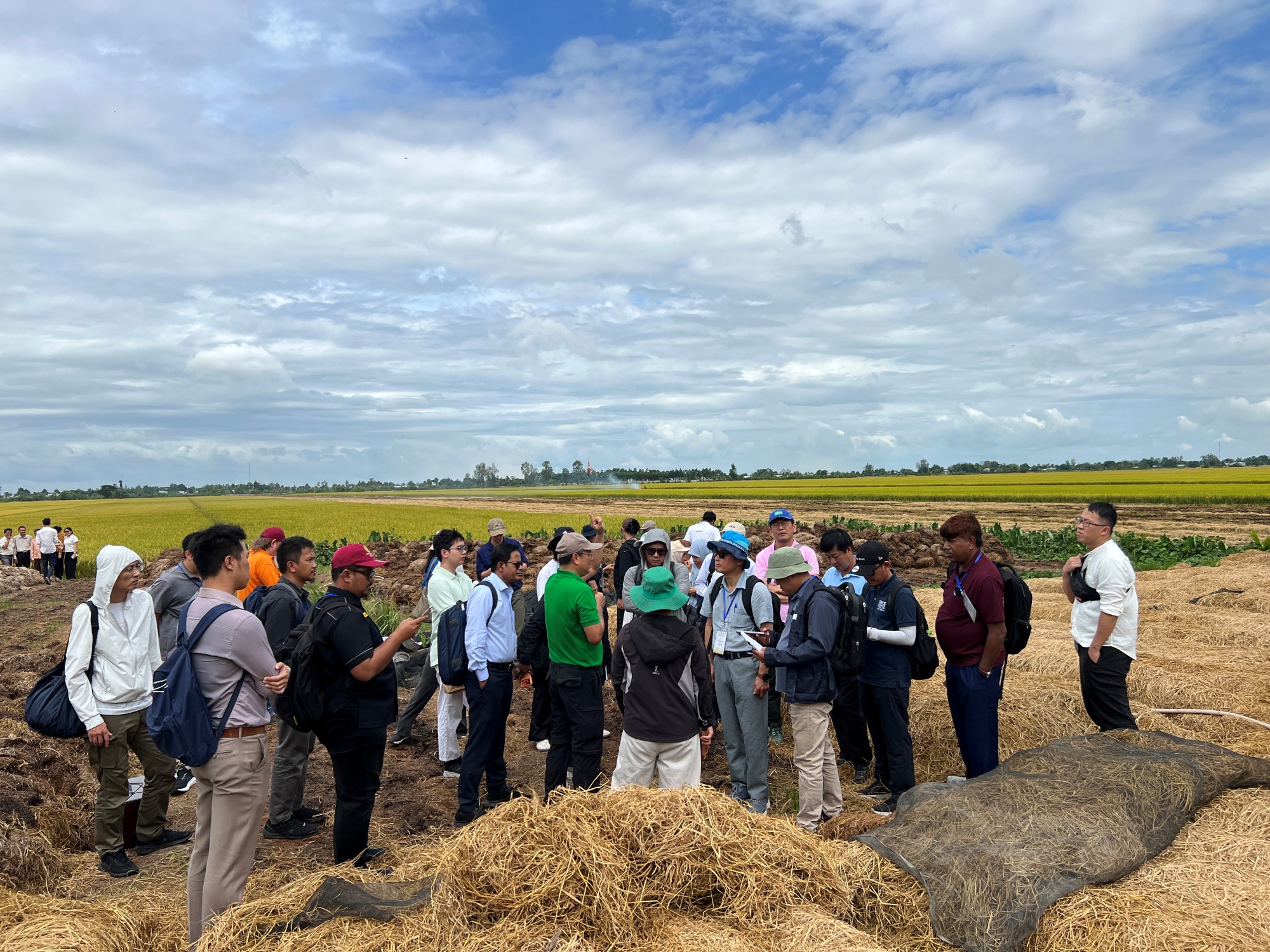
During the field visit, participants observed sustainable practices in action across local rice fields.
Following three successful pilot seasons—Summer–Autumn 2024, Autumn–Winter 2024, and Winter–Spring 2024–2025—the Tien Thuan Agricultural Cooperative expanded its low-emission farming area from 50 hectares to 120 hectares, according to Cooperative Director Mr. Nguyen Cao Khai.
Mr. Thai Thanh Tan, Deputy Director of the Can Tho Sub-Department of Plant Production and Protection, presented data highlighting the tangible benefits of the 1Mha model over conventional practices. The initiative significantly cut resource use—reducing nitrogen fertilizer by roughly 30%, irrigation water by 20–30%, and pesticides by 25%, while optimizing seed rates down to 60 kg per hectare. These input savings paid off in the field: grain yields rose by approximately 7%, driving a 20% increase in overall profits for local farmers. Reflecting on the impact of the demonstration, Mr. Tan emphasized that the visit provided a crucial platform to showcase Vietnam’s achievements in sustainable rice production while fostering global knowledge exchange on climate change adaptation.
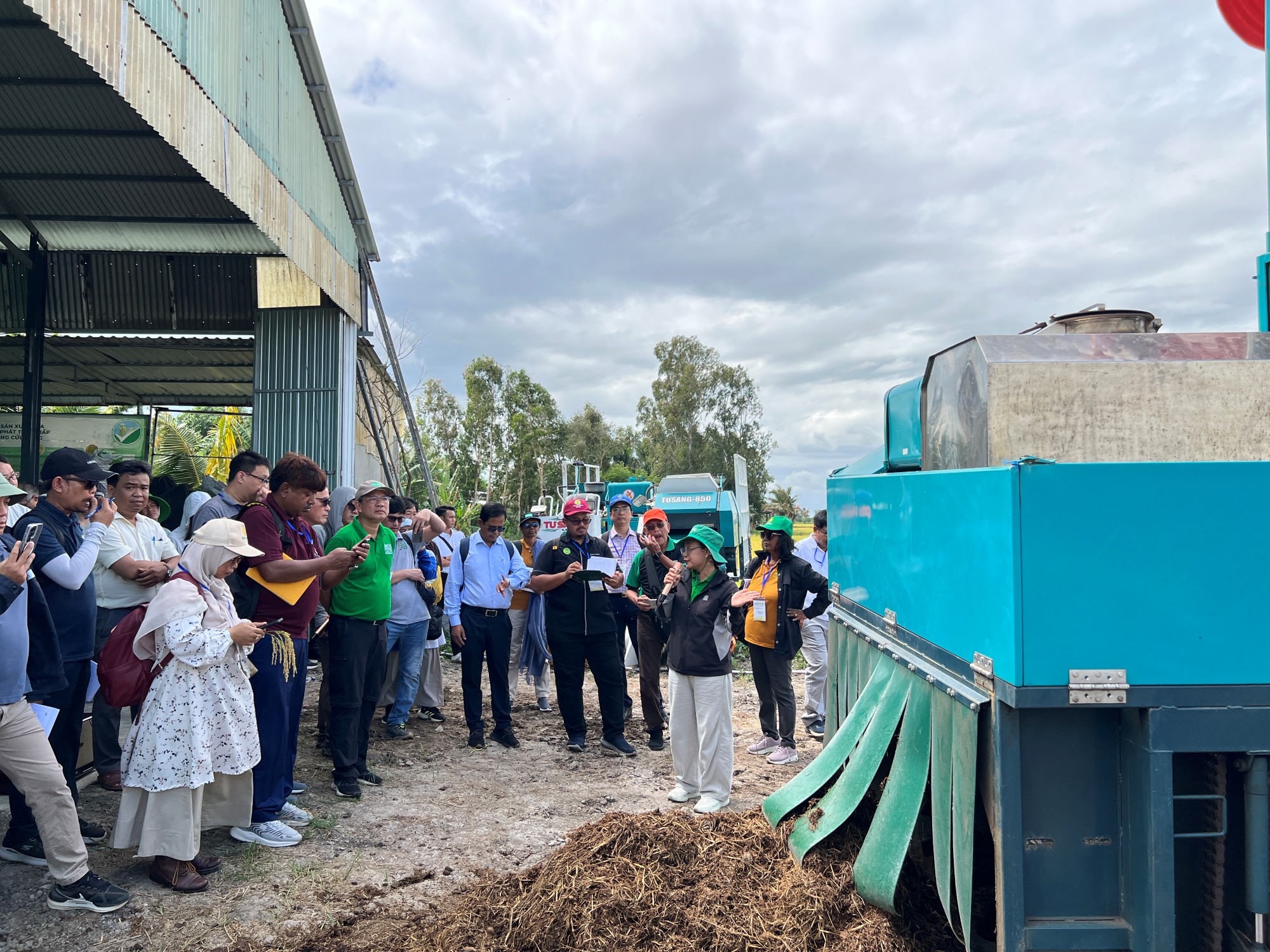
Beyond field management, delegates explored how IRRI and local partners are helping farmers turn agricultural waste into economic value.
Through mechanized collection technologies supported by IRRI, farmers now gather leftover rice straw post-harvest rather than burning it in the open field. Local farmers have been trained in seasonal mushroom cultivation using both open-field and indoor systems.
After mushroom harvesting, the spent substrate is composted and reapplied to rice and horticultural crops as organic fertilizer. This circular approach generates an additional income of VND 5–6 million (USD 190-228) per hectare per crop for participating farming households while significantly reducing field burning emissions.
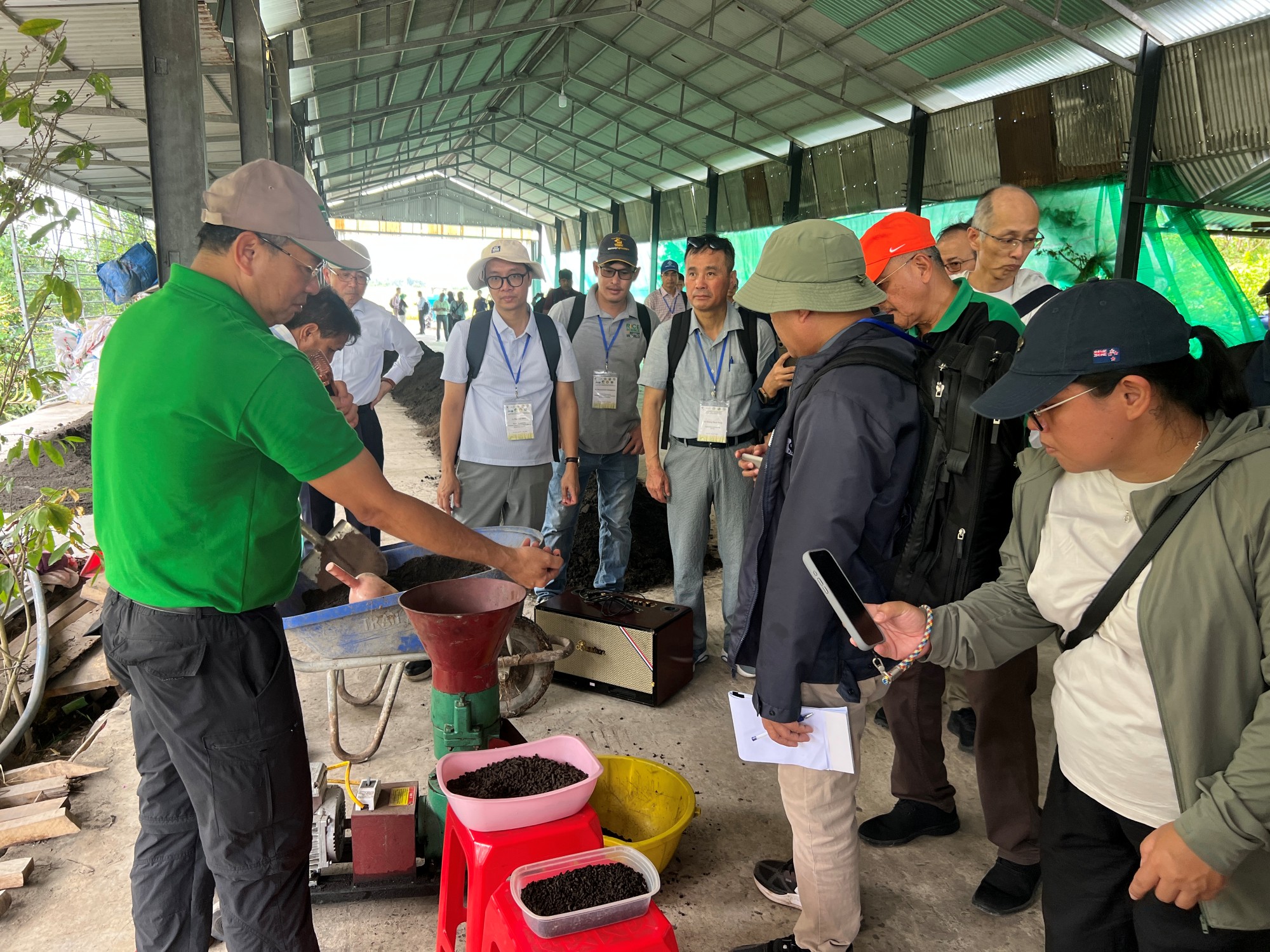
Throughout the tour, delegates discussed core components of the 1Mha technical guidelines, including: high-yielding, resilient rice variety selection, precision nutrient management and reduced seeding rates, Alternate Wetting and Drying water management techniques, and greenhouse gas monitoring protocols for straw management.
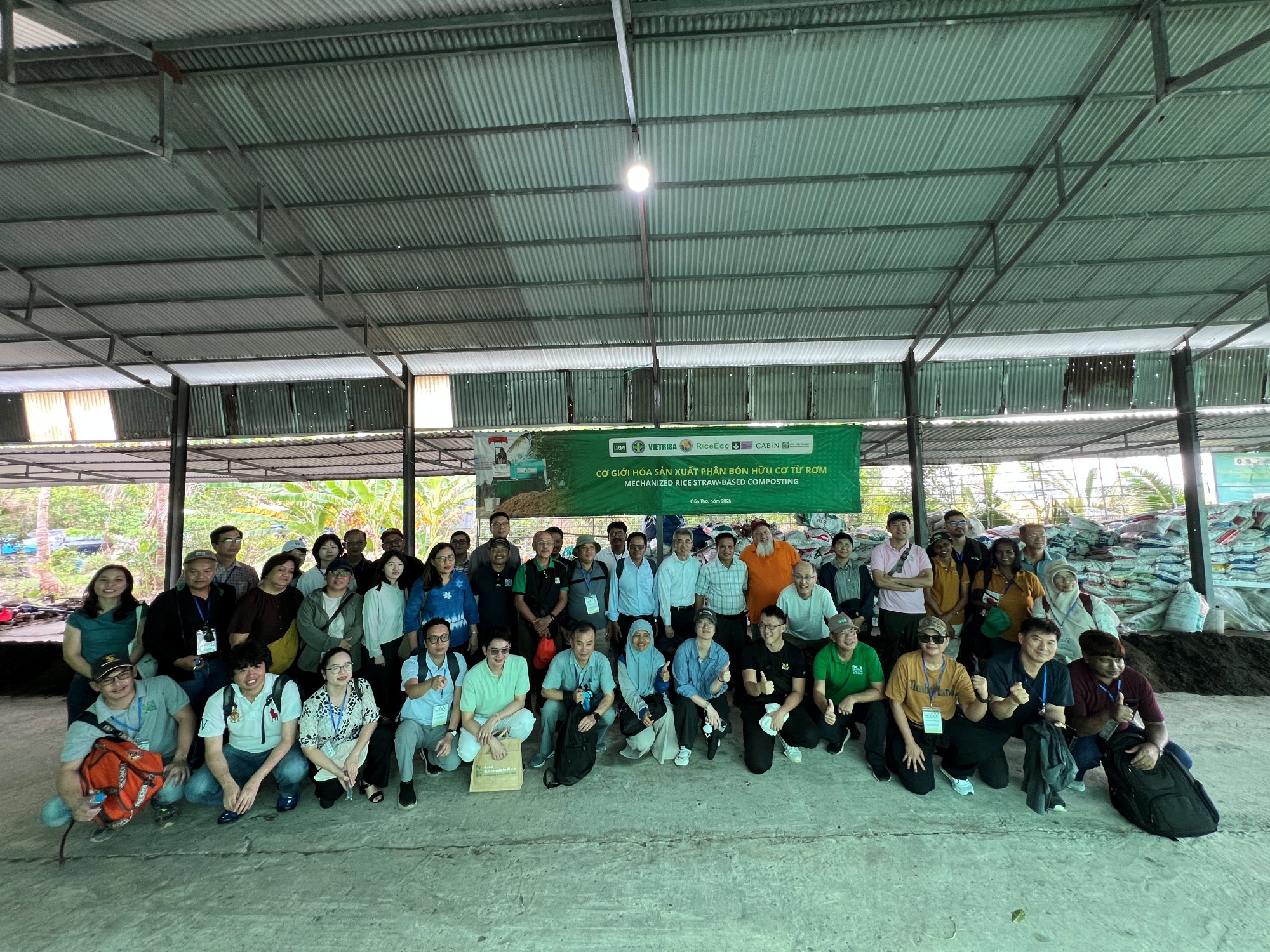
These field innovations and circular economy initiatives are supported by multi-partner international efforts, including the CGIAR Scaling for Impact Program, the Taiwan ICDF-supported CABIN Project (Capacity Building for Sustainable and Low-Carbon Rice Innovations in Southeast Asia), and the Mekong–Republic of Korea Cooperation Fund-supported RiceEco Project (Rice Straw-Based Circular Economy for Improved Biodiversity and Sustainability).