IRRI and partners demonstrate cost savings and sustainable rice farming solutions in Vietnam’s Red River Delta
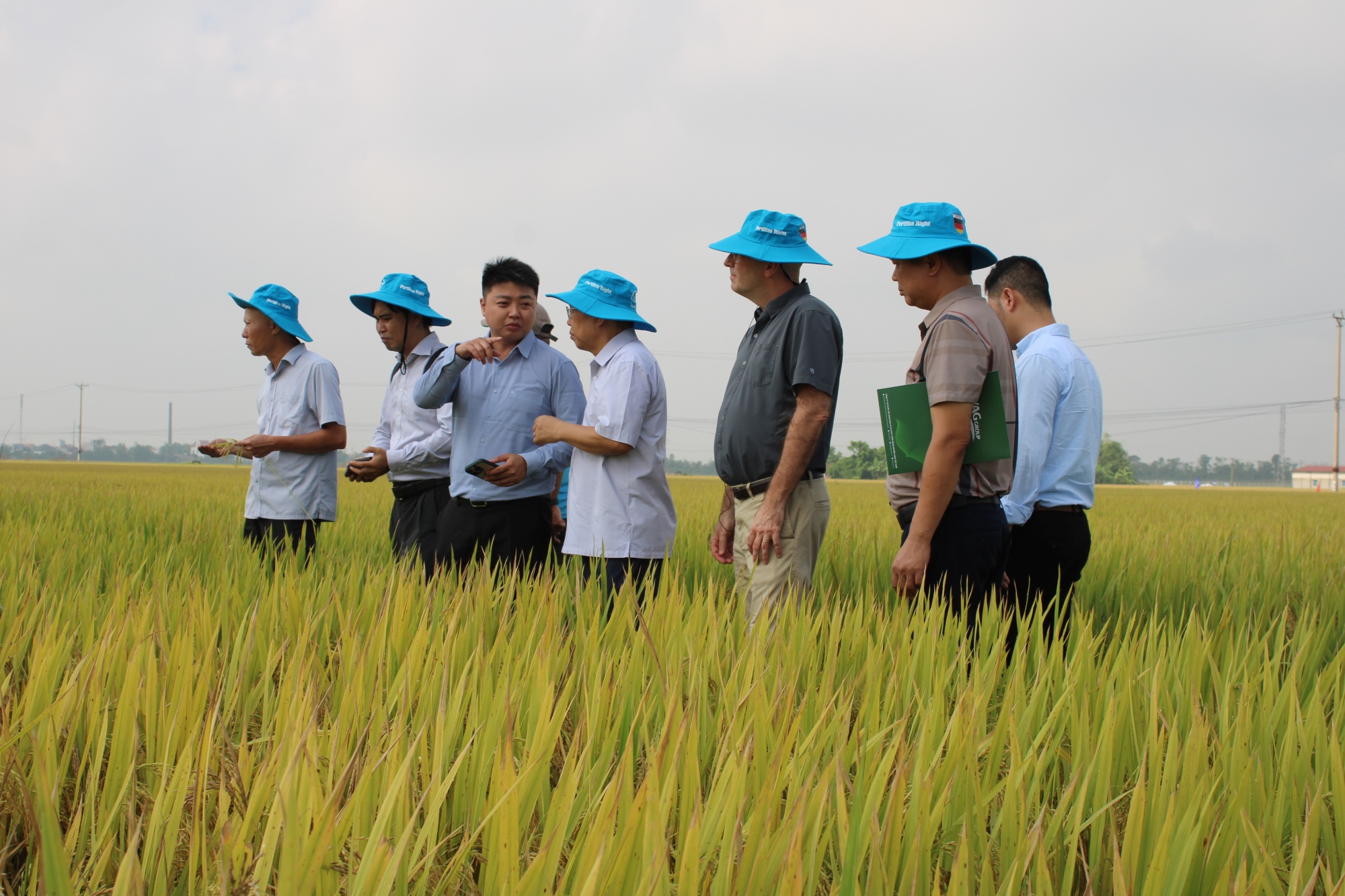
Ninh Binh, Vietnam (16 October 2026) — The International Rice Research Institute (IRRI), in collaboration with the Ninh Binh Department of Agriculture and Environment and Vietnam Green Agriculture Investment and Development Group Joint Stock Company (VAG Group), convened a review workshop on the High-Efficiency, Green, and Sustainable Rice Farming Model, highlighting promising results in reducing production costs, improving fertilizer-use efficiency, and promoting circular agriculture.
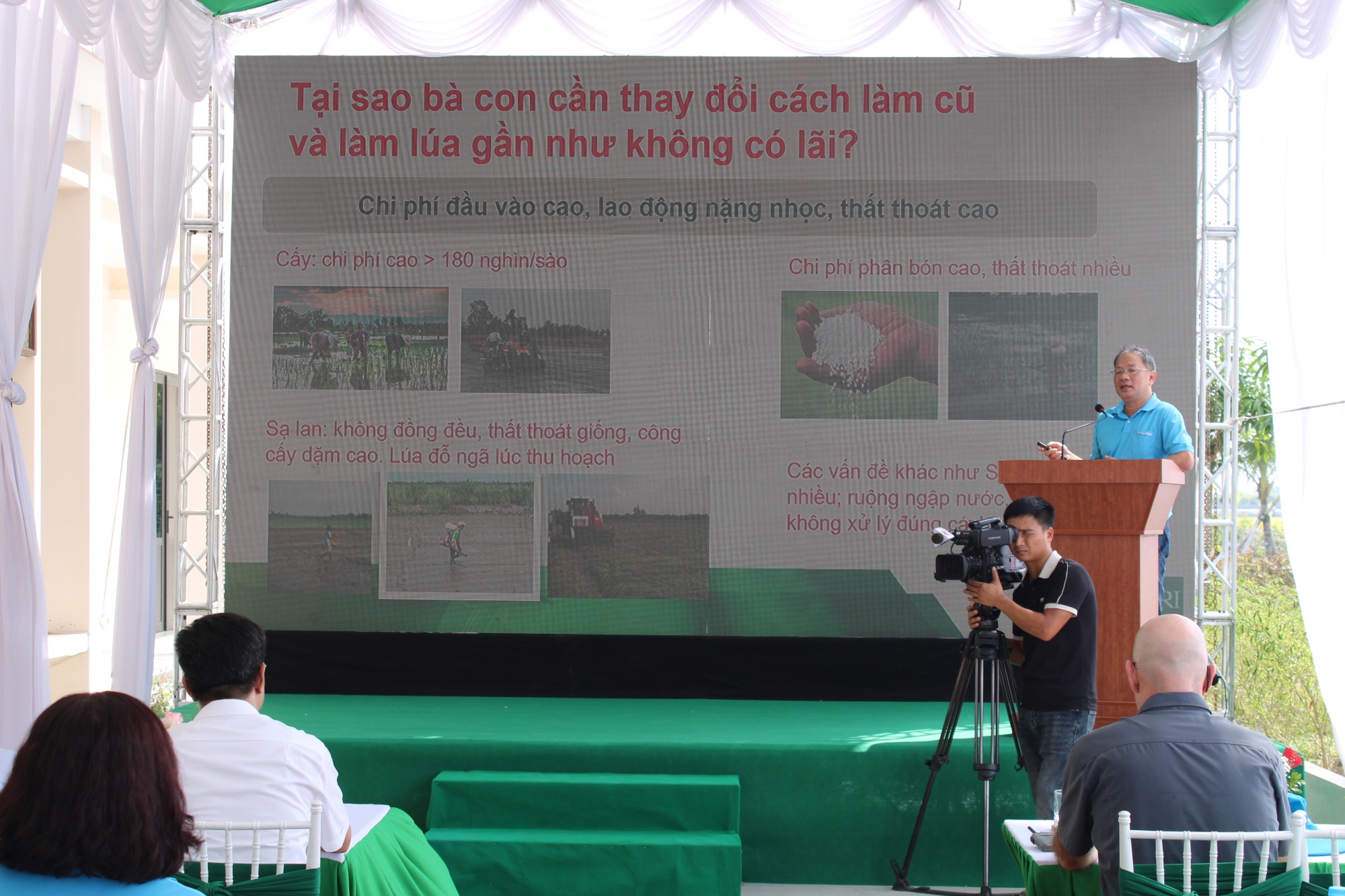
Held in Nghia Son Commune, the event brought together nearly 100 representatives from government agencies, research institutions, agricultural cooperatives, farmers, private sector companies, and development partners to assess the model's performance and explore opportunities for scaling across Vietnam's Red River Delta.
Established in July 2026, the 2.2-hectare demonstration used the LP5 rice variety and introduced mechanized row direct seeding combined with fertilizer deep placement (mDSR-FDP), developed by IRRI and Tu Sang Agricultural Machinery Company. The technology integrates precise seed placement and fertilizer application, reducing labor requirements and improving the efficiency of agricultural inputs.
Following three months of implementation during the 2026 rice season, monitoring results showed that the model reduced production costs by an average of 23.6%, equivalent to approximately VND 9.3 million (USD 359) per hectare, compared with conventional practices, including broadcasting, mechanical transplanting, and manual transplanting.
Crop establishment costs declined from more than VND 5 million (USD 193) to VND 1.67 million (USD 64) per hectare, while fertilizer costs decreased from VND 9.7 million (USD 375) to VND 5.7 million (USD 220) per hectare. Net profits increased by more than VND 5 million (USD 193) per hectare.

The model integrates the 4R Nutrient Stewardship framework, applying the Right Source of fertilizer, at the Right Rate, at the Right Time, and in the Right Place, with mechanized direct seeding and fertilizer deep placement to improve nutrient-use efficiency, minimize fertilizer losses, and support healthier rice growth. It also promotes circular agriculture by converting rice straw into organic fertilizer, helping improve soil health, reduce straw burning, and create additional economic value from agricultural by-products.
“The scientific value of the model lies in creating a synchronized solution that transforms the farming system to adapt to the ecological conditions and farming practices in the Red River Delta,” explained Dr. Nguyen Van Hung, Senior Scientist at IRRI.
A key highlight of the initiative was the participation of three fertilizer companies, MTK-Innova Ag, BioWish, and BOF/AMT, testing improved fertilizer technologies and products incorporating U.S.-sourced technologies and materials under local rice-growing conditions.
During the field visit, participants observed experimental plots, discussed the performance of fertilizer innovations, and explored how private sector solutions could complement mechanization and precision nutrient management.
Mr. Mark Petry, Agricultural Counselor at the U.S. Embassy in Hanoi, representing the U.S. Department of Agriculture (USDA), emphasized the importance of private sector engagement in translating research into practical solutions.
“The private sector is essential to turning research into practical solutions for farmers. Fertilizer companies bring innovation, technical expertise, and the ability to scale up technologies such as improved fertilizers and mechanized direct seeding with fertilizer deep placement,” he said.
Petry also highlighted opportunities to deepen bilateral agricultural cooperation through partnerships between U.S. fertilizer companies and Vietnamese businesses, helping bring advanced technologies to more farmers while strengthening agricultural productivity and trade.

Despite promising results, scaling up remains challenging due to fragmented landholdings, inconsistent cropping schedules, and limited access to mechanization services. Agricultural cooperatives will play a key role in addressing these barriers by coordinating production, standardizing farming practices, facilitating technology adoption, and strengthening market linkages.
Mr. Nguyen Sinh Tien, Deputy Director of the Ninh Binh Department of Agriculture and Environment, emphasized the importance of ensuring that innovations are both technically effective and appropriate for local production conditions.
Building on the demonstration, IRRI, VAG Group, and partners plan to further refine the technologies, continue testing during the Spring 2027 cropping season, and strengthen partnerships with local cooperatives to support wider adoption.

The activity was supported by the USDA Fertilize Right Project, the CGIAR Sustainable Farming Program (SFP), and the CGIAR Scaling for Impact (S4I) Program.