IRRI at CED9: Connecting climate action, clean air, water, and nature through sustainable rice systems
- Improving urban air quality depends on transforming rural practices, specifically by transitioning to a circular bioeconomy that repurposes agricultural residues to eliminate open-field burning.
- Upscaling nature-based solutions from isolated projects to regional frameworks requires robust scientific guidance and data-driven adaptation to local agricultural landscapes.
- Optimizing agricultural water efficiency and groundwater recharge is essential to safeguard regional food security and stabilize rural livelihoods against rising global temperatures.
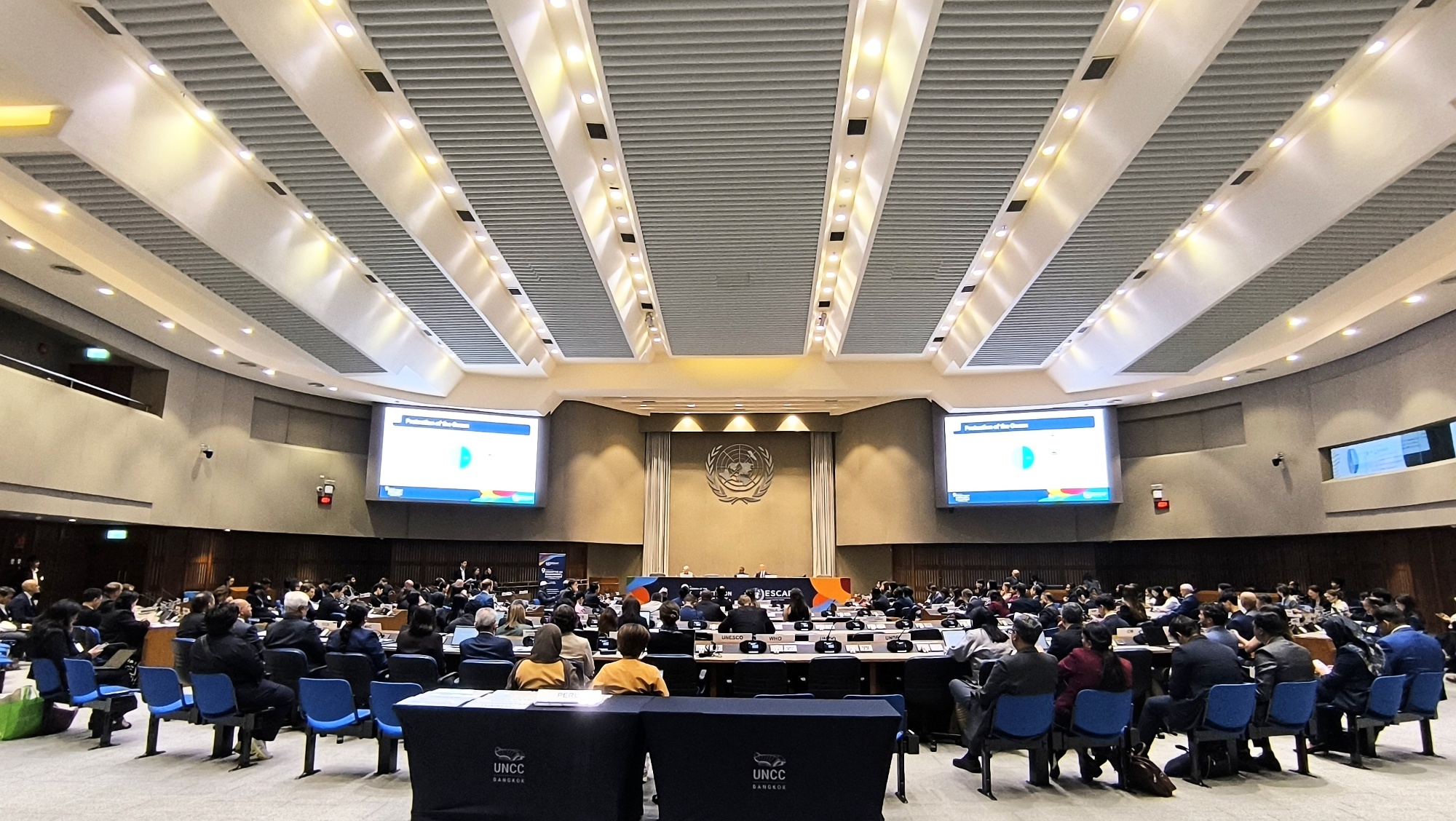
BANGKOK, Thailand (July 1–3, 2026) — Ministers and senior government representatives from across Asia and the Pacific adopted new regional commitments to advance climate action, reduce pollution, and strengthen environmental governance at the Ninth Session of the Committee on Environment and Development (CED9), convened by the United Nations Economic and Social Commission for Asia and the Pacific (UN ESCAP).
CED9 is high-level intergovernmental meeting that brings together leaders from Asia and the Pacific to create policies that combat climate change, reduce pollution, and promote green economies. It aims to help countries achieve sustainable economic growth while protecting the planet.
For International Rice Research Institute’s (IRRI), CED9’s regional agenda reinforces the importance of advancing sustainable and climate-resilient rice systems, with rice sitting at the intersection of its priorities, offering scalable mechanisms for lower emissions, cleaner air, the circular use of agricultural residues, and more resilient rural livelihoods.
While countries in the region have adopted national targets to achieve carbon neutrality between 2050 and 2070, the session highlighted persistent challenges in translating these high-level ambitions into binding legal frameworks, robust data monitoring, and verifiable reporting systems.
Throughout the session, delegates emphasized that the region’s environmental challenges can no longer be managed in isolation. For instance, it was stated that approximately 90 percent of the regional population remains exposed to unsafe air quality.
The Committee adopted the Ministerial Declaration on Environment and Development in Asia and the Pacific, 2026, alongside the Regional Programme of Action on Advancing Synergies for Sustainable Development in Asia and the Pacific (2026–2030). These frameworks place a strong emphasis on climate adaptation, ecosystem conservation, circular bioeconomy, pollution reduction, and environmental governance, setting the strategic direction for member states based on national priorities.
Key themes of climate change, biodiversity loss, air pollution, water stress, waste management, and development finance are deeply interconnected and can no longer be addressed by sectoral, siloed approaches.
From Waste to Resource: The Rice Straw Challenge
One immediate example of these environmental synergies lies in the management of rice straw as well as other residues. Across much of Asia, rice straw is frequently treated as waste. When smallholder farmers lack affordable alternatives, open-field burning remains the fastest way to clear land.
However, the consequences extend far beyond the farm. Smoke from agricultural burning contributes significantly to seasonal haze and degraded air quality, a challenge that is particularly acute in South Asia and Southeast Asia. At CED9, delegates acknowledged that achieving cleaner air requires sustainable agricultural solutions to avoid open burning, recognizing that urban air quality cannot be separated from the management of agricultural landscapes.
A circular bioeconomy approach may offer a viable pathway to shift agricultural residue from a liability into an economic resource. During a dedicated side event on the bioeconomy, member states like Bangladesh emphasized linking natural resource protection with direct benefits for farmers, prioritizing bioproducts such as biogas and biofertilizers.
Japan specifically highlighted that rice residues like straw can be transformed into value-added products that support rural income, job creation, and climate change mitigation. The consensus among regional partners was that many promising technical practices already exist; the immediate challenge is to connect, finance, and scale them.
Science-Based Nature Solutions and Water Security
Nature-based Solutions (NbS) formed another core pillar of the ministerial dialogue, with NbS now included in the climate action plans of 94 percent of countries in the region, according to the International Union for the Conservation of Nature (IUCN). Delegates from the Russian Federation and other nations stressed that the deployment of NbS must be rigorously guided by scientific evidence, while representatives from the Pacific emphasized the crucial role of local knowledge to ensure solutions fit local ecological and social realities.
Rice production is not automatically a nature-based solution. However, rice landscapes can actively contribute to nature-positive, ecosystem-based targets when managed properly—specifically through optimized water regimes, reduced biomass burning, improved soil health, and habitat conservation. This opens key avenues for cross-sector collaboration. While conservation organizations bring vital expertise in ecosystem restoration and landscape planning, IRRI complements this with science-tested agronomic solutions, field data, and decades of partnership with national agricultural research and extension systems.
Water management remains an equally critical linkage, as highlighted by countries like Thailand, Bangladesh, and Indonesia, which emphasized water security, water quality monitoring, and groundwater recharge. Transitioning to improved rice water management methodologies reduces methane emissions, improves resource efficiency, and strengthens farm-level adaptation to climate stress, while supporting wider efforts to protect water-related ecosystems.
Implementing the Ambition
The transition from climate ambition to implementation is technically and logistically complex. A major recurring barrier highlighted during the sessions is the severe lack of investment and misaligned planning. Adaptation finance remains insufficient, with presented estimates reporting that only around 10 percent of global climate finance is currently directed toward adaptation.
Furthermore, the Asian Development Bank (ADB) pointed out a key institutional bottleneck: engaging only environment ministries is insufficient when investment decisions depend on complex financing arrangements. To overcome siloed planning and unlock funding, national ministries of finance must be directly involved in the design of cross-sectoral initiatives.
This is where applied agricultural research plays a decisive role. Through evidence generation, data tracking, multi-stakeholder partnerships, and targeted policy support, IRRI is positioned to help countries translate high-level regional commitments into verified action on the ground. Given its immense footprint and vital role in food security, the rice sector represents a natural, high-impact starting point for sustainable transformation in Asia.