IRRI, CGIAR Promote Women’s Leadership at GCWAS2026; Initiatives Win Recognition
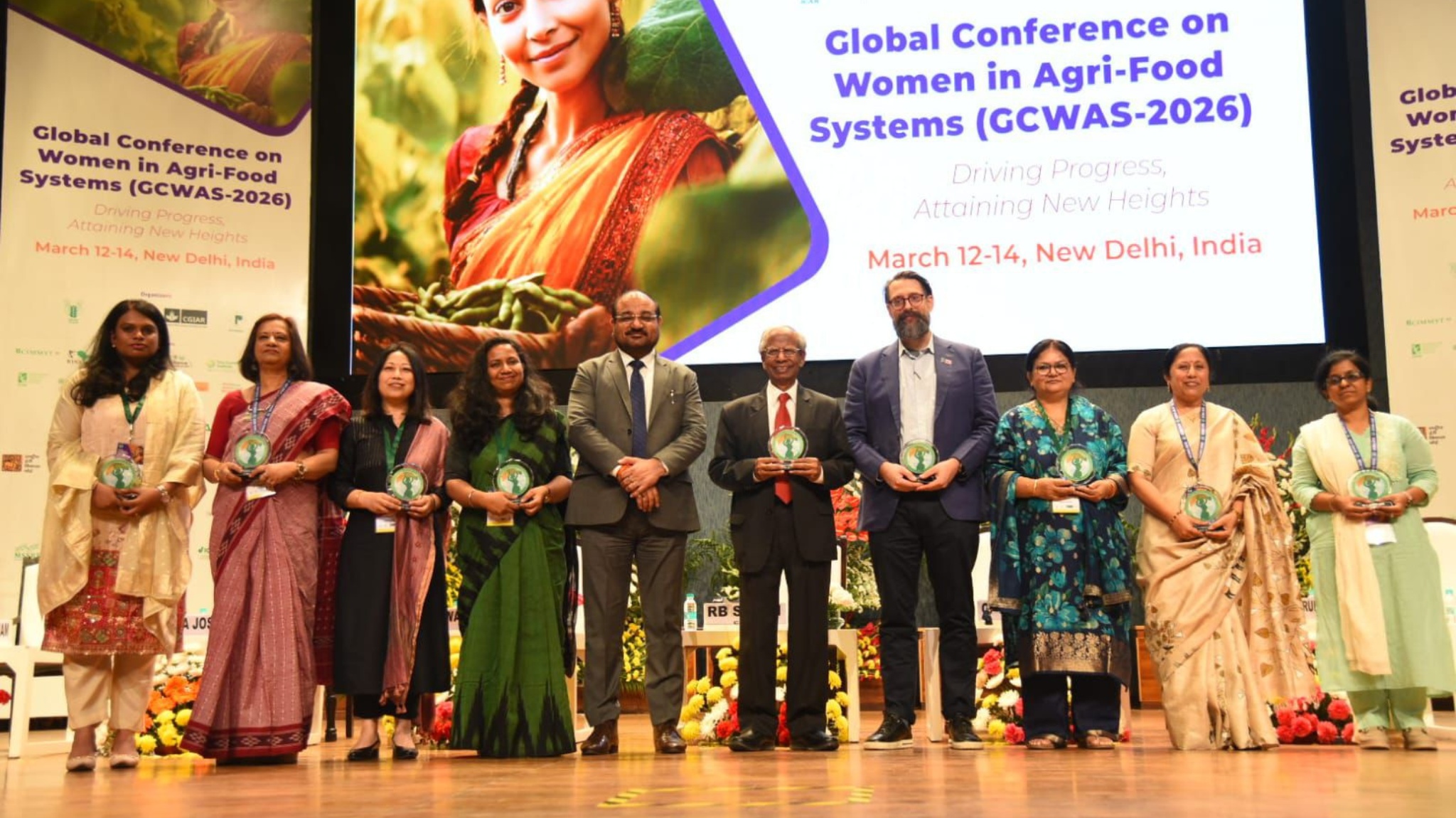
NEW DELHI, India (12-14 March 2026) — As key knowledge partners at the Global Conference on Women in Agrifood Systems (GCWAS2026), the International Rice Research Institute (IRRI) and CGIAR helped steer global discussions toward actionable, research-backed pathways for advancing women’s leadership in agrifood systems. Held as a flagship event for 2026, the International Year of Women Farmers, the conference marked a shift from advocacy to implementation, highlighting how science and innovation can drive inclusive and resilient agricultural development.
During the conference, IRRI demonstrated how gender-responsive technologies, including climate-smart seed systems and digital advisory tools, strengthen agri-value chains and promote resilience and inclusion for women farmers.
What is really needed for women's empowerment?
The three-day conference, organized by Trust for Advancement of Agricultural Sciences (TAAS) with Indian Council of Agricultural Research (ICAR), was inaugurated by the President of India Smt. Droupadi Murmu at the ICAR Convention Centre, NASC Complex. Bringing together over 700 participants from 18 countries, it featured nine sessions on women’s empowerment in the agri-food system, including global leadership, gender equality, technology, policy, economic advancement, market access, and youth engagement.
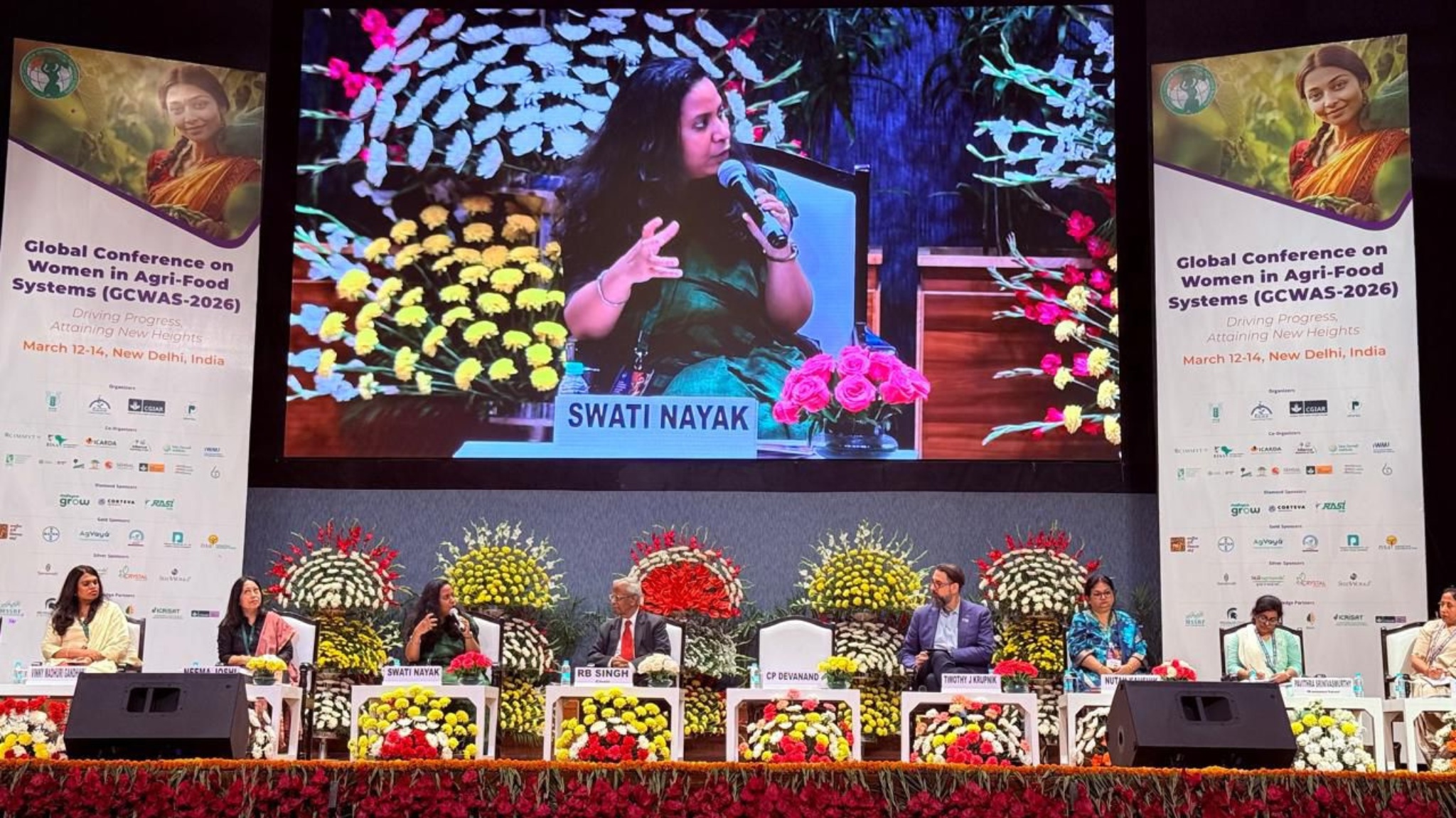
During a technical session, Dr. Swati Nayak, IRRI Seed System Scientist and Country Manager ad interim, emphasized the importance of advancing women’s leadership in seed systems and agri-enterprises. "True empowerment requires not only participation but also ownership and control over productive resources and access to markets," she said.
Dr. Nayak further emphasized the need for enabling ecosystems, such as access to credit, market linkages, and gender-inclusive capacity-building tools, to help women entrepreneurs build sustainable seed businesses.
Meanwhile, Nicoline de Haan, Director of the CGIAR Gender Equality and Inclusion Accelerator, stressed the need to move to evidence-based, systemic transformation. She called for dismantling institutions rather than focusing solely on individual farmer capacity.
Dual Scientific Recognitions for IRRI Bangladesh
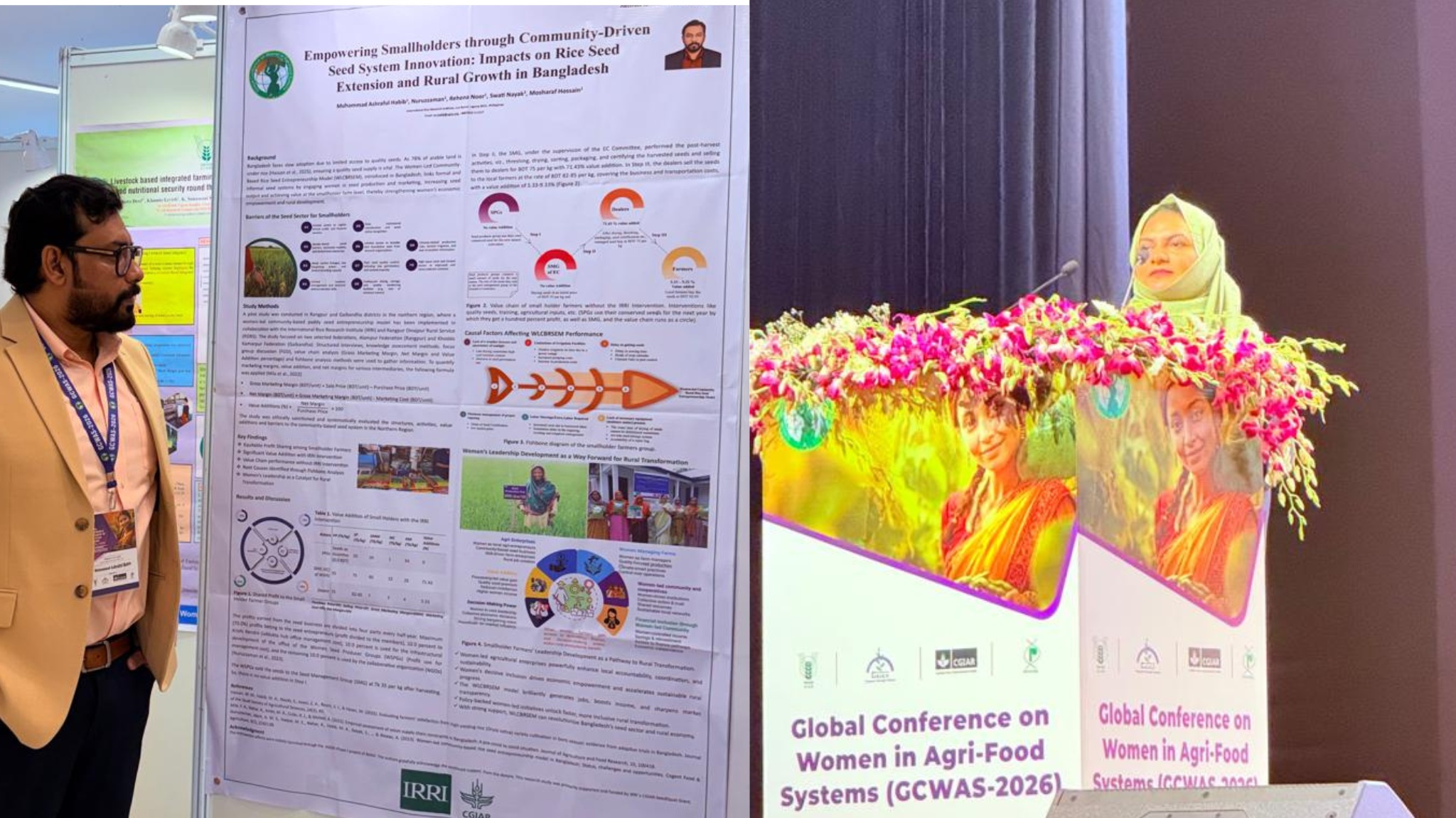
IRRI Bangladesh received two prestigious scientific awards at GCWAS2026. Lead Specialist, Seed Systems, Dr. Muhammad Ashraful Habib won the best poster presentation, while Assistant Manager Rehana Noor received the best oral presentation award.
Two research initiatives were also recognized during the conference. The CGIAR initiative on women-led, community-driven seed enterprises increased quality rice seed production in northern Bangladesh from 80 tons in 2021–22 to nearly 200 tons in 2023–24. This model accelerated adoption of high-yielding, stress-tolerant varieties, strengthened local seed knowledge, and enabled women entrepreneurs to achieve up to 71% higher value addition, providing a scalable pathway for resilient rural development and inclusive agribusiness.
Separately, an HSBC-funded study in the Haor region identified barriers to seed certification, including inadequate post-harvest drying infrastructure, limited seed-testing services, and weak institutional coordination. The findings highlight the need for gender-responsive capacity-building and integration of community seed banks into formal certification systems to improve equitable seed access and livelihoods in climate-vulnerable areas.
Engaging Forums, Dialogues, and Innovation Showcases
The conference resulted in actionable commitments and new collaborations across research, policy, and development communities. Key areas of focus included gender equality, economic empowerment, digital inclusion, climate resilience, leadership development, and inclusive value chains.
A major outcome was the adoption of the Delhi Declaration, developed under the technical leadership of IRRI, CGIAR, and partners. The declaration calls for the establishment of a Global Alliance on Women in Agrifood Systems, aimed at advancing institutional reform, ensuring equitable access to resources, and strengthening data-driven accountability. It sets a clear direction for enabling women to lead the transition toward climate-resilient, inclusive, and sustainable agrifood systems.
The Women Farmers’ Forum, Youth Forum, and innovation exhibition provided platforms for dialogue, knowledge exchange, and showcasing women-focused agricultural technologies, highlighting solutions that improve productivity, reduce labor, and support women-led enterprises.
GCWAS2026 marked a milestone in advancing inclusive, resilient agrifood systems by centering women’s leadership, strengthening global partnerships, and highlighting grassroots innovations with transformative potential.