Why Grain Quality Matters in Modern Rice Breeding

LOS BAÑOS, Laguna (December 10, 2025) – For decades, rice breeding focused on yield and stress tolerance, often overlooking a crucial factor: grain quality. As markets evolve and consumer preferences grow more diverse, traits such as texture, aroma, and nutrition are becoming the main criteria for consumer acceptance.
To help address this, IRRI recently conducted a training titled “Training on Grain Quality Modeling Techniques to Screen High-Value Germplasm.” The program introduced advanced tools for screening rice based on grain quality traits, helping breeders select varieties that better align with consumer expectations.
Why Grain Quality Matters

Dr. Nese Sreenivasulu, Head of IRRI’s Grain Quality and Nutrition Center (GQNC), emphasized that rice preferences are no longer uniform. “Southeast Asia favors soft-textured rice, India prefers fluffy grains, and aroma is increasingly important worldwide. Consumers also want rice with improved nutrition, including iron and zinc fortification, and low glycemic index (GI) varieties,” he said.
“These emerging preferences show that rice value chains are changing. Breeding must keep pace, not only to supply high-value grains but also to create products aligned with evolving health and nutrition demands,” Dr. Sreenivasulu added.
Key Domains of Grain Quality
Grain quality affects both consumer satisfaction and market value. Dr. Sreenivasulu highlighted four key traits breeders must consider:
- Milling Quality - Good milling quality ensures rice grains stay whole after processing. Breeding for long, slender grains in the past caused head rice yield to drop from about 65% to 40%, as these fragile grains broke more easily. Since millers ultimately decide which varieties succeed, breeders must focus on grains that can withstand milling, not just look appealing.
- Cooking Quality - Cooking quality varies by region. Southeast Asia prefers soft, tender rice, while India favors rice that is slightly sticky but still fluffy. Past breeding shifted from high-amylose (~25–28%) to intermediate-amylose (~20–23%) types to improve texture, but this unintentionally increased the GI of many varieties. Since texture depends on more than amylose content, breeders need better tools to ensure rice stays appealing and healthy after cooking.
- Aroma - Aromatic rice commands premium prices internationally, but aroma stability can be lost if temperatures are too high during grain development. Without reliable screening tools, breeders struggle to combine high yield with consistent fragrance.
- Nutritional Quality - Consumers increasingly demand low GI rice, higher micronutrients, and pigmented varieties. Premium markets now range from USD 250 per ton for regular rice to as much as USD 1,700 per ton for low GI rice, making grain quality both a key economic driver and important breeding target.
Modern Breeding in a Modern Value Chain
Rice feeds over 4 billion people worldwide and is grown by 144 million farm families. Today, the value chain extends beyond farmers to include millers, traders, processors, consumers, and health-focused markets. Modern breeding must balance all these needs: high yield and resilience for farmers, grain traits for millers, premium quality for traders, texture and taste for consumers, and nutrition for health-conscious buyers.
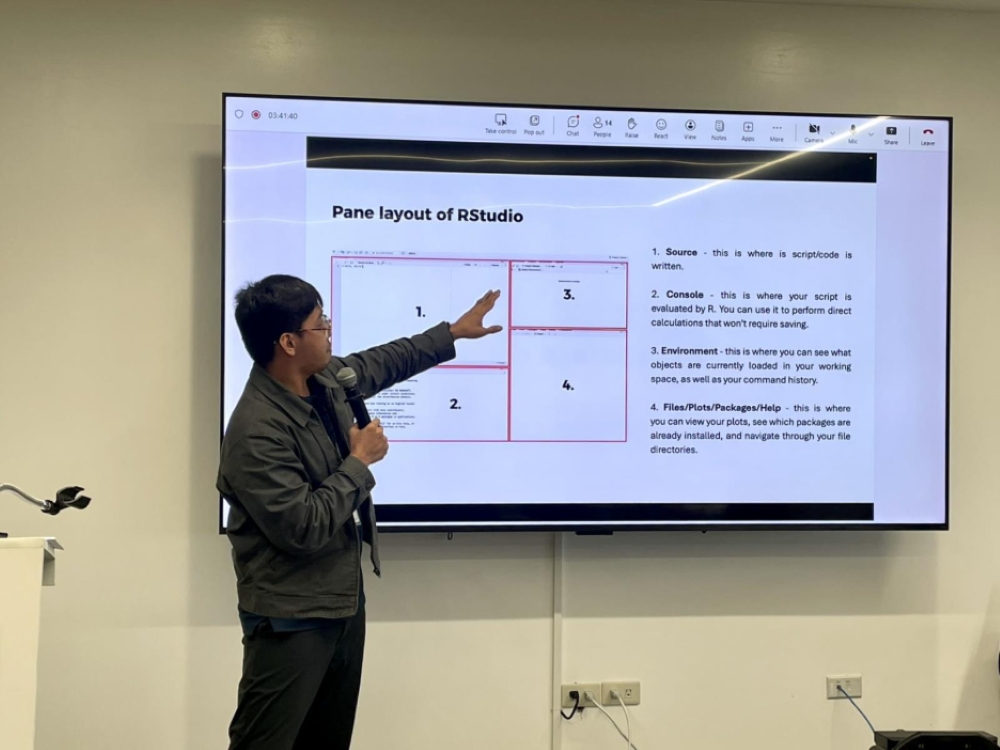
To manage this complexity, the training introduced R programming, AI tools, and modeling techniques for grain quality analysis. Researchers learned to combine sensory, physical, and chemical data into models to guide the selection of rice varieties that align with consumer preferences.

The training, conducted by Glenn Vincent Ong, Reuben James Buenafe, Dr. Rhowell Tiozon Jr., and the GCQC team, prioritized OneRicePH partners from UPLB, IRRI, and DA‑PhilRice, helping the Philippines develop rice varieties that are consumer-preferred, health-oriented, and commercially viable.