Mechanization and digital tools support sustainable rice-shrimp farming in Vietnam
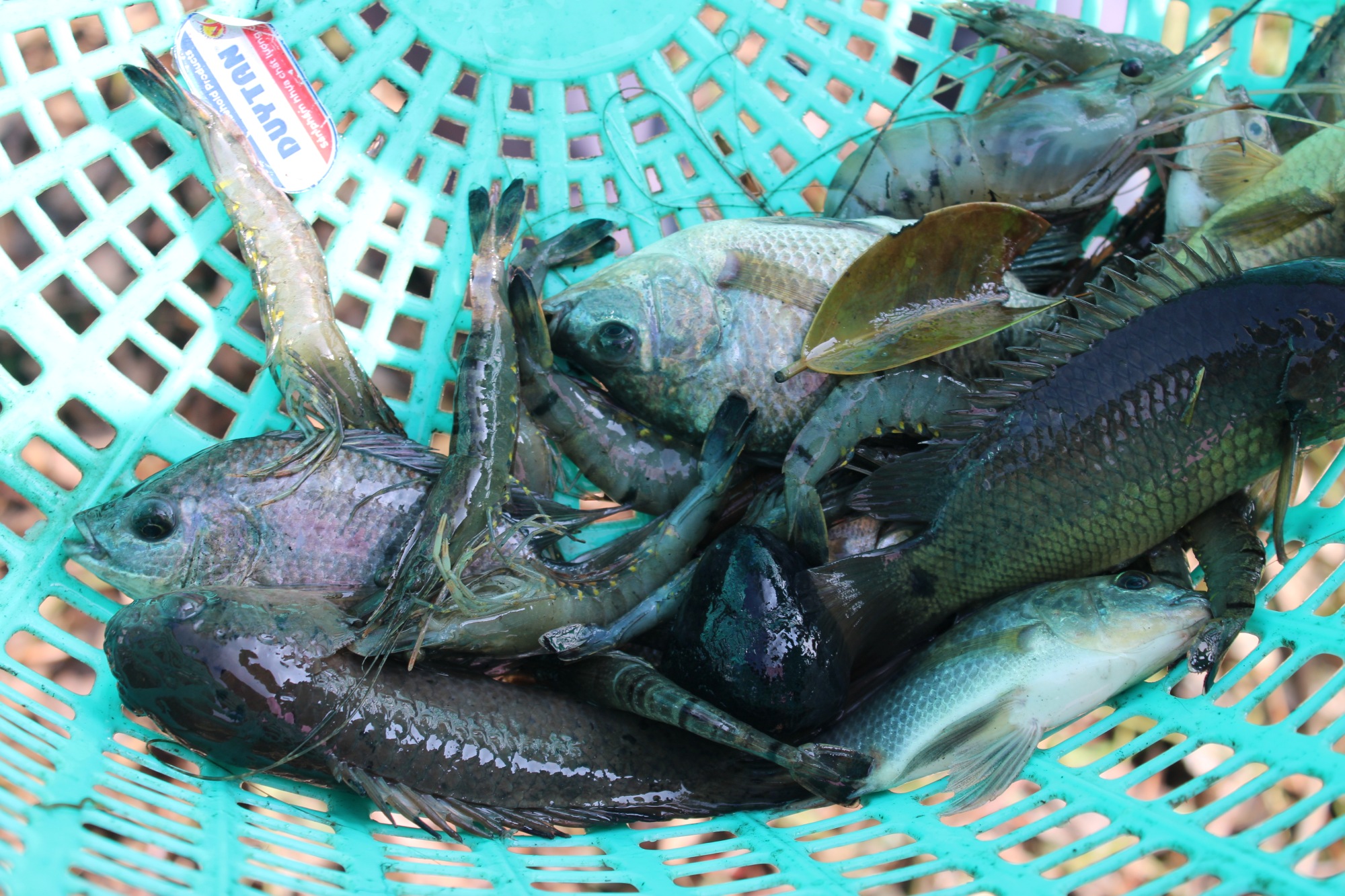
In Vietnam’s Mekong Delta, mechanization, digital tools, and stronger market linkages are helping farmers manage the changing water conditions, production costs, and environmental demands of integrated rice-shrimp systems.
CA MAU, Vietnam, 29 September 2026 — Mechanized row seeding combined with fertilizer deep placement (mDSR-FDP) can reduce laborm, improve crop establishment and enhance input-use efficiency in rice-fish systems in Ca Mau province, Viet Nam's largest shrimp producer. But for it to work, it must be adapted to rice-shrimp conditions and paired with appropriate crop and resource management practices.
To help farmers welcome this practice, the International Rice Research Institute (IRRI), in collaboration with the Ca Mau Department of Agriculture and Environment and the Vietnam Rice Sector Association (VIETRISA), organized a field demonstration of the rice-shrimp farming model and a workshop titled “Advancing Sustainable and Climate-Resilient Rice-Shrimp Systems: Opportunities, Solutions and Value Chain Linkages” in Hong Dan Commune.
Participants from central and local government agencies, research institutes, universities, international organizations and development partners, businesses, cooperatives, and farming communities joined a field demonstration on precision rice farming within the rice-shrimp system at Hoa Phat Agricultural Services Cooperative, where they observed mechanized row seeding combined with fertilizer deep placement (mDSR-FDP) and agricultural drone technology.
The field demonstration was followed by a workshop covering development directions, climate-resilient farming solutions, digital technologies, value chains, branding, markets, and the enabling conditions for the sustainable development of rice-shrimp systems in the Mekong Delta.

“Rice-shrimp systems offer coastal Mekong Delta farmers an opportunity to diversify income and adapt to changing water conditions amid growing climate risks and rising production costs,” said Dr. Madonna Casimero, Senior Scientist at IRRI.
Rice and shrimp production are closely interconnected, making the improvement of the whole system essential to strengthen productivity, profitability, climate resilience, and environmental sustainability while safeguarding water quality, soil health, and the ecological conditions needed for shrimp production.
Dr. Casimero also highlighted that this work supports Vietnam’s ambition to develop one million hectares of high-quality, low-emission rice by 2030 by translating these principles into practical solutions for coastal areas such as Ca Mau that jointly advance productivity, climate adaptation, environmental sustainability, and farmers’ livelihoods.
Digital tools for precision agriculture and climate adaptation
Beyond mechanization, IRRI and its partners are also developing data tools, including rice-shrimp suitability maps, remote sensing data, water forecasts, CS-MAP, saltwater intrusion alerts, and WebGIS, to support precise production management and climate risk management.
Machine learning (ML) combines soil, land-use, topographic, and climate data to generate soil and nutrient maps, while Rice Crop Manager, real-time water sensors, AI assistants, and digital extension support site-specific decisions. Integrating these tools is particularly important for rice-shrimp systems, where production depends closely on fluctuations between saline and freshwater conditions, weather, and water availability.

In his presentation, Mr. Nguyen Van Hung, Project Leader and Senior Scientist at IRRI, shared that nutrients and sowing time account for approximately 66% of the overall importance of the technical factors analyzed in relation to yield gaps, contributing 37% and 29%, respectively. These findings highlight the importance of data-driven management of water, planting schedules, and nutrients to improve production efficiency.
Beyond field-level technical support, the EasyFarm digital platform connects farmers with mechanization services, field management solutions, agricultural inputs, and buyers, supporting the production and marketing of rice, straw, and other agricultural products.
During the workshop, Mr. Le Thanh Tung, President of VIETRISA, moderated a special panel discussion on translating the ecological advantages of rice-shrimp systems into market value.
The discussion aligned with Ca Mau’s direction to develop the “Fragrant Rice-Clean Shrimp” brand in connection with “Ca Mau Ecological Rice,” highlighting the need for consistent production quality, traceability, product standards, and stronger linkages among farmers, cooperatives, and businesses. These elements are essential to building buyer confidence and ensuring that the ecological characteristics promoted through branding are reflected in the products reaching the market.

Summarizing the panelists’ discussion, Mr. Tung emphasized that the key is to translate the advantages of the entire rice-shrimp ecosystem into market value, beyond selling rice and shrimp as separate products. The concept of One land - two seasons – two products – one ecosystem offers a compelling commercial story, but it must be substantiated through verifiable quality, traceability, and standards.
Stronger coordination across the value chain can help connect responsible production practices with market requirements, enabling farmers and cooperatives to benefit when buyers recognize and reward these ecological advantages.
Representing farmer-producers, Mr. Vo Duc Toan, Director of Hoa Phat Agricultural Services Cooperative, shared that farmers’ main concern is whether new solutions can reduce seed and fertilizer use, lower labor costs, and minimize risks. Sustaining these practices requires access to appropriate mechanization services, regular technical guidance, and reliable buyers, giving farmers greater confidence to adopt them and increase the value of rice-shrimp products.

The activity is supported by the ASIA Partnerships for Accelerating Agricultural Solutions at Scale (PAASS) initiative under CGIAR’s Sustainable Farming Program (SFP) and the CGIAR Scaling for Impact (S4I) Program.