Project Details

Sankalp Bhosale
Deputy Head - Rice Breeding Innovation
SDG


Background
Developing better rice varieties depends on collecting accurate field data on plant performance, also known as phenotyping. However, traditional phenotyping methods are slow, labor-intensive, expensive, and difficult to scale across large breeding trials. Researchers often need to manually measure thousands of plants in the field, delaying breeding decisions, and increasing operational costs. In addition, research data are often stored across different systems, limiting the effective use of artificial intelligence (AI) and advanced analytics in agricultural research.
To address these challenges, the project “Product Development and Management for AI Solutions: AI-Ready Data and Machine Learning Operations for Accelerated Breeding” will establish a cloud-based Machine Learning Operations (MLOps) system to support the development and deployment of AI and Generative AI (GenAI) tools for agricultural research.
Implemented through the CGIAR Accelerator on Digital Transformation, under the Google.org AI Collaborative: Food Security, the project will leverage Fairgrounds, a collaborative, federated data platform that brings together agricultural data from around the world while respecting data ownership, permissions, and responsible stewardship. Through an end-to-end data pipeline, the initiative aims to improve how research data are collected, managed, accessed, and analyzed.
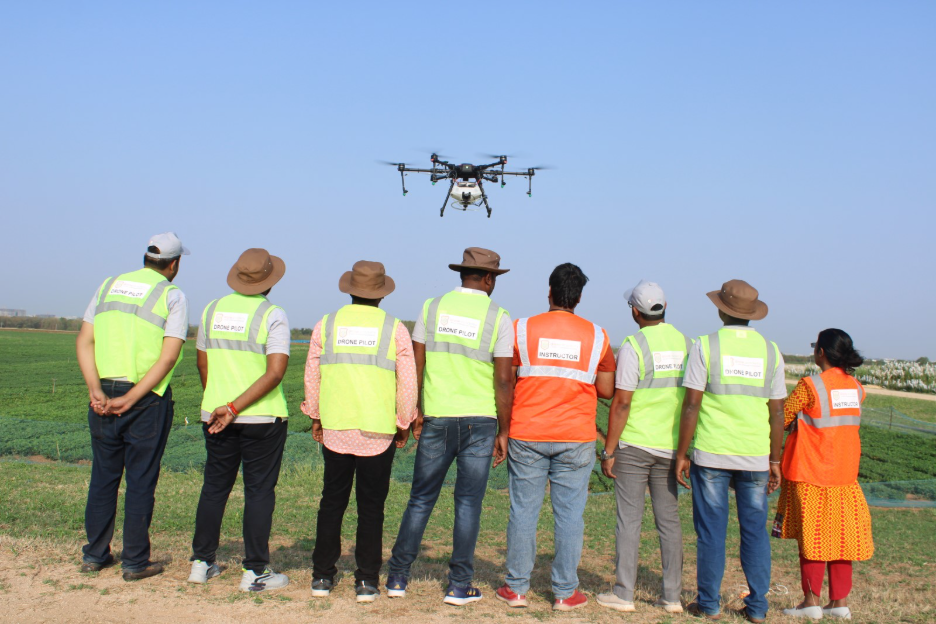
A key component of the project is the development of a digital high-throughput phenotyping system using drones and AI-based analytics. The system is expected to provide a faster, more accurate, and more cost-effective alternative to manual phenotyping, reducing implementation costs by up to four times. Priority traits will be identified and used to train AI models that can serve as reliable alternatives to manual field measurements.
Stage 1 trials will be conducted in Tanzania, India, and the Philippines at the IRRI Headquarters. The Alliance of Bioversity and CIAT will conduct drone flights in Tanzania, while ICRISAT will lead drone phenotyping activities in India. The project will also develop a Standard Operating Procedure (SOP) for rice drone phenotyping, including imaging protocols and data management workflows, to support wider adoption and scaling.
Objectives
The project aims to develop and optimize a predictive AI model capable of accurately quantifying target phenotypic traits using drone-generated imaging data. It also seeks to integrate and process multimodal datasets, including genomic, phenotypic, imaging, and environmental data, to improve the model’s ability to identify complex trait relationships and enhance prediction accuracy.
In addition, the project aims to validate and benchmark the model’s performance using standardized metrics and independent datasets to ensure its reliability, scalability, and applicability across different breeding populations and experimental conditions.