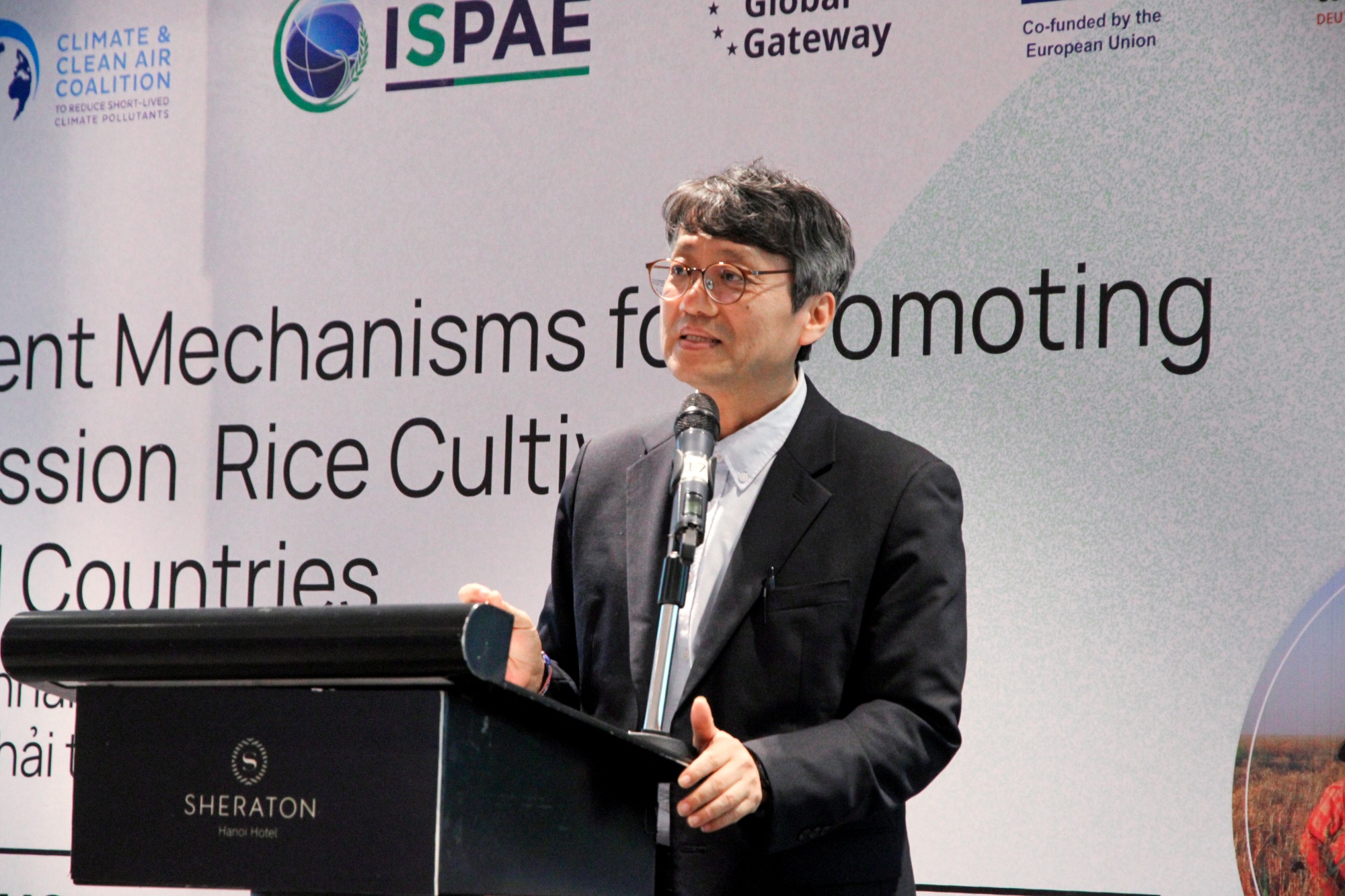
ASEAN partners, IRRI urge faster transition to low-emission rice
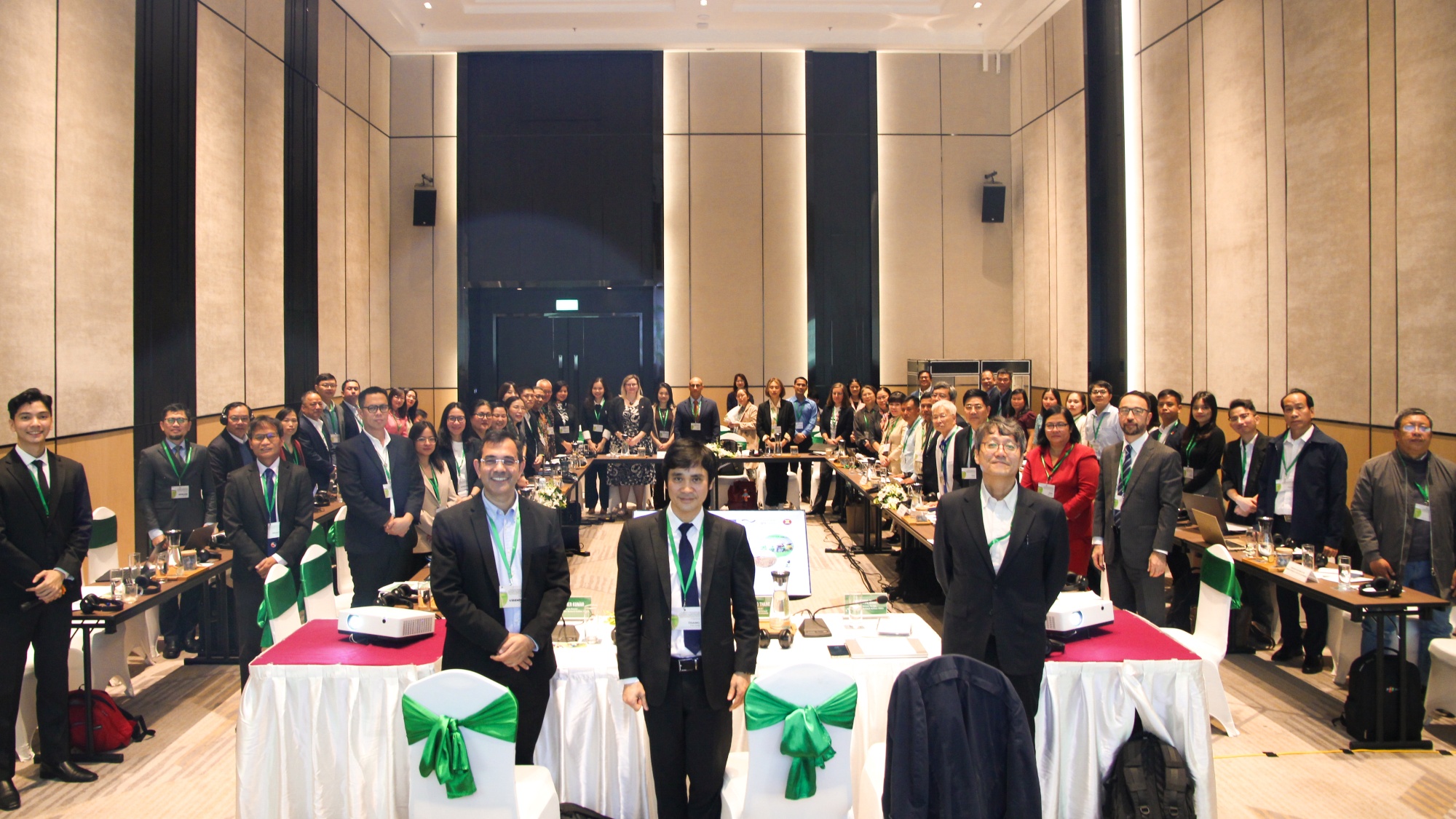
HANOI, Viet Nam (January 21–23) — Low-emission rice could become one of Southeast Asia’s strongest climate change solutions with more supportive policies, investment mechanisms, and regional coordination to boost the scaling of climate-resilient rice cultivation practices, according to a regional workshop led by the International Rice Research Institute (IRRI).
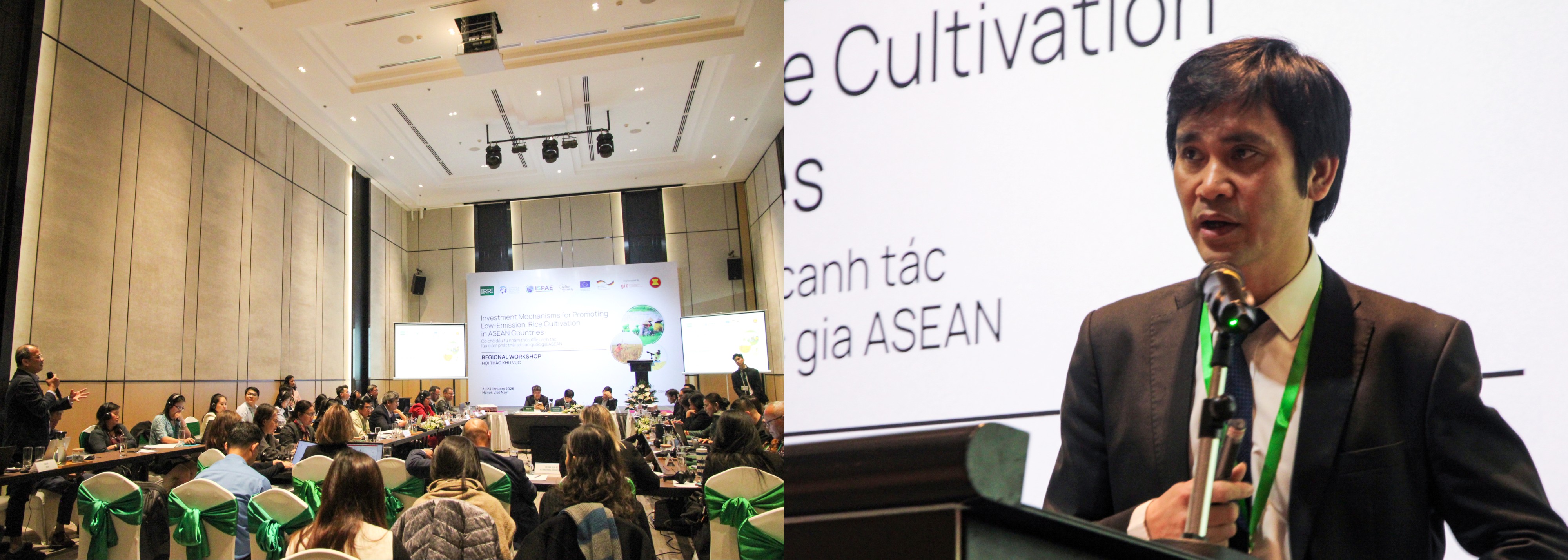
The three-day workshop, “Investment Mechanisms for Promoting Low-Emission Rice Cultivation in ASEAN Countries,” brought together more than 70 rice sector decision makers, technical experts, and policy advisors from Cambodia, Indonesia, Lao PDR, the Philippines, Thailand, and Viet Nam to discuss how to move low-emission rice toward large-scale implementation across ASEAN countries.
In Southeast Asia where nearly a quarter of the world's rice is produced, rice generates higher emissions than livestock or other crops largely due to flooded paddy fields. However, with low-emission technologies, such as Alternate Wetting and Drying (AWD), improved nutrient management, and sustainable rice straw utilization, greenhouse gas (GHG) emissions from rice cultivation can be reduced by up to 65% without reducing yields.
“As ASEAN countries strengthen their Nationally Determined Contribution (NDC) commitments, there is growing recognition that accelerating the transition toward a low-emission, resource-efficient, and climate-resilient rice production system is both necessary and urgent,” Dr. Tran Cong Thang, Director of the Institute of Policy and Strategy for Agriculture and Rural Development (ISPAE) emphasized.
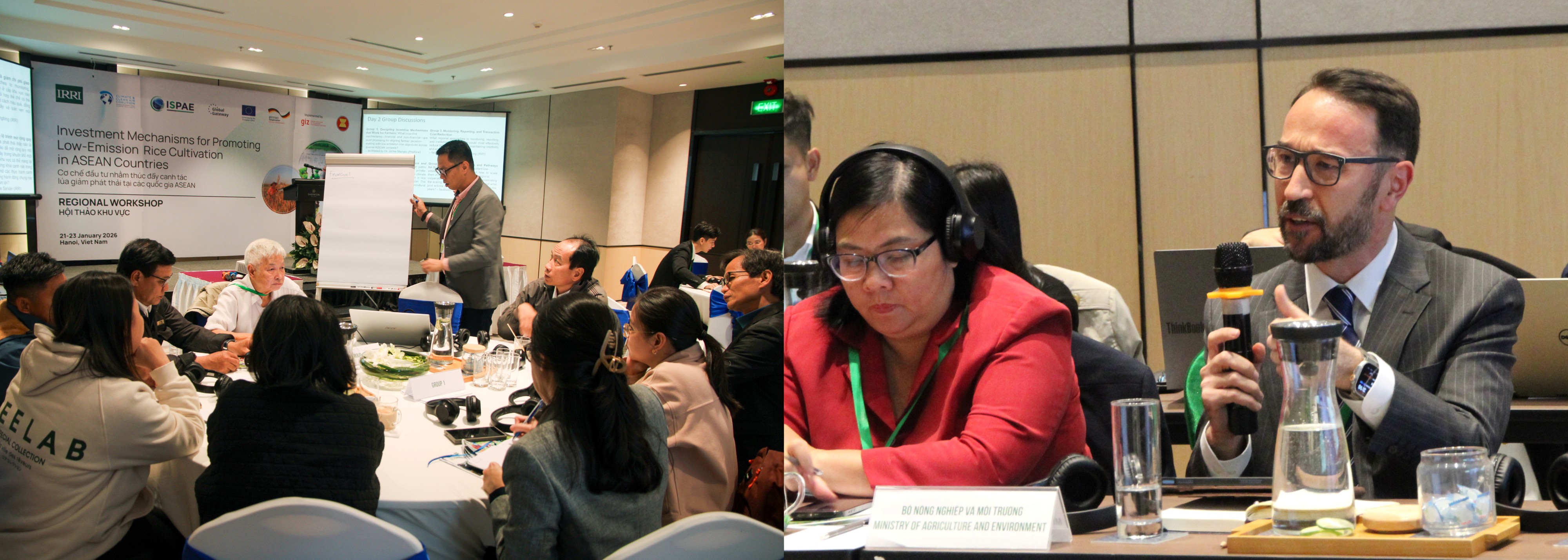
While low-emission practices are technically proven to be effective across Southeast Asian countries, scaling adoption remains a challenge. Workshop discussions highlighted the need for enabling systems that make these practices viable and investable at scale, including supporting policies, financing mechanisms, institutional coordination, and reliable data.
Country presentations reflected uneven regional progress: Viet Nam is moving beyond pilots to large-scale implementation supported by national policies and coordinated investment. The Philippines has strong technical foundations, with national programs in place, but faces measuring, reporting, and verification (MRV) system and financing barriers that limit large-scale rollout. Thailand also shows policy alignment with its national climate targets, with low-emission rice practices supported through nationwide programs and dedicated investment mechanisms. Meanwhile, Indonesia shows strong national support but requires scalable investment mechanisms. Efforts in Cambodia and Lao PDR remain largely project-driven, with national policies aiming to accelerate investments into climate-resilient rice practices.
New evidence presented by IRRI and its partners based on farmer surveys and economic analyses in the Philippines, Thailand, and Viet Nam revealed that factors influencing adoption include farmer incentives, access to technical support and training, credit support, and availability of machinery. In fact, in addition to financial incentives, training and capacity building emerged as the strongest entry point to increase farmer uptake of low-emission farm practices, along with more flexible carbon market contract durations and targeted farm support.
"Our analysis demonstrates clear pathways for ASEAN countries to significantly reduce methane emissions while improving farmer incomes. The investment requirements are important but achievable, and the economic and social benefits make this transition not just environmentally necessary but economically compelling,” said Dr. Alisher Mirzabaev, IRRI Senior Scientist for Policy Analysis.
A simple, reliable, and fully operational MRV system was identified as one of the most critical regional priorities, which remains fragmented and often too complex. A robust MRV system would not only help measuring methane reductions but also unlock investment opportunities, build confidence among investors and corporate buyers, and create momentum toward a regional carbon market pathway.
Mobilizing financial resources through blended finance, which combines public funds, climate finance, and private investment, can also support farmers’ adoption of low-emission practices and strengthen value chains. However, financial literacy among farmers was seen as essential to improve their ability and willingness to engage with loan-based climate financing mechanisms.
Together, these strategies create opportunities for the ASEAN to build a regional investment ecosystem that links food security objectives, climate targets, and carbon-finance returns.
“This is a pivotal moment for ASEAN to affirm its global pioneering position in low-emission rice production,” said IRRI Regional Director for Asia Dr. Jongsoo Shin. “We are not just protecting the environment but also opening new markets, enhancing value chain worth, and improving sustainable livelihoods for millions of farmers," he added.
The workshop was made possible with support of the Methane Accelerator for Southeast Asea (MASEA) project, the Climate and Clean Air Coalition (CCAC), the ASEAN EU-German Climate Action Programme (CAP) implemented by Deutsche Gesellschaft für Internationale Zusammenarbeit (GIZ), and the Institute of Policy and Strategy for Agriculture and Rural Development (ISPAE) under Vietnam’s Ministry of Agriculture and Environment (MAE).