Building better digital connections for climate-smart rice services in Thailand
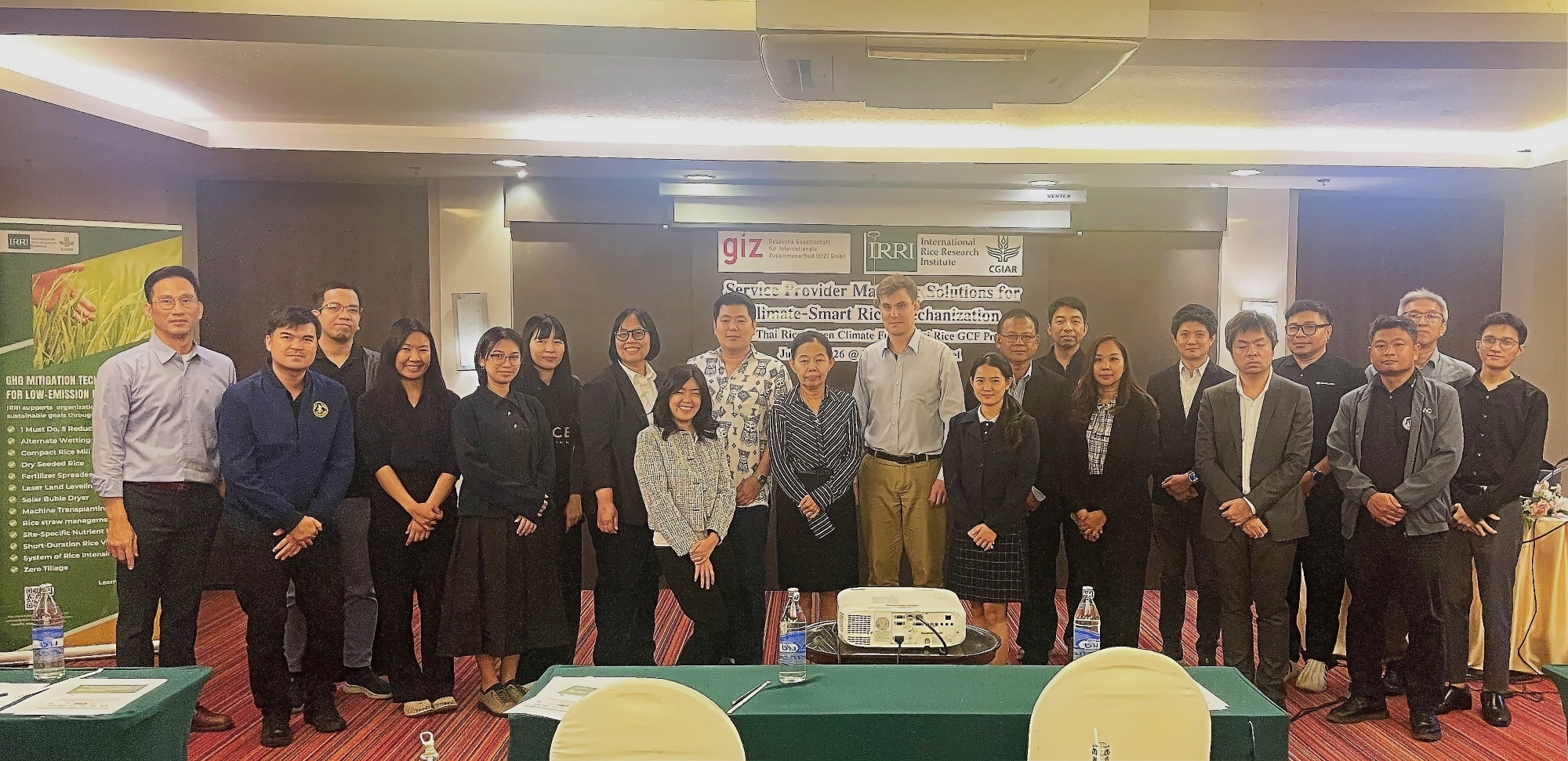
Government agencies, development partners and the private sector came together to explore how existing digital systems can better connect rice farmers with climate-smart agricultural services.
BANGKOK, Thailand (24 July 2026) — The International Rice Research Institute (IRRI) convened a Matching Solution Workshop with representatives from Thailand’s Rice Department, Department of Agricultural Extension, and the Deutsche Gesellschaft für Internationale Zusammenarbeit (GIZ) GmbH to advance the development of a practical and connected digital solution for farmers to access climate-smart agricultural services in Thailand.
As a strategic component of the Thai Rice: Strengthening Climate-Smart Rice Farming (Thai Rice GCF) project, the workshop explored how farmers and agricultural service providers can be connected more effectively without creating yet another standalone digital platform.
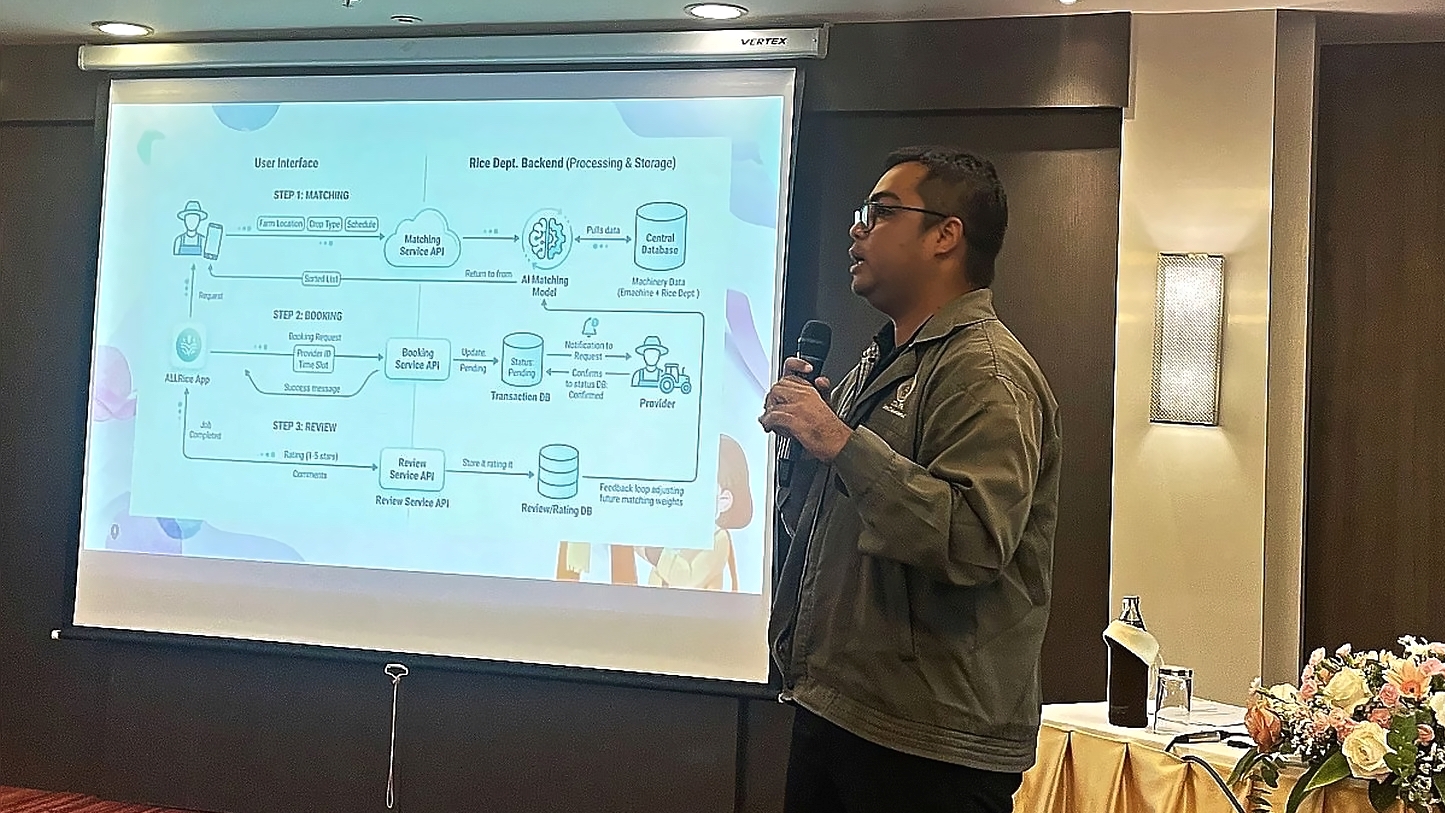
Rather than starting from scratch, the proposed solution is to build on existing digital systems in Thailand, with stronger interoperability between platforms operated by Thailand’s Department of Agricultural Extension (DOAE) and Rice Department (RD) as an important foundation for future development.
This direction builds on discussions held during an earlier workshop, which identified the combination of existing systems and functions with DOAE’s E-Machine platform as the focus of project’s first phase of implementation.
The event also highlighted existing digital platforms, practical experiences, and opportunities to strengthen connections between systems already serving Thailand’s agricultural sector.
Participants examined the main elements required for an effective digital platform, such as data and information management, the services the platform will provide, and the business models needed to make the system useful and sustainable for the intended end users.
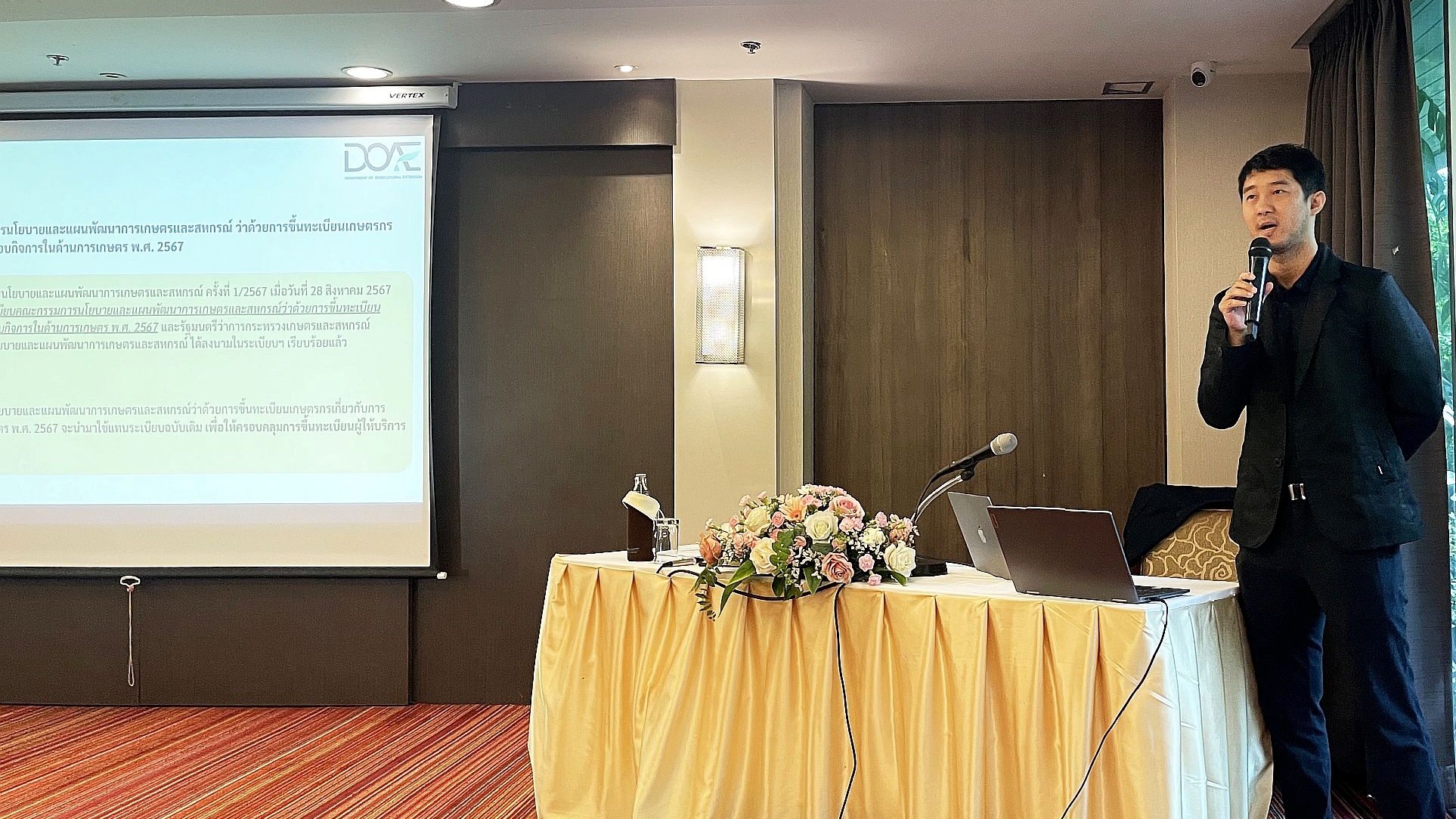
Mr. Keradach Rodkitanun, Computer Systems Officer at the Department of Agricultural Extension. Presenting on requirements and ideas for developing a farmer-to-service provider mobile application.
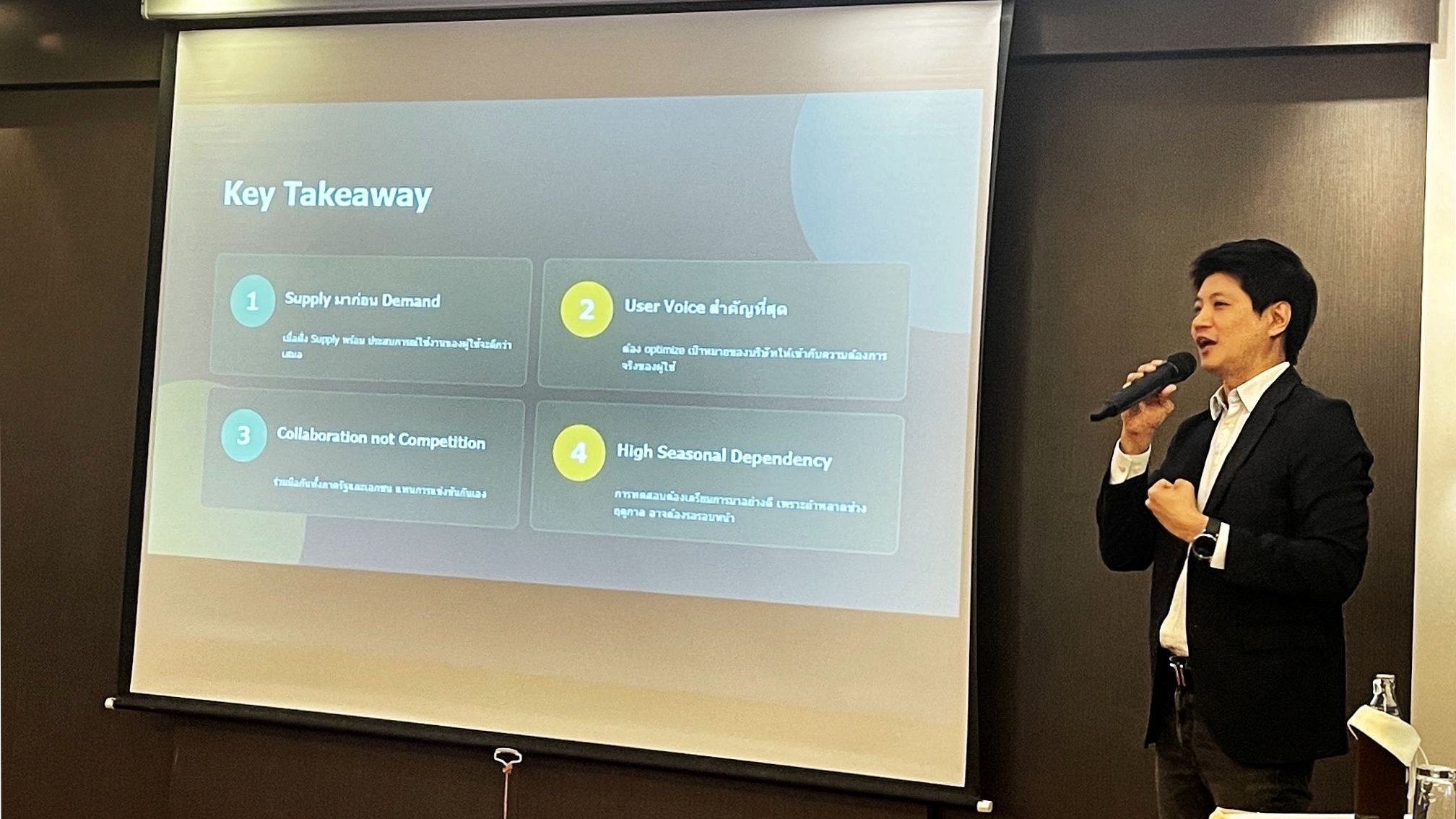
Practical insights from participants also reflected on crucial factors that for consideration during development. This includes the oversupply of matchmaking apps that emerged before the demand existed; difficulties in integrating service costs to the system, which may require case-by-case estimations; limitations of a fully-automated matchmaking platform between a farmer and an agricultural service provider in addressing a user’s needs; and fluctuations in demand between and during cropping seasons.
The recurring message across the discussions was that building the technology is only part of the challenge and that its value will depend on whether farmers and service providers can easily use it. Institutions behind the platform need to agree on clear arrangements for safely sharing and managing information, coordinating among participating institutions, and delivering services that respond to farmers’ practical needs. To help ensure that the system reflects these needs, IRRI will conduct a needs assessment with farmers and service providers following the event.
This workshop represented another step towards creating stronger links between farmers, service providers and the institutions supporting Thailand’s transition towards climate-smart rice production.
Through this collaborative effort, Thai Rice GCF, supported by the Green Climate Fund, aims to transition smallholder rice farming in Thailand towards climate-smart and climate-resilient models, while boosting productivity, enhancing farmers’ livelihoods, strengthening market environments, and reducing greenhouse gas emissions.