DA, IRRI map climate risks across vulnerable rice communities in PH
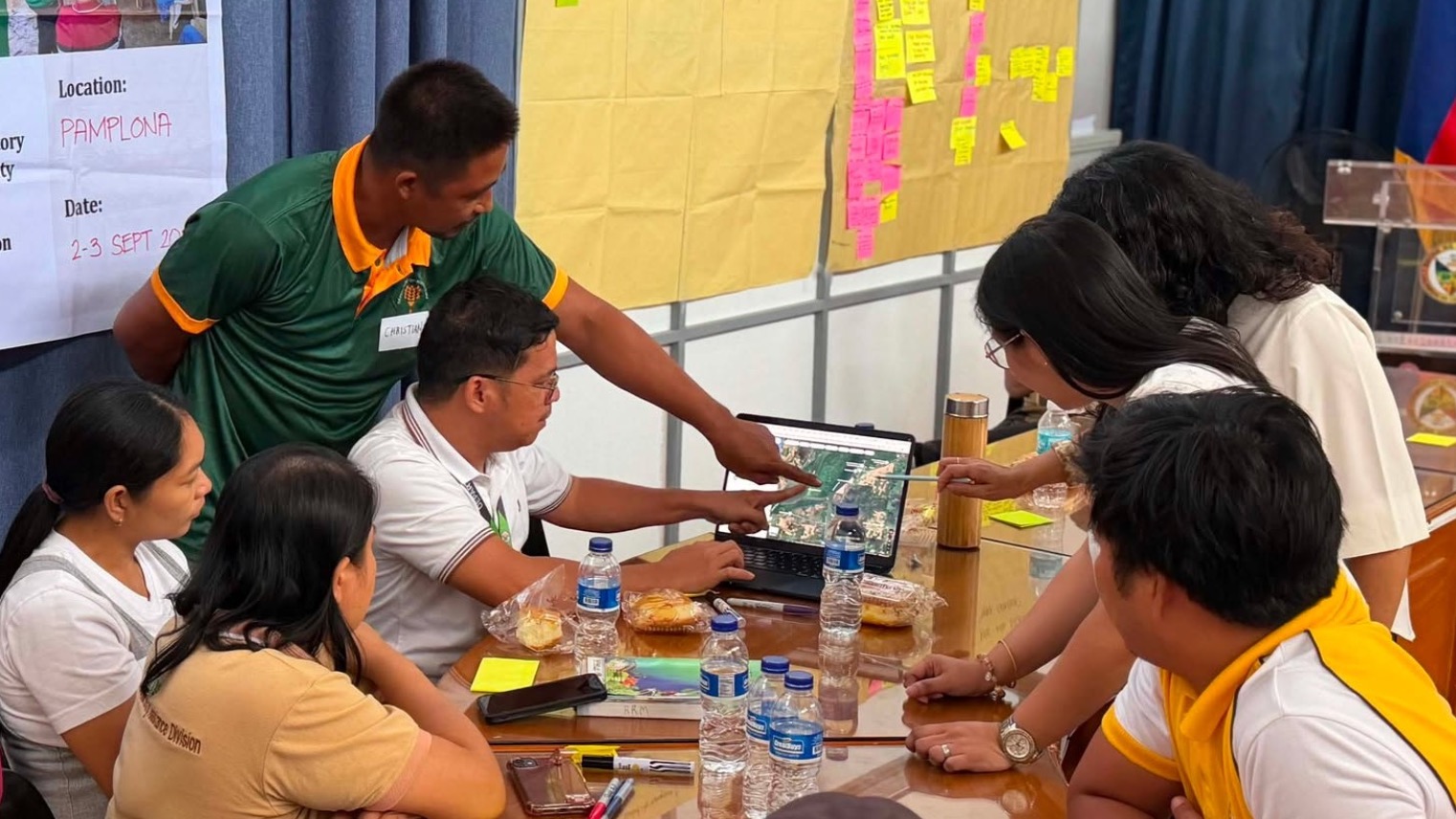
DA and IRRI are mapping local climate risks across three AMIA sites to guide tailored climate-smart solutions that strengthen farmers’ resilience and support sustainable rice production in vulnerable communities.
LOS BAÑOS, Philippines, September 3, 2026 — Climate risks vary across rice-growing communities, requiring solutions tailored to local needs. In Gerona, Tarlac, farmers face drought and typhoons; in Banate, Iloilo, flooding, typhoons, and dry spells associated with El Niño shape local agricultural priorities; while in Pamplona, Camarines Sur, saltwater intrusion adds another challenge alongside drought and typhoons.
The Sustainable Rice Ecosystems (SuRE): Co-creation of Sustainable and Scalable Climate-Smart Package of Technologies in Vulnerable Rice-based Communities project is assessing these local conditions to support the Department of Agriculture’s Adaptation and Mitigation Initiative in Agriculture (AMIA) sites in adopting and sustaining suitable climate-smart technologies.
Supported by the Department of Agriculture (DA) and implemented by the International Rice Research Institute (IRRI), SuRE works with farmers, municipal agriculture offices (MAOs), and local government units (LGUs) to identify and co-create solutions suited to the conditions of vulnerable rice-based communities in the Philippines.
The project recently conducted field activities in three Department of Agriculture Adaptation and Mitigation Initiative in Agriculture (AMIA) sites, specifically, Gerona, Tarlac (AMIA Phase 1); Banate, Iloilo (AMIA Phase 2); and Pamplona, Camarines Sur (AMIA Phase 3) to understand local farming systems, climate risks, stakeholders, and priorities for climate-smart interventions.
Understanding local realities
Initial field activities included community profiling, stakeholder mapping, and focus group discussion (FGD) informed by an inclusive stakeholder perspective. This approach allows the project to identify how local production systems, climate hazards, available resources, and existing partnerships can shape the suitability of different innovations.
In Barangay Matayuncab, Gerona, Tarlac, the project team focused on understanding local farming and livelihood systems, where farmers mainly rely on rice, corn, vegetables, high-value crops, and livestock. The team also assessed how droughts and typhoons affect priority crops like rice, corn, and eggplant.
During stakeholder discussions, the potential role of solar-powered irrigation systems (SPIS) Borrowing program in the area was also examined to help farmers save fuel costs for irrigation pumps. The borrowing program would allow equitable use of the limited number of SPIS units available in the municipality.
Different risks, different priorities
The same approach was adapted to the conditions of Banate, Iloilo, across Barangays Carmelo, Merced, and Libertad. The site assessment focused on communities experiencing flooding, typhoons, and dry spells associated with El Niño.
The stakeholder mapping centered on community seed banking, identifying actors who could be involved in establishing and maintaining a community seedbank, examining their potential roles in sustaining access to locally appropriate planting materials amid climate-related disruptions.
Saltwater intrusion, drought, and typhoons are among the priority climate-related hazards identified in Barangay Cagbunga, Pamplona, Camarines Sur. The community recognizes that agricultural planning can no longer rely solely on historical seasonal patterns due to the shifts in the timing and severity of flooding, drought, and salinity.
Rice-fish technology was considered in the area as a potential innovation to support more diversified and climate-responsive farming systems during the project’s community profiling and stakeholder mapping.
Initial discussions indicate interest in diversifying rice-based production, and exploring complementary livelihood options in response to locally identified climate risks. However, farmer acceptance, suitability to local conditions, access to appropriate seeds, infrastructure, soil and pest management, and institutional support remain important considerations.

From assessment to action
Across the three sites, the field activities show why climate-smart agriculture needs to be grounded in the realities of individual farming communities. The differences in hazards, production systems, available resources, and existing innovations provide important information for determining which technologies and support mechanisms are most appropriate in each location.
The assessment findings will help the SuRE team to co-develop, prioritize, test, and validate site-specific climate-smart technology packages with farmers and local partners.
The activities were conducted in coordination with the Municipal Agriculture Offices and LGUs of Gerona, Banate, and Pamplona, together with key DA partners including the DA Bureau of Agricultural Research (DA-BAR), Climate Resilient Agriculture Office (DA-CRAO), Agricultural Training Institute (DA-ATI), and Regional Field Offices III, V, and VI.


