Dr. Gurdev Khush Reflects on IRRI’s Legacy
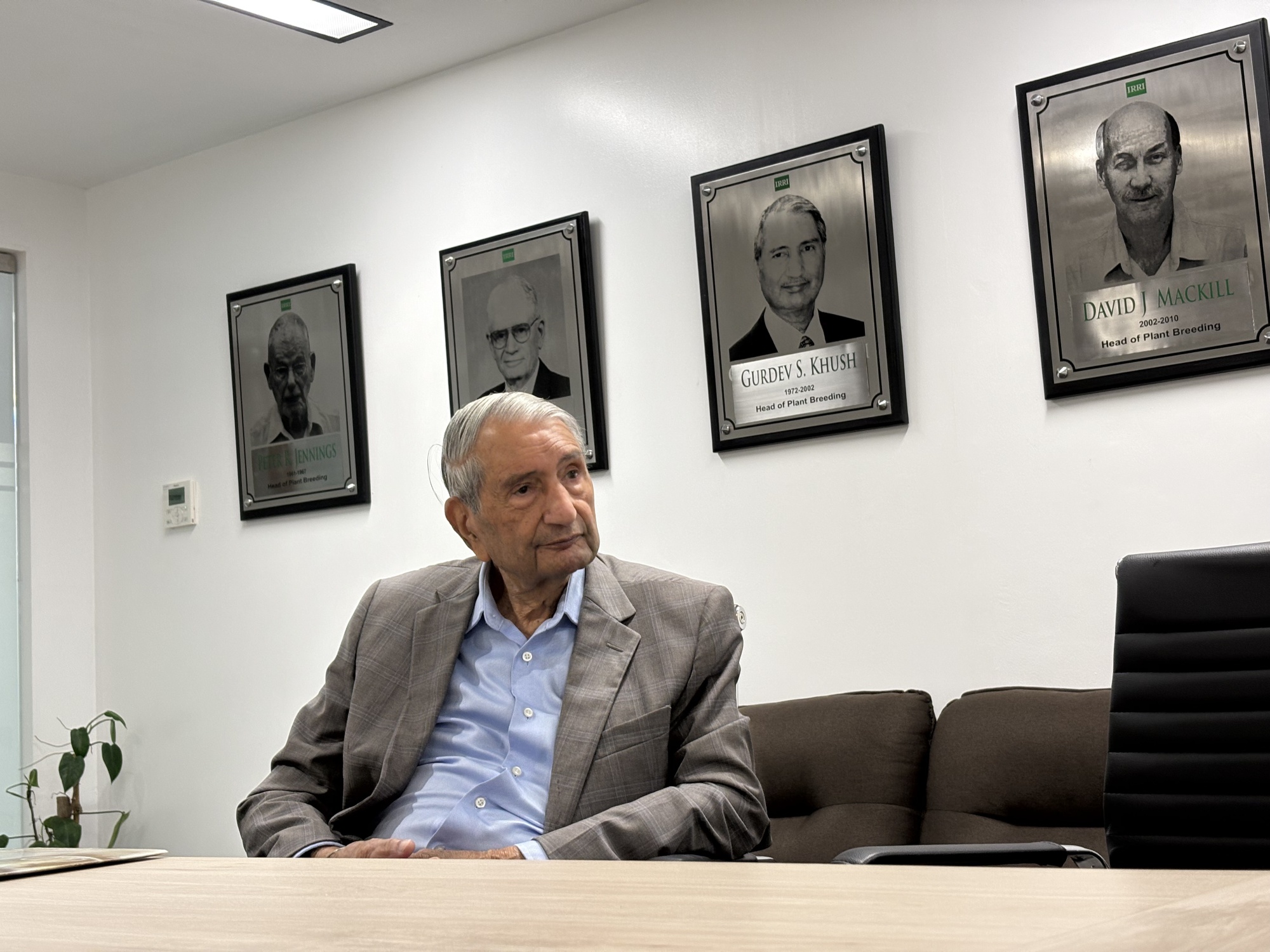
IRRI recently welcomed back one of its most distinguished scientists, Dr. Gurdev Khush, whose groundbreaking work in rice breeding helped shape the Green Revolution and transform global food security. During his visit to the IRRI Headquarters, Dr. Khush and his wife engaged with scientists and staff to learn about the Institute’s latest research directions. This opportunity bridged IRRI’s storied past with its evolving scientific agenda. For many early-career researchers, the visit was a rare chance to meet a pioneer whose work laid the foundation for much of modern rice science.
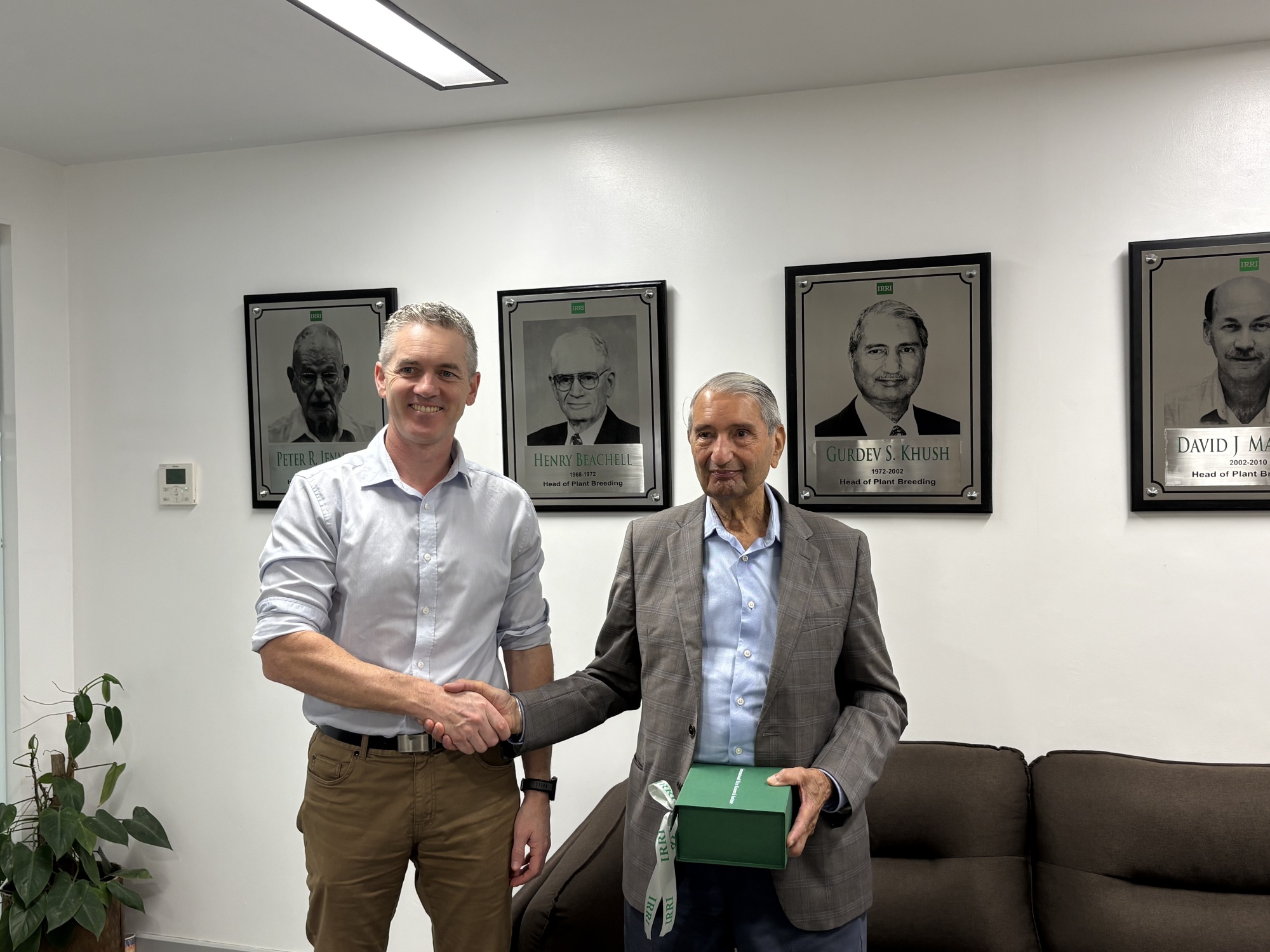
Reflecting on his 35-year career at IRRI, Dr. Khush spoke most fondly of the rice breeding work that defined his life’s contribution. Among the more than 300 varieties developed under his leadership, IR36 stands out as particularly memorable. “The real revolution occurred with IR36,” he noted, recalling how its resistance to pests and diseases, short growth duration, and high yield allowed it to spread rapidly across Asia. “It was covering large areas in Asia, everywhere,” he said. This is an achievement that demonstrated how science, when carefully designed for farmers’ realities, could deliver transformative impact at scale.
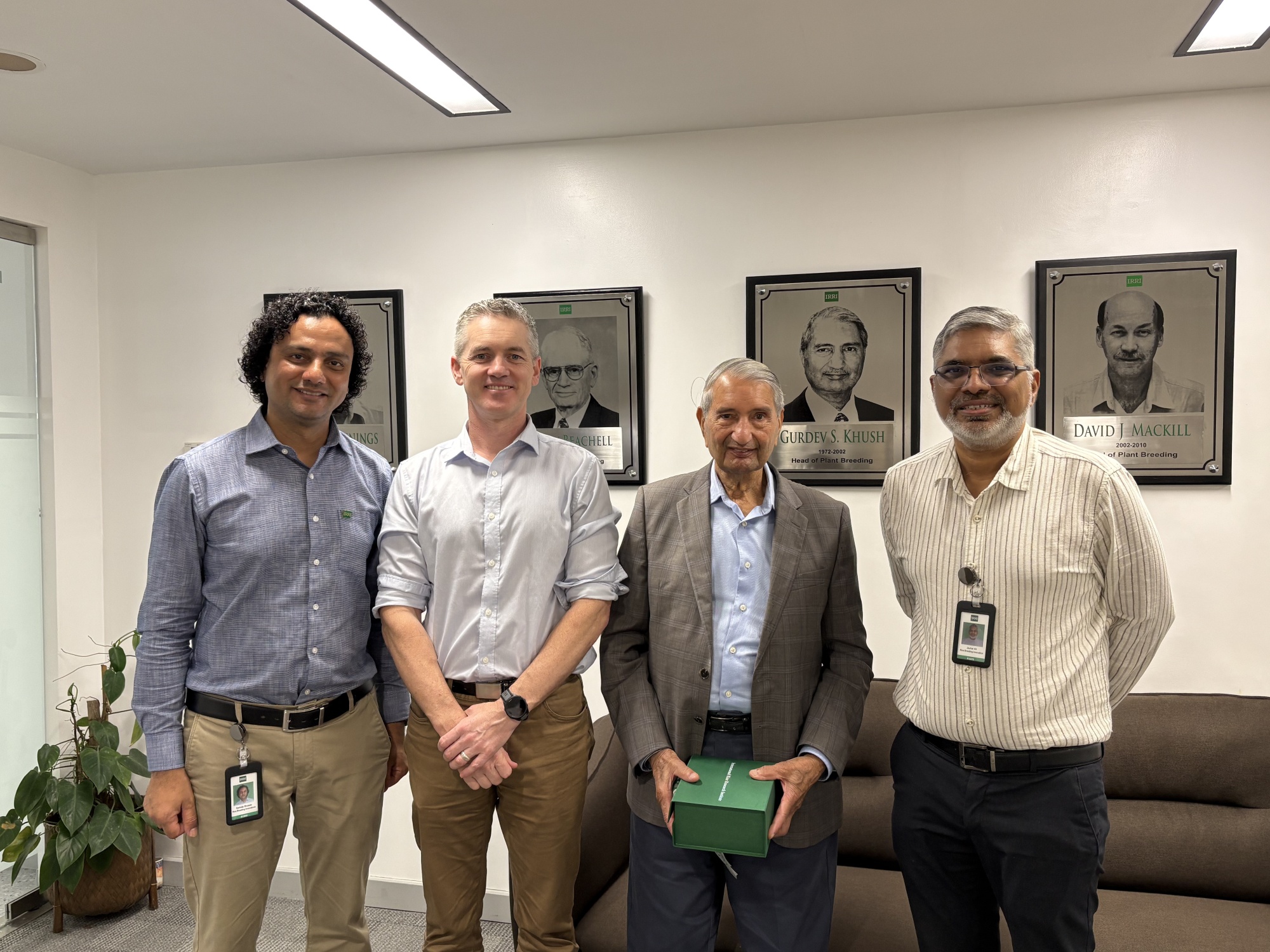
Dr. Khush also reflected on how IRRI’s role has evolved, underscoring the enduring importance of collaboration and capacity building. He recalled a time when few national scientists had formal training, and when strengthening local scientific capacity was one of IRRI’s most critical contributions. Today, he expressed encouragement at seeing breeders, social scientists, and other disciplines working together more closely than ever. Looking ahead, his hope for IRRI remains clear: “IRRI should be at the forefront of rice research,” he said, continuing to provide leadership, generate new ideas, and inspire scientists across countries to advance rice-based solutions for a changing world.