Global research network puts rice roots at the center of climate resilience
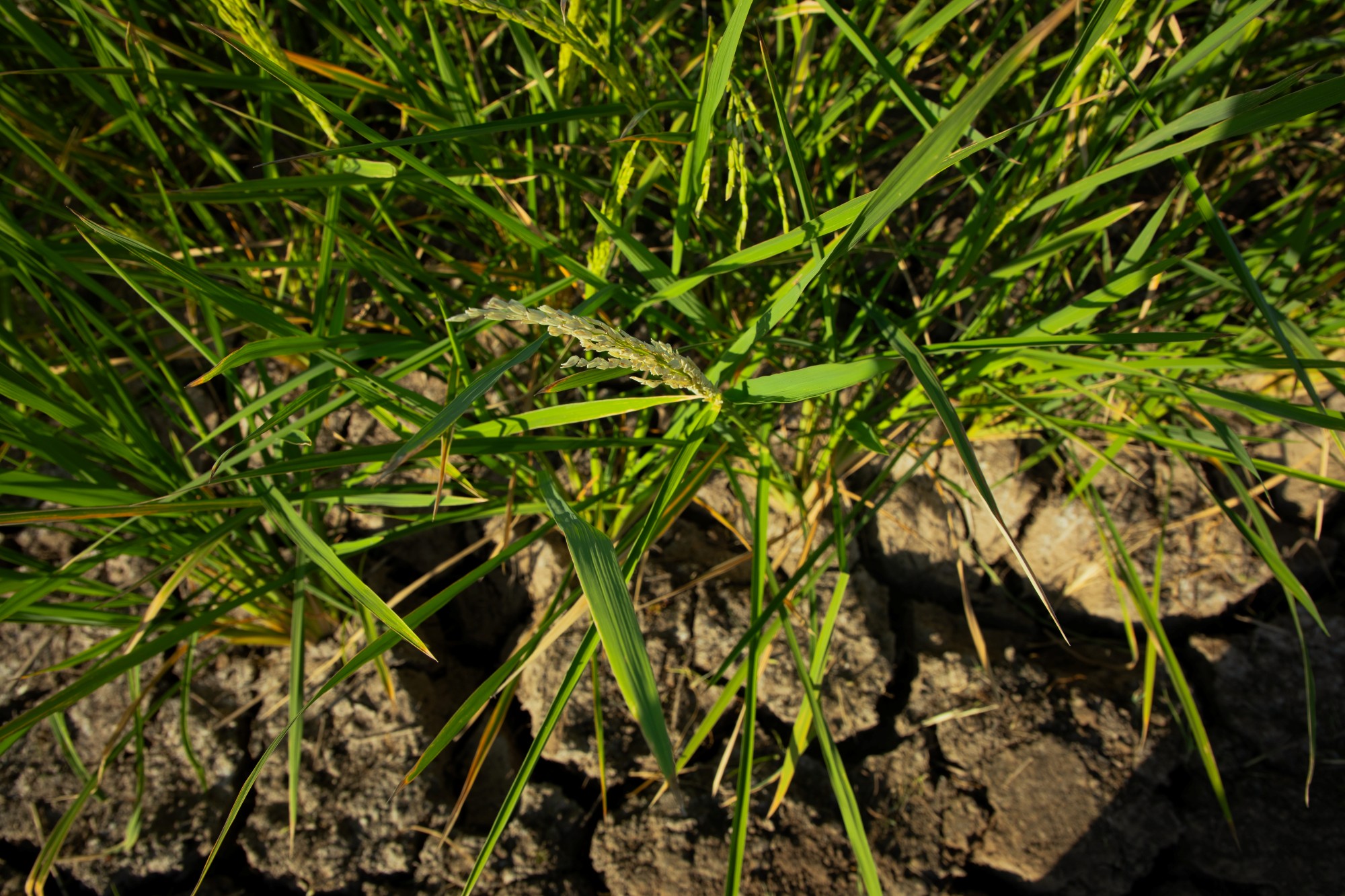
Scientists unite across disciplines to tackle rising heat, drought and salinity in rice systems
LOS BAÑOS, LAGUNA (22 April 2026) — A global network of scientists working on rice and climate stress has come together to tackle one of agriculture’s most urgent challenges: how to protect the world’s most important staple crop as environmental pressures intensify.
Hosted by the International Rice Research Institute (IRRI) in partnership with the University of Nottingham, the workshop brought together researchers with expertise spanning root biology, heat stress, salinity, and genetics. Supported by the Global Challenges Research Fund (GCRF) Strengthening Grant, the initiative is designed not just to generate research findings, but to connect disciplines and accelerate solutions.
Rice feeds more than half the world’s population, yet it remains highly vulnerable to rising temperatures, erratic rainfall, and increasing soil salinity. With global temperatures now exceeding the 1.5°C threshold under the Paris Agreement, researchers say that collaboration across specializations is becoming as critical as the science itself.
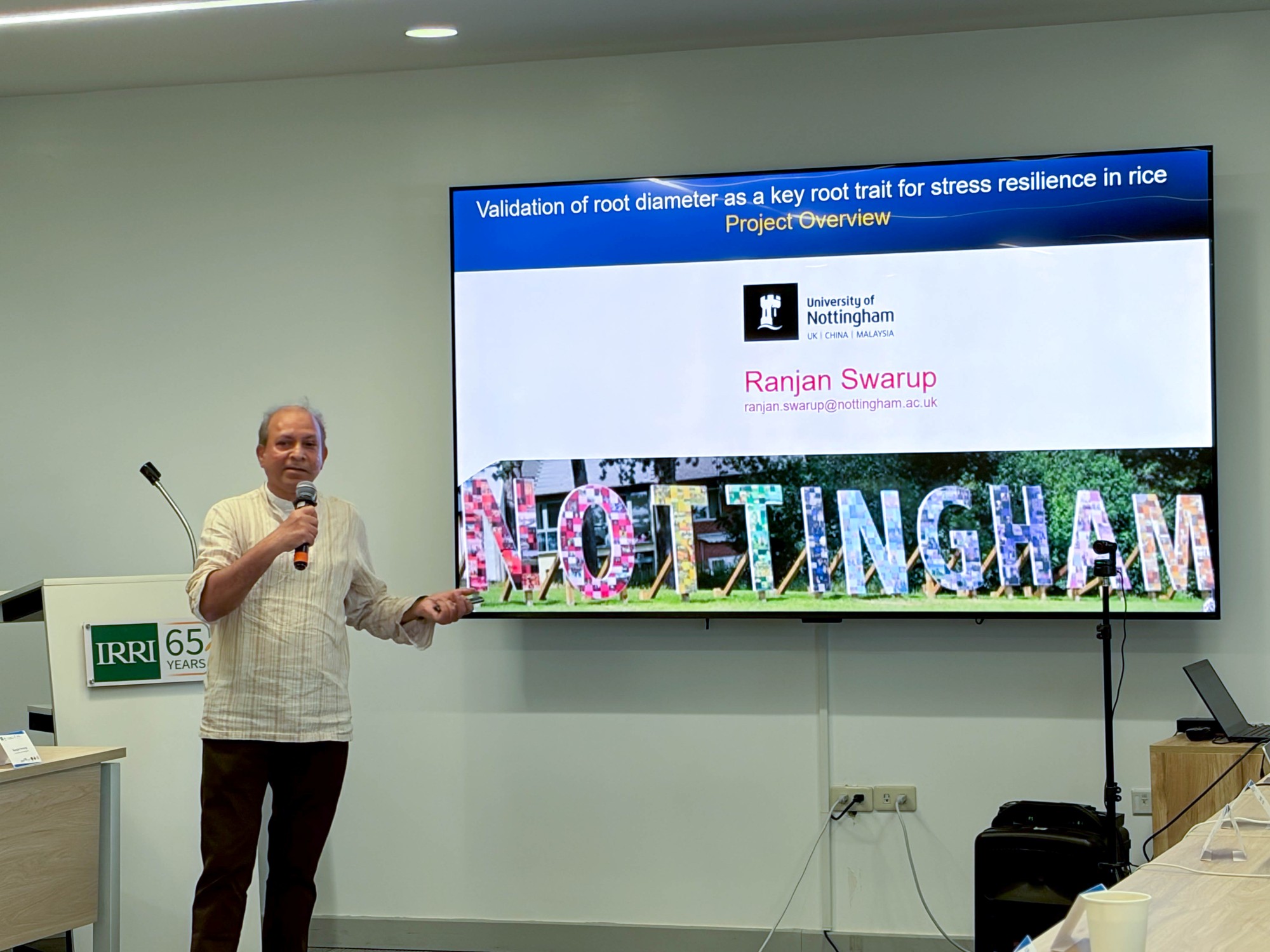
“These trends suggest we are moving toward irreversible points of no return,” said Ranjan Swarup, Plant Molecular Biologist at the University of Nottingham, noting that even a 1°C increase in temperature can reduce crop yields by around 6%.
“This is why climate-resilient crops are now urgent,” he added, adding that progress will depend on combining insights across disciplines.
Roots emerge as a hidden frontier for climate resilience
As climate pressures grow, scientists are looking into understanding how rice responds to stress, which requires looking at the plant as an integrated system, from roots to grains.
A research initiative led by former IRRI Senior Scientist Dr. Amelia Henry (now at CIRAD) and IRRI Research Leader Dr. Sankalp Bhosale examined how variation in root structure influences drought tolerance. The team identified rice lines with contrasting root diameters that showed improved performance under stress.
These lines were tested through field trials, root imaging, and climate simulations. Advanced imaging provided detailed visualisation of root systems, while gene expression studies at the University of Nottingham helped link these traits to their genetic basis.
Early findings suggest that certain root features, such as more crown roots, a smaller central root core called the stele, and fewer large water-conducting vessels known as ‘metaxylem’, are linked to better plant growth and improved performance under drought conditions.
The research team says these traits could help accelerate the development of drought-resilient rice varieties, although validation at the yield level is still ongoing.
Heat stress threatens harvests and grain quality
Rising temperatures are emerging as one of the most immediate threats to rice production, particularly during flowering and grain-filling stages when the crop is most sensitive.
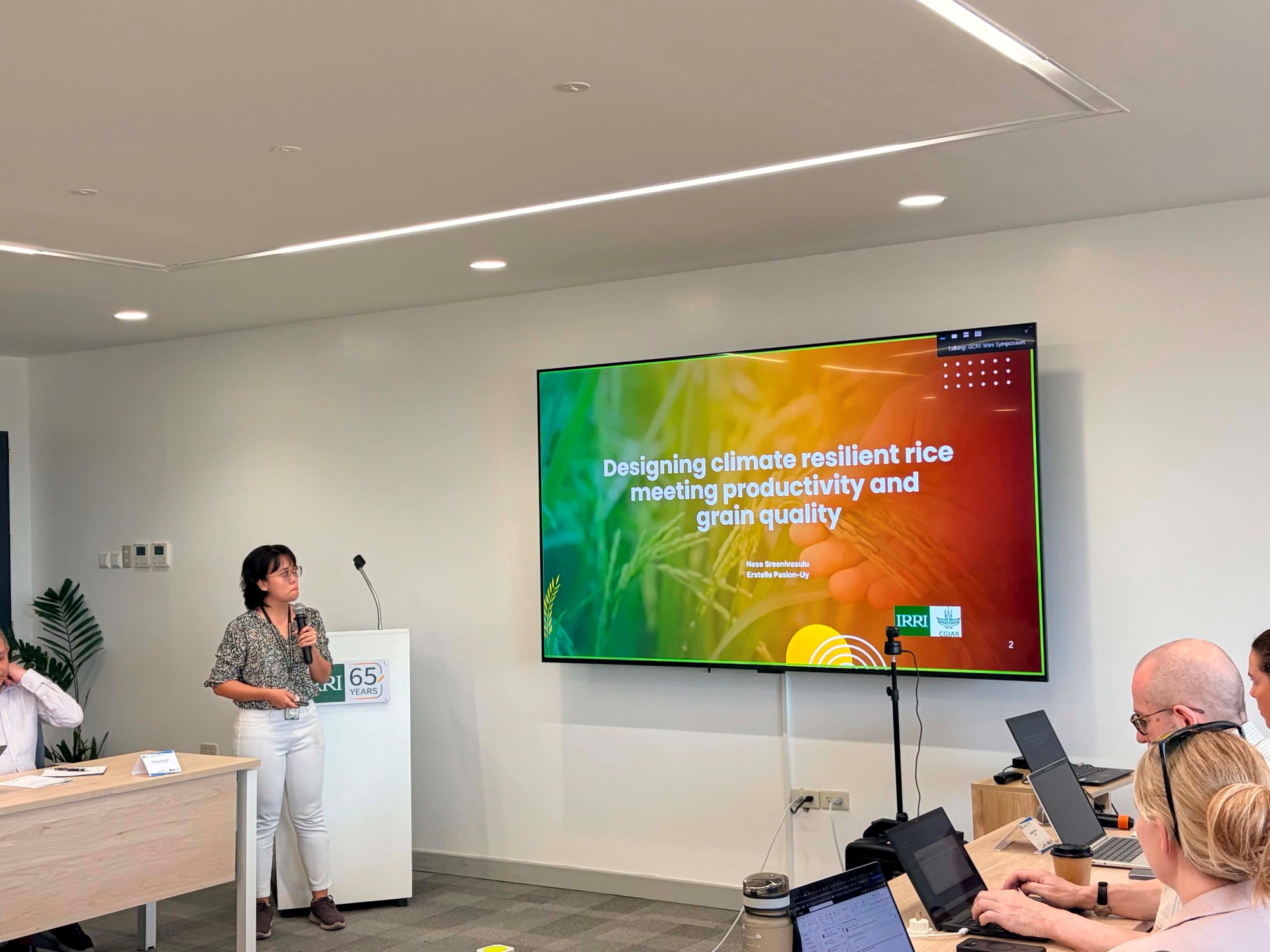
“Rice is especially vulnerable during key developmental phases, and even small temperature increases can significantly reduce productivity,” said Erstelle Pasion-Uy, a researcher from IRRI’s Grain Quality and Nutrition Center.
Research shows that a 1°C increase in nighttime temperature can further lead to around 7% yield loss, often exceeding the impact of daytime heat stress (6%). Heat during flowering can cause spikelet sterility (empty grains), while heat during grain filling disrupts starch formation, resulting in chalky grains, higher breakage, and reduced market value.
To address this, researchers are developing heat-tolerant, high-yielding rice lines using advanced breeding approaches supported by multi-omics tools. The aim is to maintain both productivity and grain quality under warmer conditions.
Salinity adds another layer of climate pressure
Salinity is increasingly affecting rice-growing systems, particularly in coastal and irrigated regions, where its impact is often compounded by other environmental stresses.
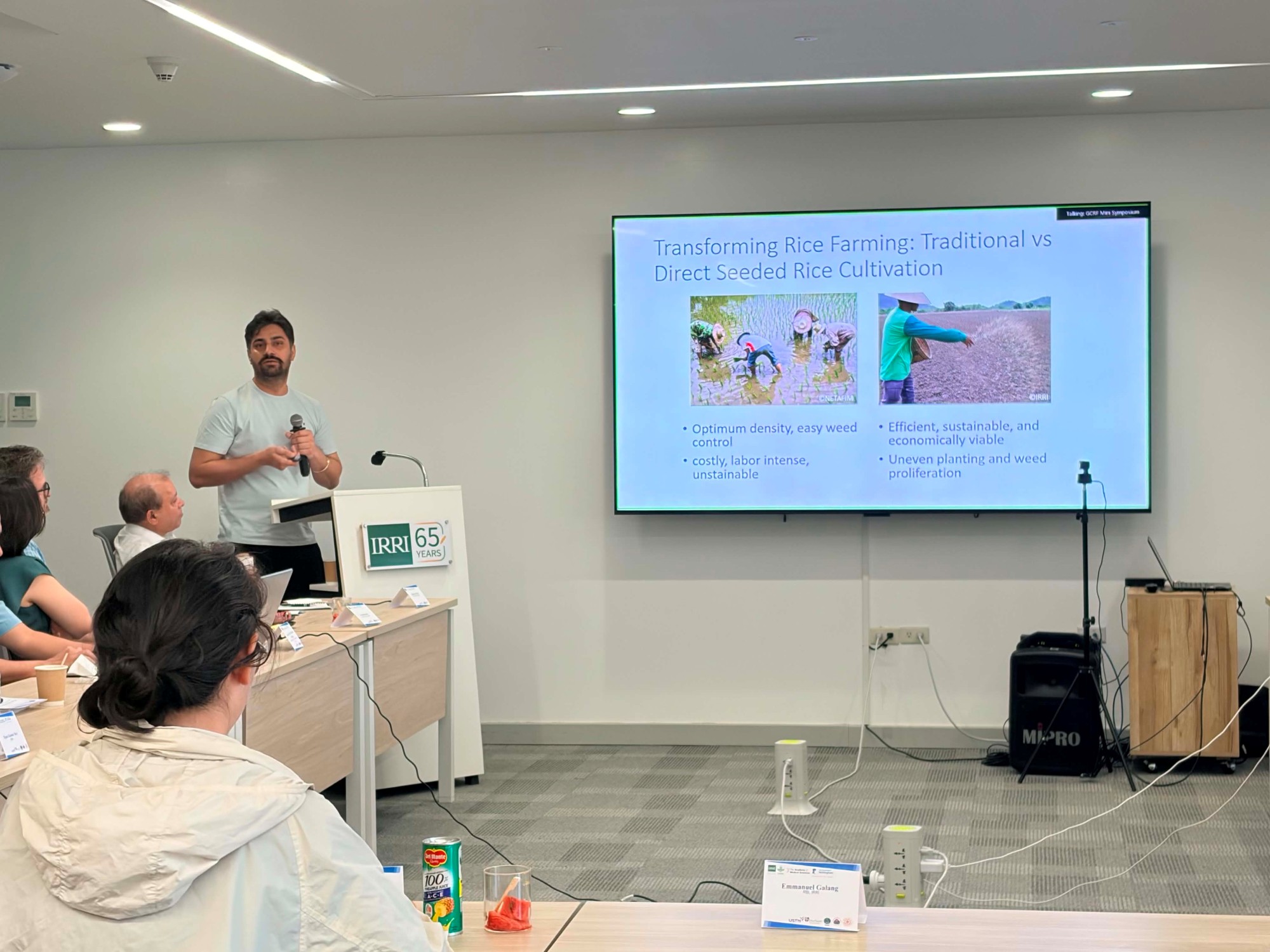
IRRI Postdoctoral Fellow Parvinderdeep Kahlon shows that while salinity alone suppresses plant growth, its effects become significantly more damaging when combined with heat or drought stress. This highlights the complexity of plant responses under climate change.
The study also found that a light treatment tested in controlled conditions helped reduce toxic chloride accumulation in leaves and shoots. This improved plant growth under saline stress, offering a potential pathway for managing salt-affected fields.
Toward integrated climate resilience in rice
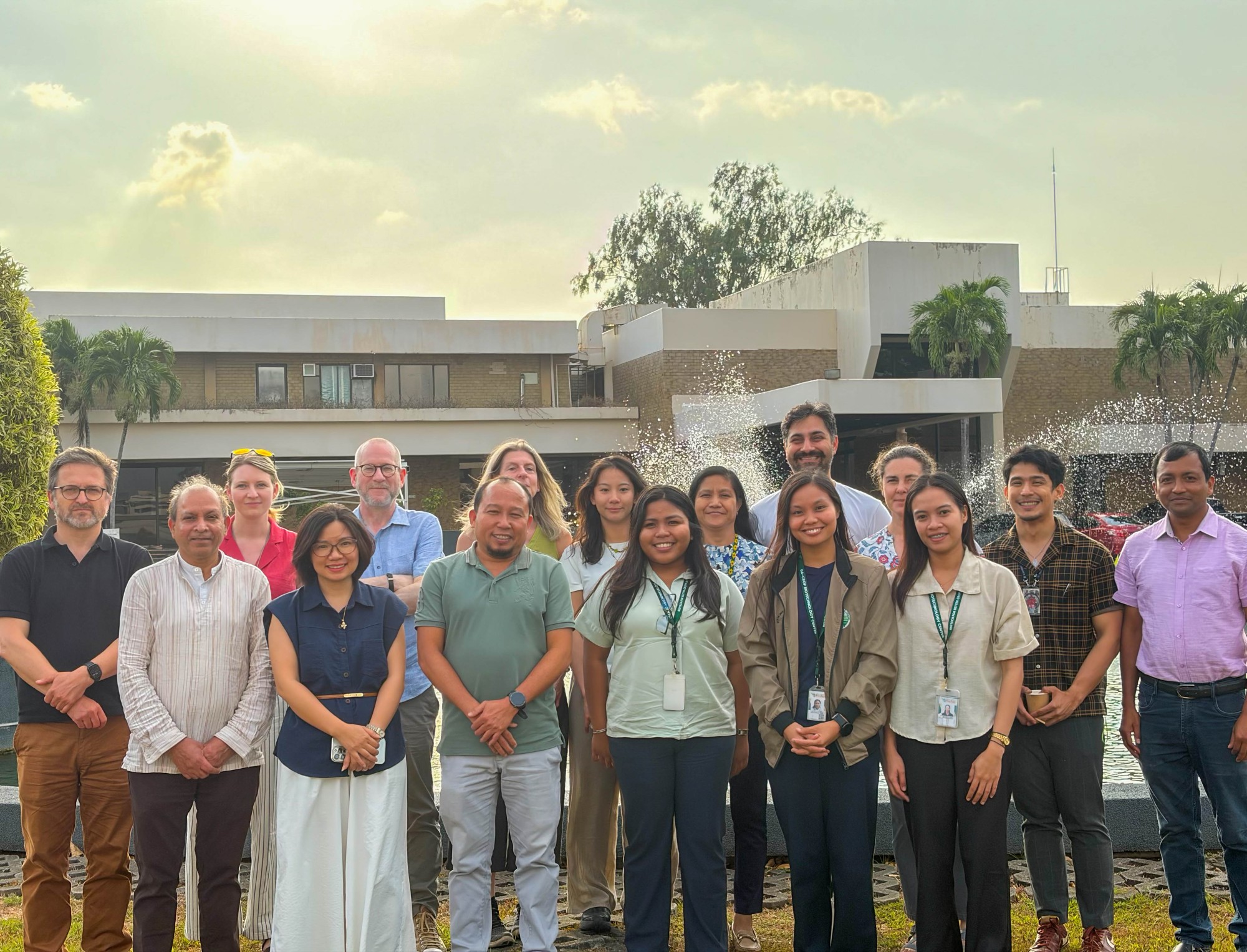
Additional research presented at the workshop highlighted the scale and diversity of ongoing work across institutions. The University of Nottingham shared work on photosynthetic and root-related heat tolerance, while the University of Copenhagen explored how roots adapt in flooded soils. The Bangladesh Rice Research Institute presented machine-learning approaches linking root traits with methane emissions, and the DA-Philippine Rice Research Institute researchers highlighted advances in improving rainfed rice resilience. Hormonal effects on rice root growth were presented from the University of Science and Technology of Hanoi. Participants of the Rice Root Phenotyping Training Course, as well as other IRRI scholars, were present in the event.
The work forms part of the concluding workshop of the GCRF Strengthening Grant project, “Validation of root diameter as a key trait for stress resilience,” held at IRRI headquarters in Los Baños.