IRRI and KAFACI Convene Regional Stakeholders in Burundi to Advance Rice Productivity and Seed Systems
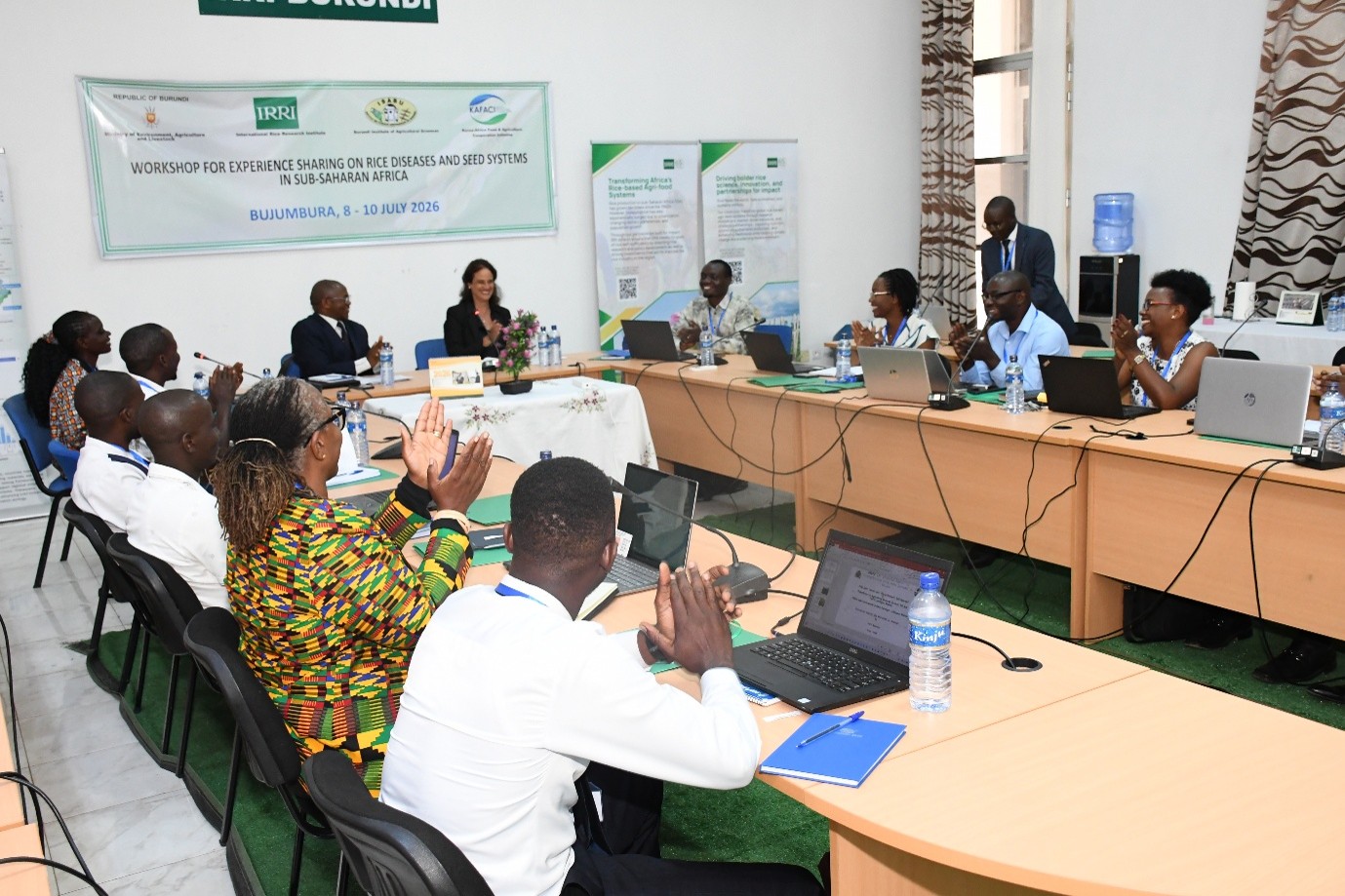
BUJUMBURA, BURUNDI (July 14, 2026) — In a bid to safeguard food security across Sub-Saharan Africa, the International Rice Research Institute (IRRI) and the Korea-Africa Food and Agriculture Science Initiative (KAFACI) convened a regional workshop in Bujumbura, Burundi. The three-day event united scientists, public agricultural leaders, and private sector actors, including seed companies from Burundi and Malawi to tackle two of the biggest hurdles facing African agriculture: crop disease and seed quality.
Rice is a vital staple and a powerful engine for economic growth across the continent. However, local yields are frequently threatened by volatile weather, shifting crop diseases, and a lack of access to high-quality seeds. Recognizing that no single institution can solve these challenges alone, the workshop broke down traditional silos, bridging the gap between cutting-edge laboratory research and commercial, boots-on-the-ground market realities.
"IRRI is deeply committed to applying science-based approaches that directly improve lives," stated Dr. Sofia Tesfazion, IRRI Regional Director for Africa, during her opening keynote. "By strengthening regional partnerships and facilitating cross-country learning and ensuring collaboration between public and private sectors, we are building a more resilient, sustainable rice sector that can weather future challenges."
From Breakthroughs to Blessings
The workshop highlighted major milestones from the ongoing IRRI-KAFACI project, showcasing how collaborative investments are yielding practical, scalable solutions:
- Defeating Rice Diseases: Scientists successfully identified six distinct rice diseases threatening Burundian fields. Crucially, the team evaluated diverse rice varieties from IRRI, Burundi, and South Korea, identifying elite lines that not only boast exceptional yields but also stand strong against devastating threats like the Rice Yellow Mottle Virus (RYMV).
- Supercharging the Seed Supply Chain: In Malawi, the project mapped out the local seed ecosystem, pinpointing bottlenecks and successfully accelerating the production of high-quality early-generation and certified seeds.
- The Power of Public-Private Synergy: Participants stepped out of the conference room and into the fields, visiting ITRASAGRI, an innovative private seed company in Burundi. The visit sparked a vital exchange of ideas, highlighted by Malawi’s Milele Agroprocessing, which shared its rich experience in collaborating with local farmers to produce premium rice seeds for export.
Gloria Phekani, Managing Director of Milele Agroprocessing, praised the initiative, emphasizing that bringing academia, public institutions, and private enterprises together under one roof is exactly what the region needs to turn scientific research into market-ready solutions for smallholder farmers.
Next Steps for Regional Impact
To turn these early victories into long-term regional resilience, IRRI, KAFACI, and their partners have outlined a clear, actionable roadmap for the next phase of the project:
- Map the Threats: Finalize the biological profiling of the identified rice pathogens in Burundi to build smarter crop defence strategies.
- Expand the Shield: Extend these critical rice disease studies into Malawi's unique ecosystems to protect more farming communities.
- Validate the Science: Run consecutive seasonal field trials to solidify the data and ensure these resilient seed varieties perform consistently year after year.
- Mobilize Resources: Launch targeted fundraising efforts to fuel the next wave of innovation in disease management and seed distribution systems.
Through these coordinated steps, the partnership aims to transform shared knowledge into durable, cross-border strategies that secure the rice value chain across Sub-Saharan Africa.