IRRI, VIETRISA unveil 'ViRiCert' for low-emission rice certification

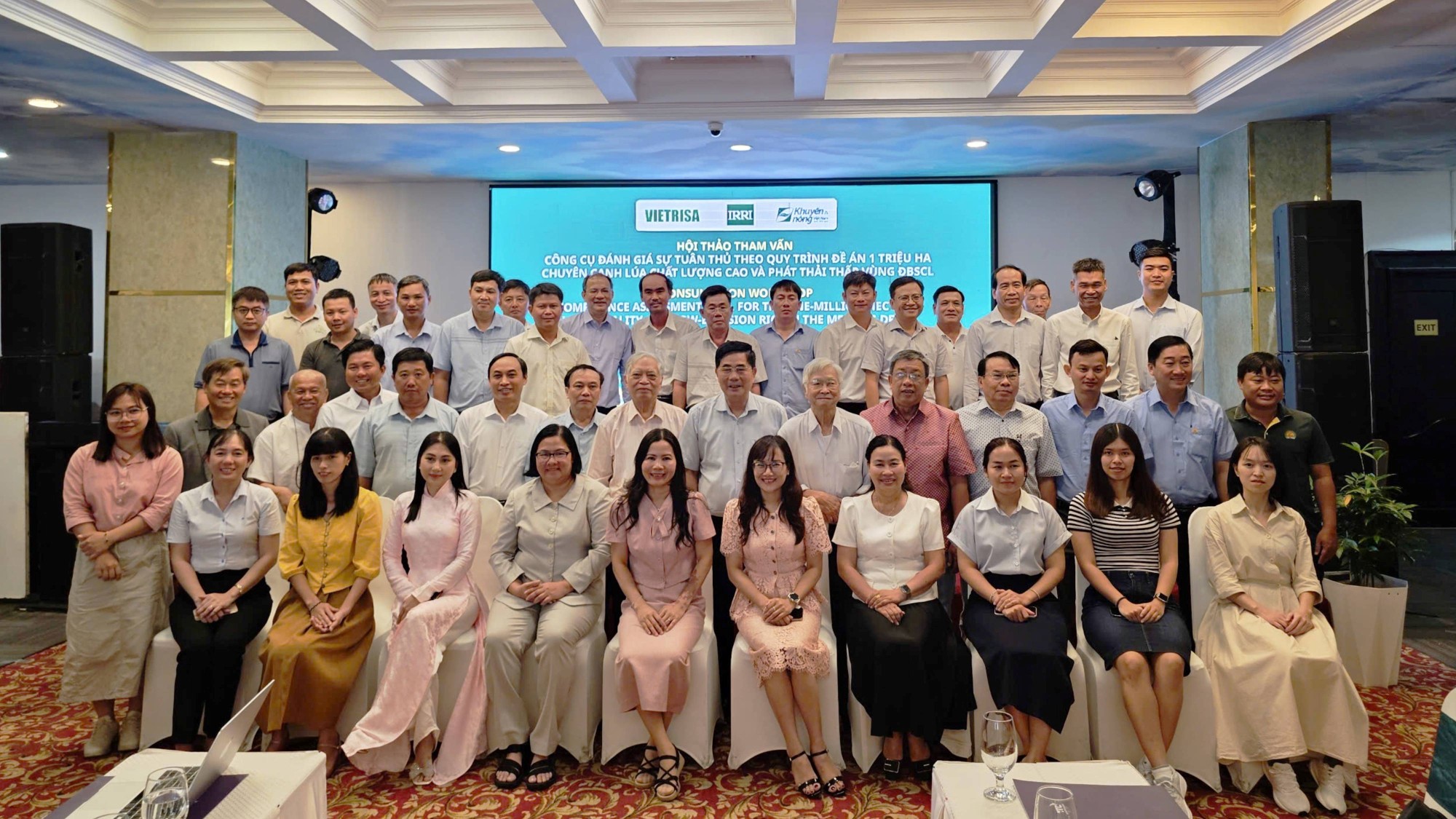
CAN THO CITY, Vietnam (18 November 2025 ) – The International Rice Research Institute (IRRI) and the Vietnam Rice Sector Association (VIETRISA) launched the ViRiCert, a new digital compliance assessment mechanism designed to support the One Million Hectares of High-Quality, Low-Emission Rice program in the Mekong Delta.
Introduced during a consultation workshop, ViRiCert is set to transform how sustainable rice cultivation is monitored and verified across the region.
A digital solution for scaling sustainability
ViRiCert was successfully developed through the close collaboration of VIETRISA and IRRI, supported by the coordination of the National Agricultural Extension Center (NAEC) and the World Bank (WB). It is envisioned to serve as a 'green compass' that will guide and support millions of farmers on their journey toward sustainable cultivation.
According to Dr. Bui Ba Bong, Chairman of VIETRISA, ViRiCert can help in providing an efficient, accurate, objective, and cost-effective mechanism for assessing farmers’ compliance with high-quality, low-emission rice production practices.
“This assessment tool is important not only in measuring farmers’ compliance with the high-quality, low-emission rice production in the Mekong Delta but also in establishing a transparency mechanism that will empower them to confidently assert the value of their green products in the market,” Mr. Le Thanh Tung, Vice Chairman of VIETRISA, added. The tool also lays the foundation for VIETRISA’s efforts to certify rice products under the “Vietnam Green – Low-Emission Rice” label.
The ViRiCert assessment methodology
Dr. Nguyen Van Hung, Senior Scientist at IRRI, explained that the ViRiCert assessment methodology is built on a scoring system based on ten key practices in the high-quality, low-emission rice production guildelines. These practices range from pre-season water management, land preparation, seeding, fertilizer application, and pest management to harvesting and rice-straw management. Each practice is assigned a specific score from 0 to 3, depending on the level of compliance with best practices, with a maximum system score of 36 points.
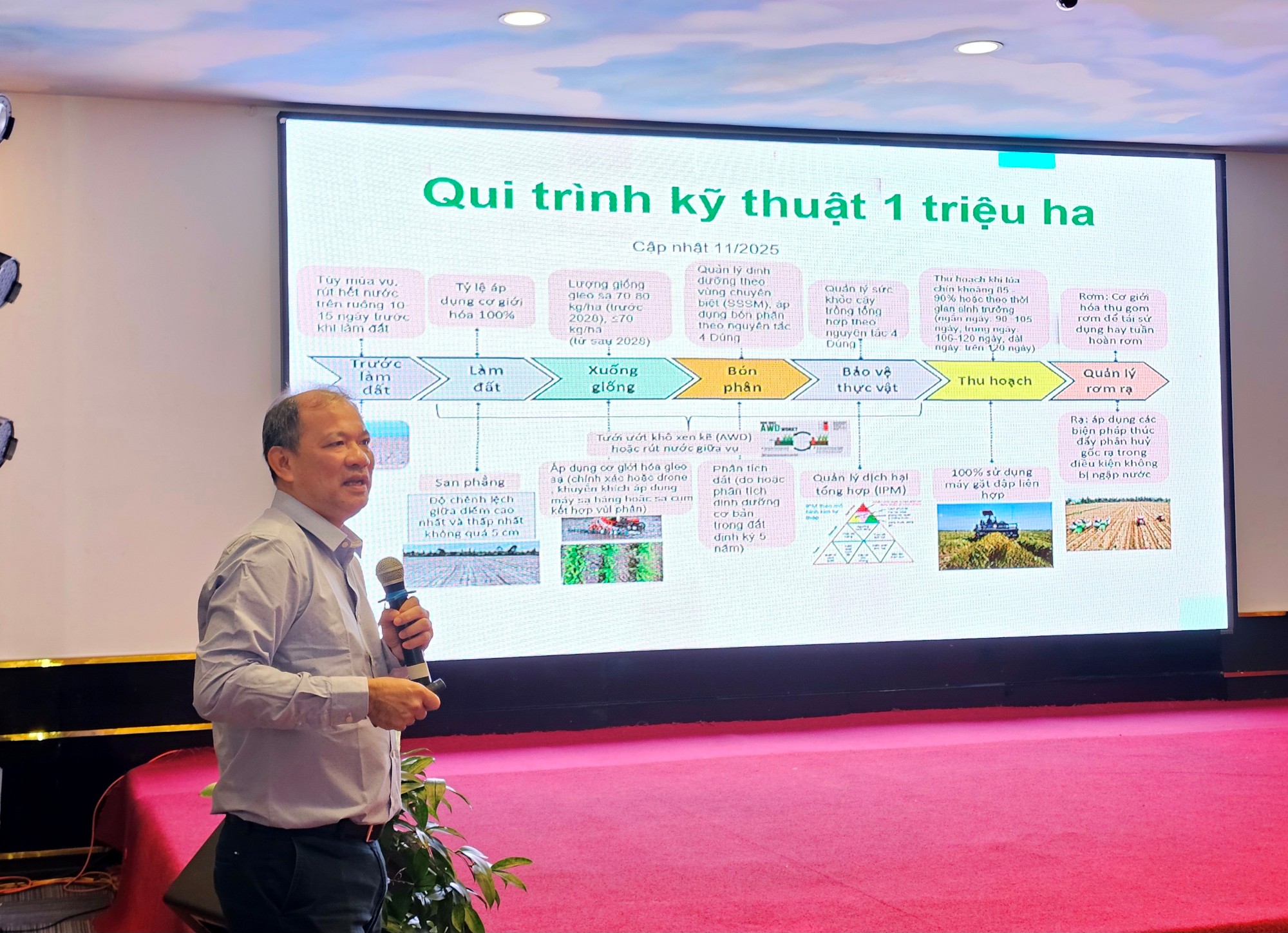
Crucially, Dr. Hung highlighted two mandatory conditions that must be met to qualify as compliant with the high-quality, low-emission rice production guidelines: (1) mid-season drainage applied at least 1–2 times (each lasting ≥3 days) and (2) no burning of rice straw in the field. These measures are recognized as the most effective interventions for reducing greenhouse gas emissions and protecting the environment.
The ViRiCert system defines three compliance levels for rice production:
- Level 0 (Not eligible for evaluation) – applies if the compliance index is below 50% or if mandatory requirements are missed.
- Level 1 – requires a compliance index of ≥50 and includes mandatory conditions like at least one mid-season drainage event (≥3 days) and no rice straw burning.
- Level 2 (Full compliance) – demands a minimum compliance index of 85%, implementation of at least two mid-season drainage events, and no straw burning, which serves as a "green passport" for accessing strict international markets.
Future roadmap and stakeholder feedback
The consultation workshop provided feedback on ViRiCert's rollout, with VIETRISA outlining a strategy to use agricultural extension officers, local technical personnel, and enterprises as the core team for farmer support and on-field verification. The immediate next step involves pilot implementation across approximately 10 cooperatives, targeting 500 hectares each, to certify an estimated 20,000 tons of rice during the Winter-Spring 2025-2026 crop season.
Experts emphasized that concurrent with this pilot, VIETRISA must promptly register the trademark and logo for the "Green Vietnamese, Low-Emission Rice" brand and develop a synchronized traceability system to prevent fraud and protect consumer confidence.
Stakeholders recommended several key technical and strategic refinements, including former agriculture Minister Dr. Cao Duc Phat's proposal to reclassify compliance with herbicide and plant protection product residues as a "zero-tolerance" criterion due to consumer prioritization of food safety.
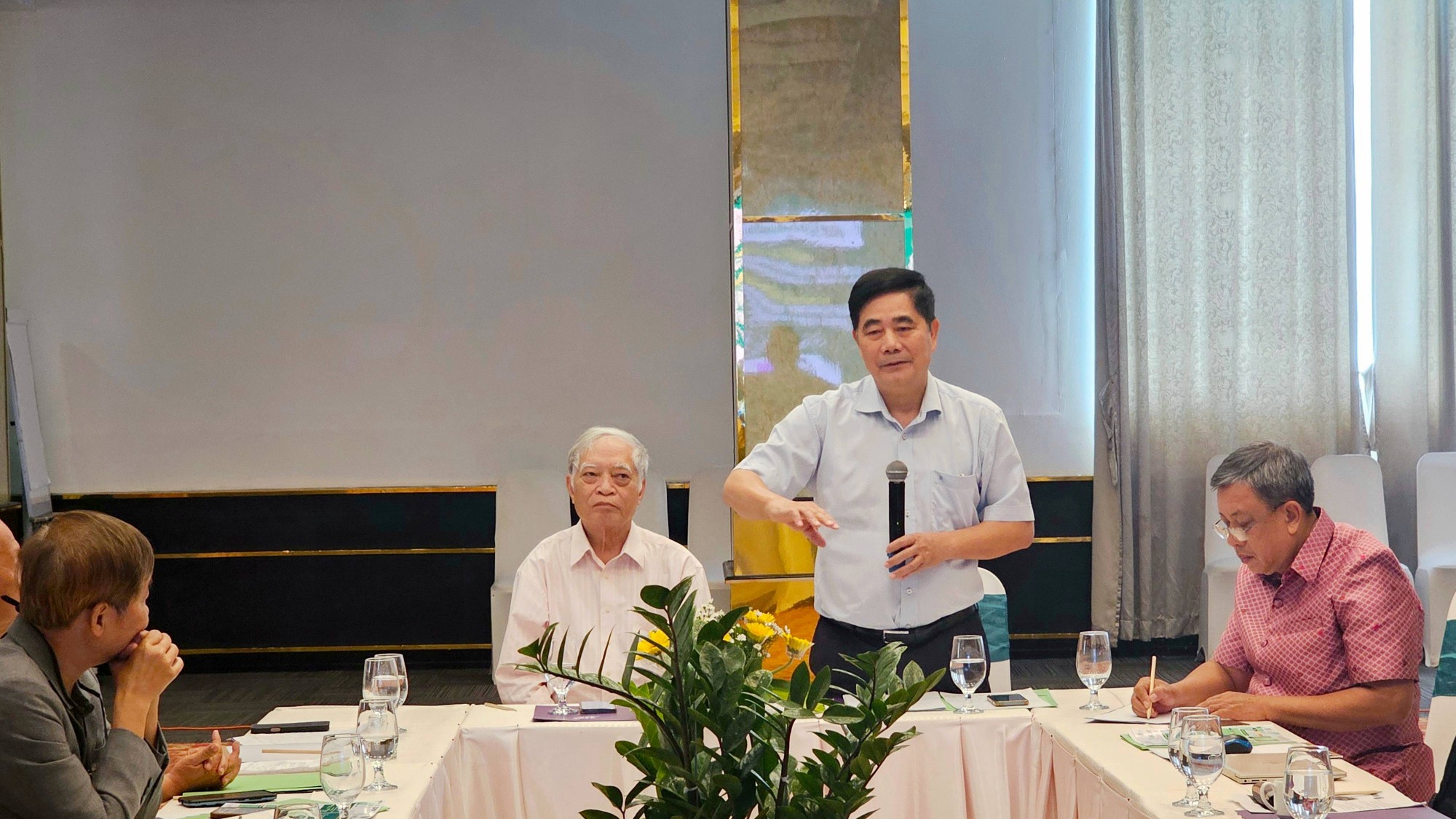
Additionally, both Dr. Phat and the World Bank's Mr. Cao Thang Binh advised that the current benchmarking framework must be expanded beyond paddy cultivation to comprehensively evaluate post-harvest handling and the quality/safety aspects of the finished milled rice product.
The beta version of the ViRiCert tool is accessible online at https://viricert.easyfarm.vn.
This work is partially funded by the World Bank MOM-P Project and CGIAR Scaling for Impact Program.