Rice Day at Bangkok Climate Action Week 2026 calls for joint action towards low-emission rice ambitions
- Farmers need economic reasons to adopt sustainable practices; environmental benefits must be accompanied by viable incomes, manageable production costs, and reduced financial risks.
- Markets and financing must support the transition to low-emission rice where buyers, financial institutions and other businesses help create demand, provide investment, and ensure that farmers benefit from more sustainable production.
(BANGKOK, Thailand) 7 October 2026—Stakeholders across the rice value chain linked the importance of making low-emission rice profitable for farmers to enable its wider adoption across Asia at Rice Day: Transforming the Rice Sector in Asia event during the Bangkok Climate Action Week.
The event was jointly organized by the Global Methane Hub, the International Rice Research Institute (IRRI), the Food and Agriculture Organization of the United Nations (FAO), and Deutsche Gesellschaft für Internationale Zusammenarbeit GmbH (GIZ)w ith the Climate and Clean Air Coalition (CCAC), Asia Philanthropy Circle and SIGMA as collaborators.
Decades of research have established several practices to reduce greenhouse gas emissions from rice cultivation, including alternate wetting and drying, improved fertilizer management, direct seeding and crop residue management. Yet knowing that these practices work does not automatically mean that farmers can or will adopt them.
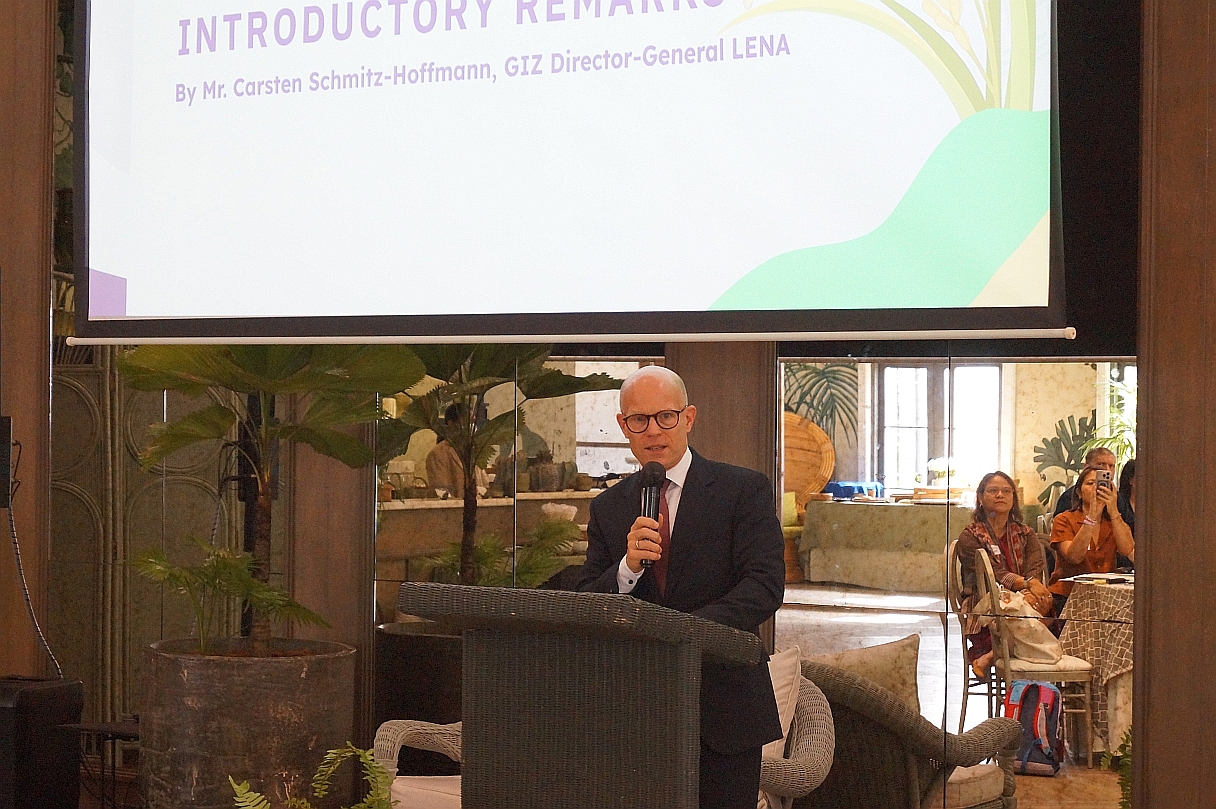
Opening the event, Mr. Carsten Schmitz-Hoffmann, Director General of theLENA Regional Department at GIZ stressed that low-emission rice production must become financially worthwhile for farmers. Beyond showing that these methods can reduce emissions, efforts to scale them must address the costs and risks farmers face when changing established practices.
Connecting knowledge, financing, and evidence
Making sustainable practices accessible requires more than agricultural research. Reliable evidence that low-emission solutions work helps guide investments and practical support to help farmers adopt new practices.
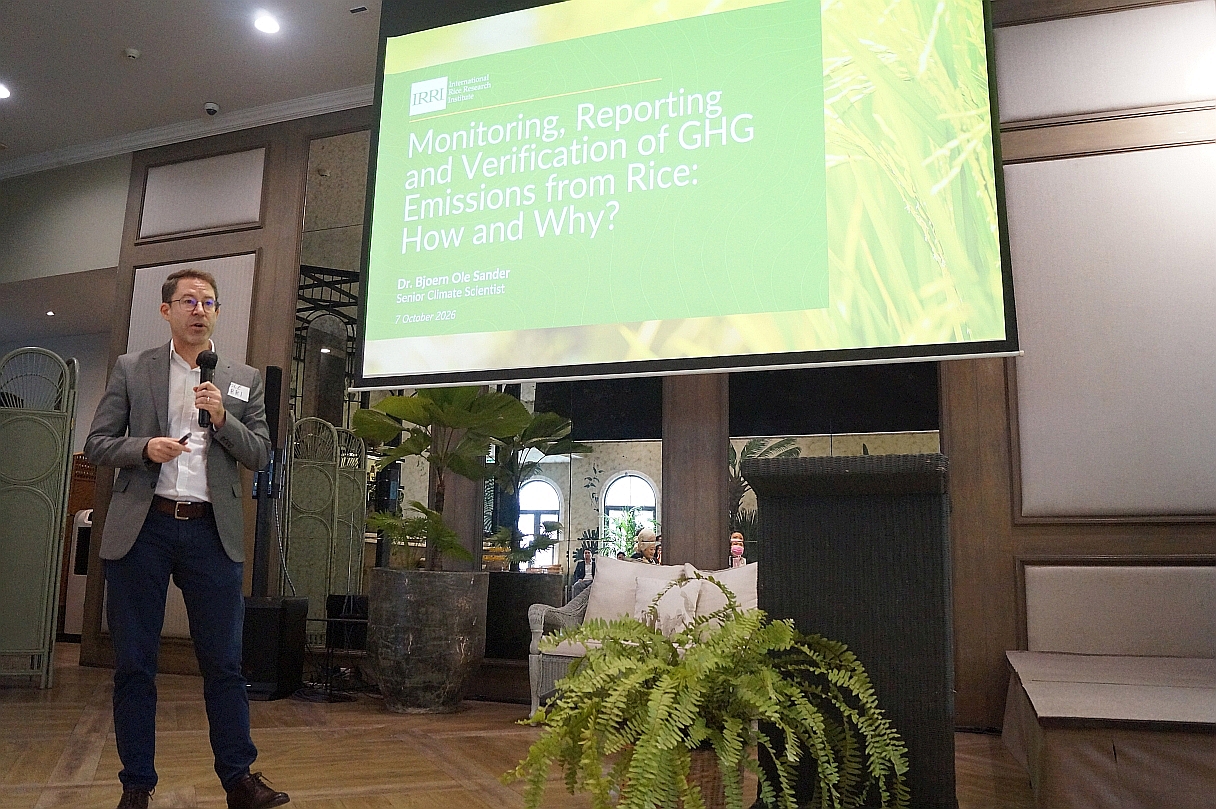
During the event, Dr. Bjoern Ole Sander, Senior Scientist for Climate Change and IRRI Country Representative for Thailand, presented digital monitoring and reporting approaches, including RiceMoRe and the ORYZA rice crop model, which can provide information on cultivation practices and production conditions to support agricultural decisions, climate reporting and investment.
To make data more useful, Ms. Lesly Goh, Scientist at the University of Illinois Urbana-Champaign and affiliated with SIGMA, called for shared information systems rather than isolated pilot projects. Mr. James Morris, Program Management Officer at the Climate and Clean Air Coalition (CCAC), emphasized connecting agricultural and emissions data with financing decisions and strengthening cooperation between agricultural and financial authorities.

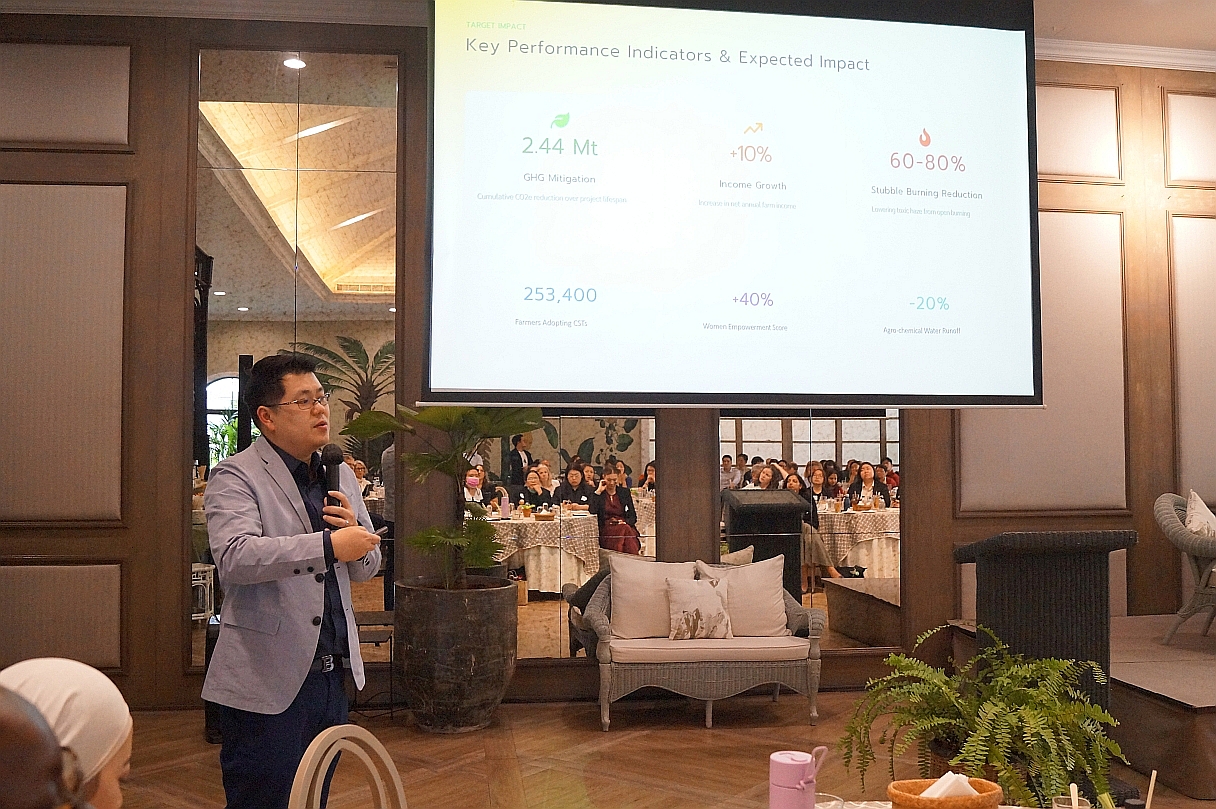
Farmers also need practical guidance to apply research-generated evidence. Dr. Atthawit Watcharapongchai, Head of Field Implementation of the Thai Rice project, presented an approach combining training for agricultural extension officers, farmer demonstrations and community champions. Weather information, online learning and digital reporting tools further support farmers in adopting improved practices.
Making sustainable rice production worthwhile
The importance of farmer support became clear through the experience of Ms. Putsadee Puangprakhon, a rice farmer from Buriram and participant in the Thai Rice project. After 15 years of office employment, she entered farming and experienced firsthand the uncertainty of depending on agricultural production for household income.
Changing rainfall patterns, extreme weather and limited irrigation water add to production risks. She also demonstrated how rice straw can be used for mushroom cultivation rather than burned, creating value from an agricultural residue.
Market opportunities can provide further incentives. Mr. Peetachai Dejkraisak, Chief Executive Officer and Co-founder of Jasberry Co., Ltd., described how certified organic rice reaches consumers in the United States and Europe, connecting healthier food with improved farmer livelihoods.
Dr. Jutarat Pattanatorn, Senior Director of Quality Assurance at CP Extra Public Company Limited, similarly highlighted opportunities for higher returns through sustainable production, while emphasizing that premiums must cover any additional cultivation costs. Food safety, transparency and consumer confidence also influence demand.
However, market opportunities do not eliminate financial risks. Mr. Supachai Thammasiri, Assistant Director of the Office of Foreign Affairs at Thailand's Bank for Agriculture and Agricultural Cooperatives (BAAC), explained that lenders must consider how changing practices affects farmers' incomes and ability to repay loans.
Sharing responsibility for the transition
The question of who bears the costs of agricultural transformation extended across the discussions.
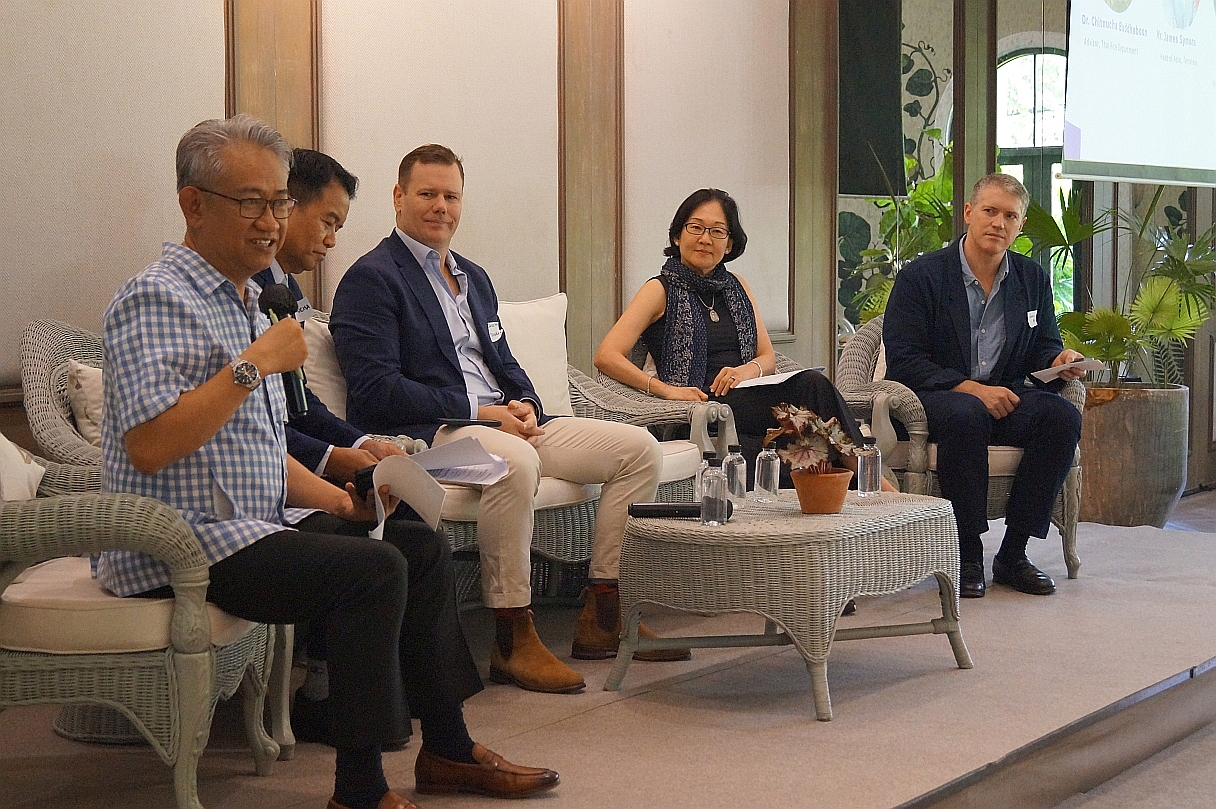
Dr. Chitnucha Buddhaboon, Adviser to the Rice Department of Thailand's Ministry of Agriculture and Cooperatives, stressed that agricultural policies must benefit farmers rather than simply demand compliance. Mr. James Symons, Head of Asia at TerraNex, likewise recognized that farmers operating on narrow margins cannot bear the full costs of changes that deliver wider environmental benefits.
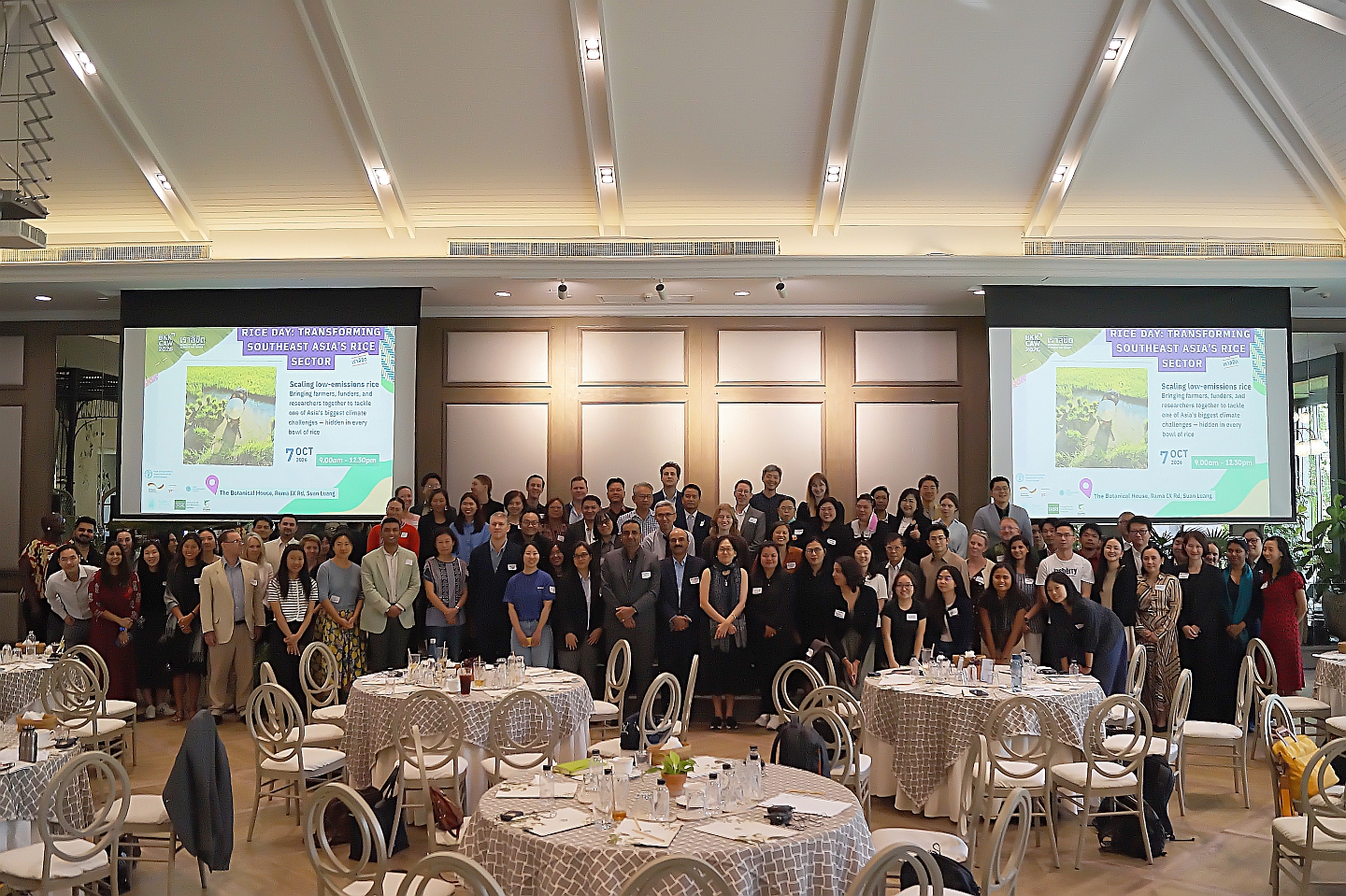
Nearly 100 representatives gathered at Rice Day, reflecting the range of institutions needed to support this transition. Research institutions provide technologies and evidence, governments enable agricultural services, financial institutions support investment, and businesses create demand for sustainably produced rice.
The challenge is connecting these contributions so that farmers have the means and motivation to change. Low-emission practices can become widespread when they are not only environmentally beneficial, but also practical, affordable and economically rewarding for those expected to implement them.
Bangkok Climate Action Week, held from 3 to 11 October 2026, provided a platform for discussions on how climate ambitions can translate into practical changes across economies and communities. Agriculture featured prominently in these conversations, particularly rice production, which supports millions of livelihoods across Asia while contributing significantly to agricultural methane emissions.