Project Details

Van Schepler-Luu
Scientist II - Plant Pathology and Host Plant Resistance
SDG


Background
Rising soil salinity is a growing threat to rice production worldwide, reducing yields and impacting farmer livelihoods. Despite this, there is limited understanding of how planting density and soil microbial health affect rice tolerance to salt stress.
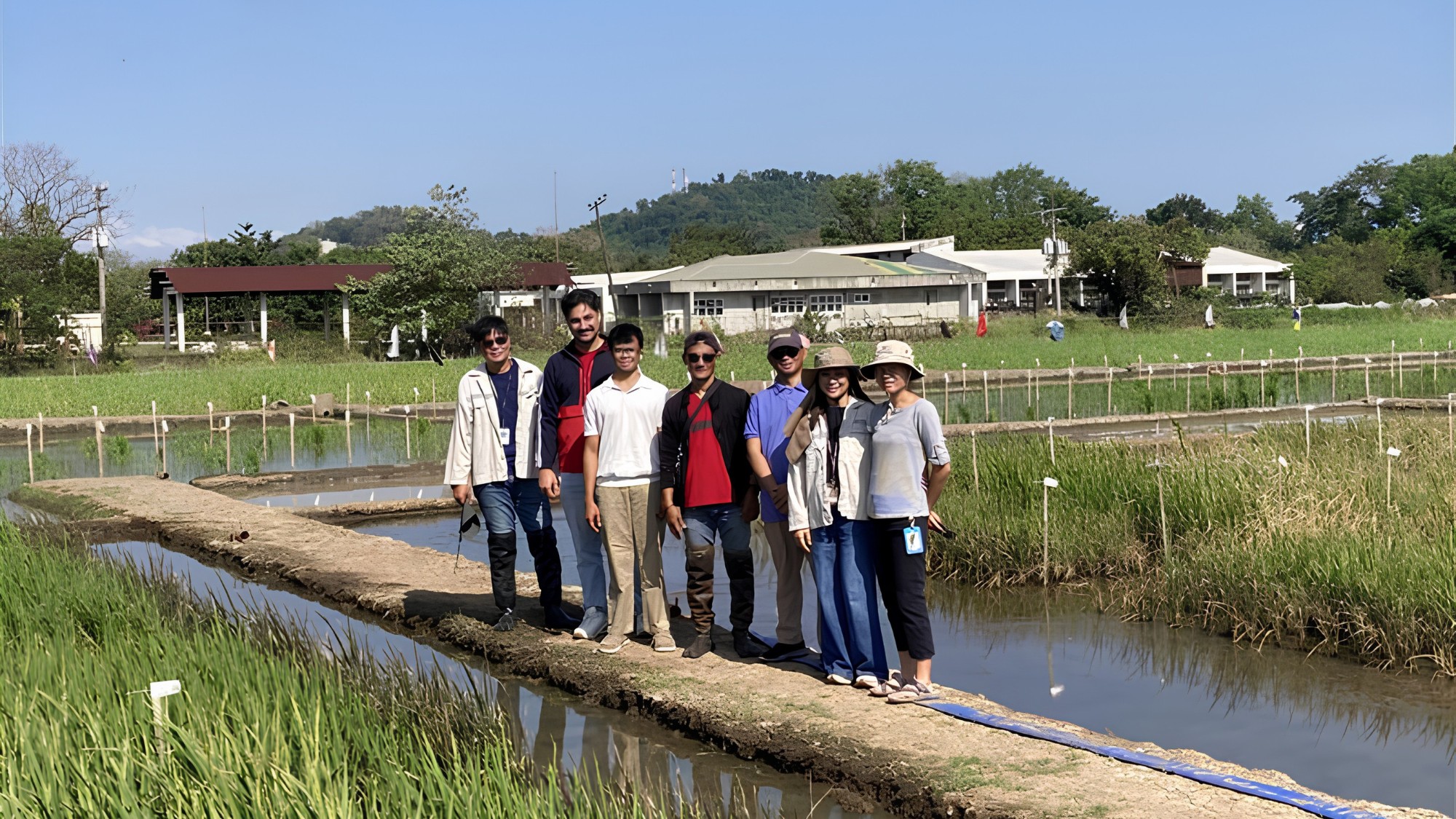
Building on earlier research at Wageningen University & Research (WUR) in the Netherlands, which examined rice responses to salinity at the seedling stage, this project advances to field trials at IRRI in the Philippines. The experiments will evaluate several rice varieties under different combinations of salinity and planting density, measuring shoot and root growth, yield components, and the elemental composition of plant tissues.
The study will also investigate how the root microbiome responds to these conditions. By examining these interactions, the project aims to clarify how salinity and planting density influence ion accumulation, plant performance, and overall yield.
Objectives
The project aims to understand how rice responds to soil salinity under different planting densities, including effects on growth, yield, nutrient composition, and the root microbiome, with the goal of supporting climate-resilient rice production.