EFFECT project reaches Mindanao to support wider adoption of agricultural technologies
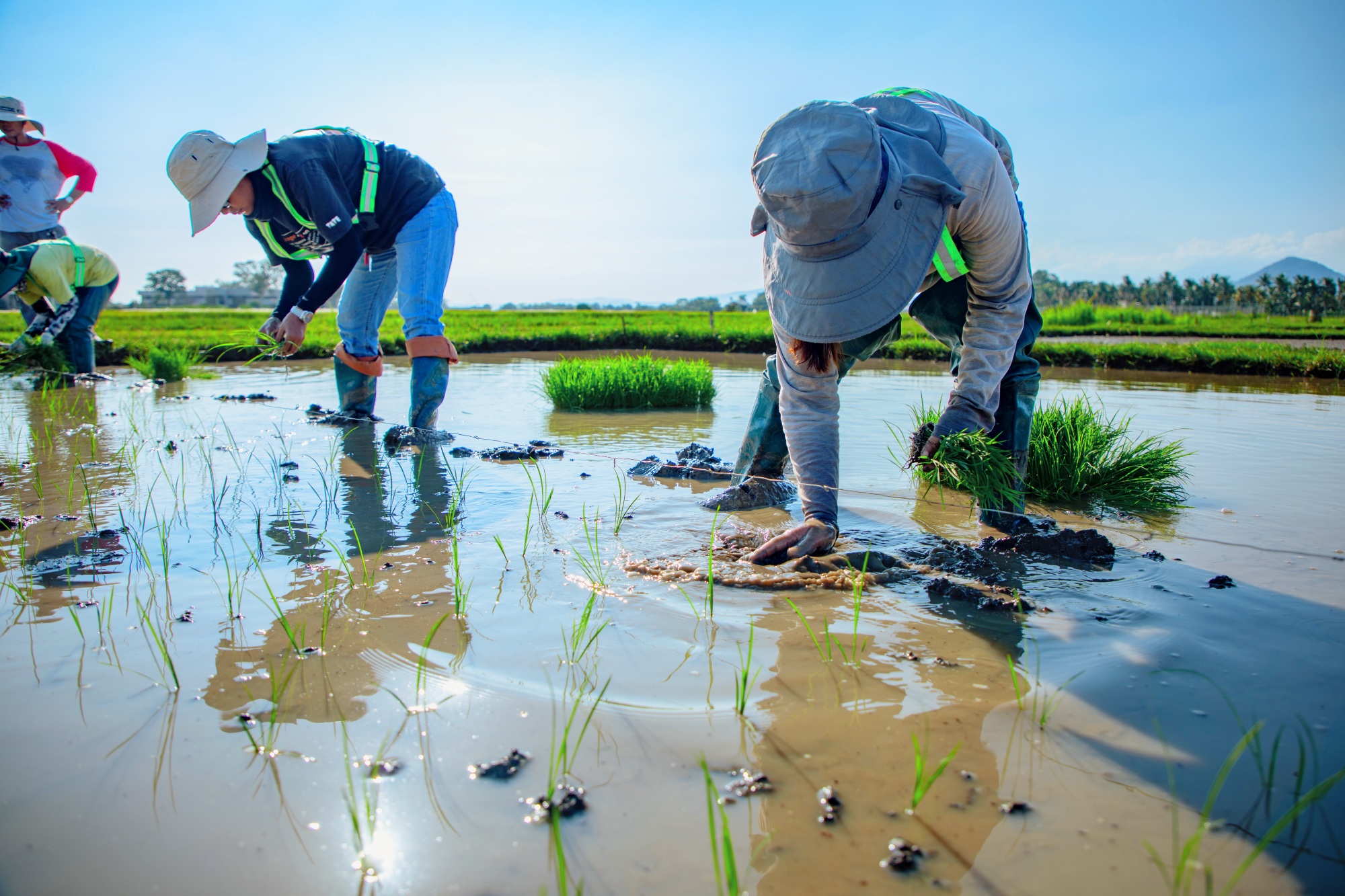
From Northern Luzon and Eastern Visayas, DA-BAR and IRRI’s EFFECT project has reached Mindanao to support wider adoption of climate-smart technologies in Philippines’ rainfed rice areas.
MALAYBALAY CITY, Philippines (8 October 2026) — In Mindanao where more than half of the Philippines’ rainfed rice lands are found, the slow adoption of available technologies and growing climate risks remain among the major challenges that constrain farmers’ productivity and resilience.
To support wider and faster uptake of climate-smart innovations, the Department of Agriculture-Bureau of Agricultural Research (DA-BAR), supported by the International Rice Research Institute (IRRI), brought together local agricultural partners from Zamboanga Peninsula, Northern Mindanao, and Agusan del Sur to help them identify existing and preferred agricultural innovations, determine challenges and opportunities for wider adoption, and validate crop suitability maps applicable to local growing conditions.
The activity builds on earlier engagements of the Enhancing Frameworks for Fast and Effective Cascading of Technologies in Agriculture (EFFECT) project in Ilocos Region, Cagayan Valley, and Eastern Visayas to support DA-BAR's SCALE UP project by integrating crop suitability mapping, innovation profiling, and locally informed scaling approaches into its implementation.
Bringing local knowledge to agricultural planning
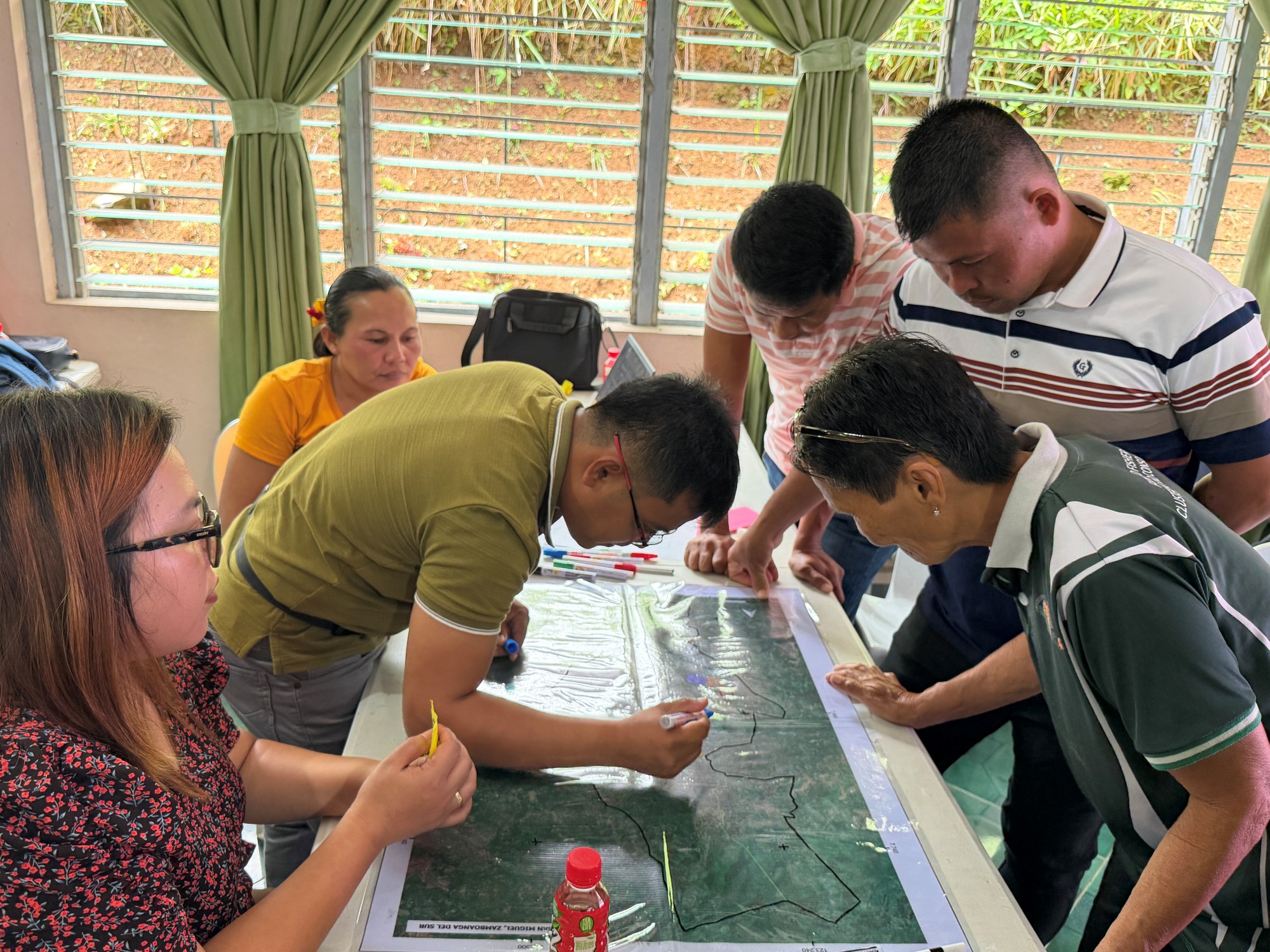
Through participatory crop suitability map validation, the EFFECT project team gathered local knowledge and field experience to assess preliminary maps. These will support more informed decisions on crop targeting and agricultural planning, as well as the targeting of innovations that will be deployed through DA-BAR's SCALE UP Program.
Based on cultivation area, income contribution, and food value, regional groups identified major and priority crops, including their cropping sequences, such as rice-rice, rice-corn, and corn-corn and patterns involving banana, potato, vegetables, and sugarcane. Planting and harvesting periods on 12-month cropping calendars were also considered to capture the cropping schedules across wet and dry seasons.
Participants used base maps to mark local cropping patterns for subsequent digitization. This approach recognizes the importance of combining spatial information on climate, soil, and terrain with farmers' and local implementers' understanding of the actual growing conditions and seasonal cropping calendar.
Understanding innovations and their scaling potential
Scaling requires coordinated support throughout the production and marketing cycle. These preliminary insights point to approaches that build existing local organizations and programs while addressing the financing, service delivery, and infrastructure gaps that limit sustained adoption.
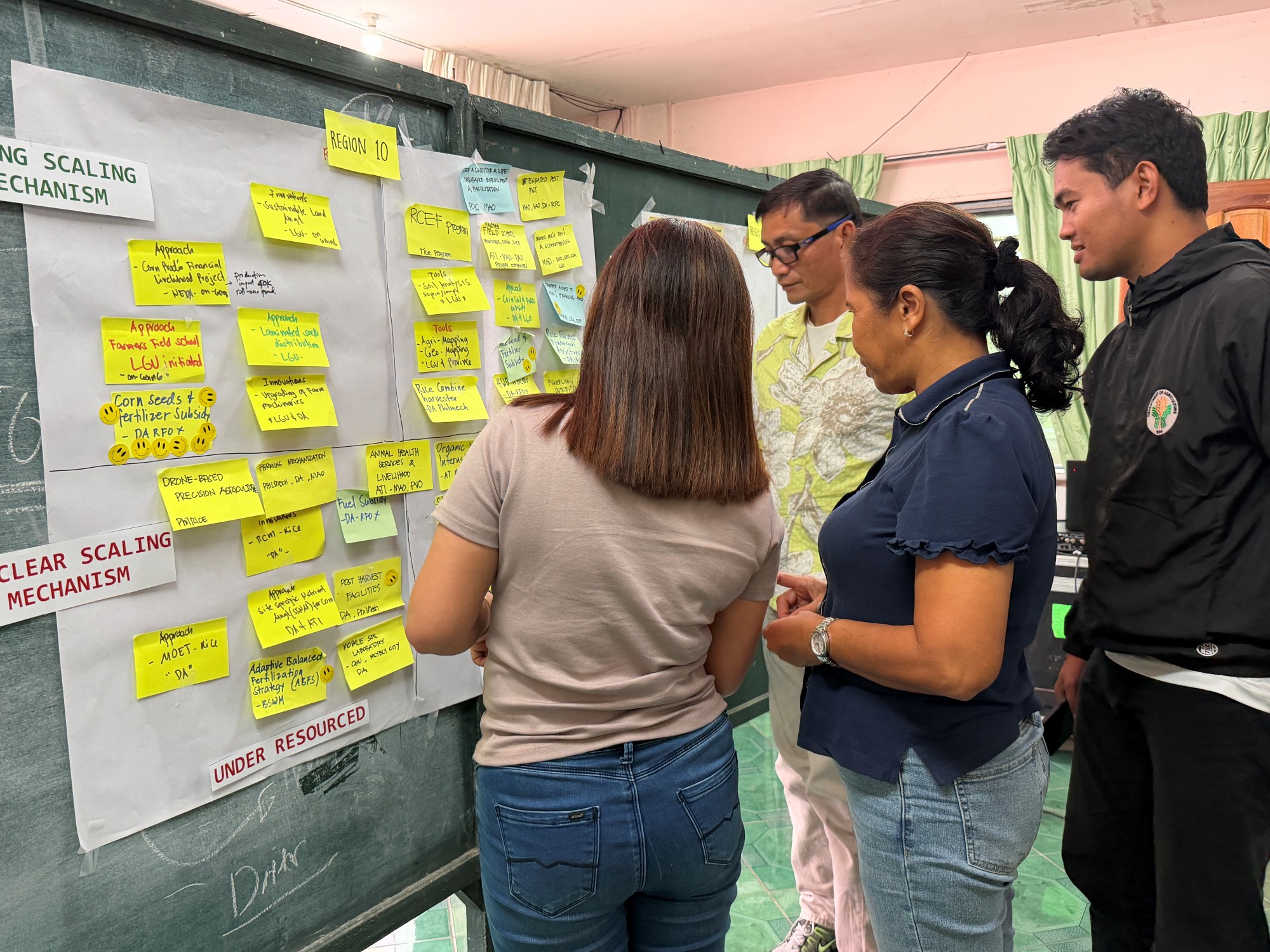
Discussions during stakeholder mapping and scaling mechanisms revealed approaches that are already working for farmers to access, afford, and sustain their use of agricultural innovations.
In Zamboanga Peninsula, existing corn clusters connect farmers with input suppliers, financing, hauling services, and buyers. Packaging other relevant innovations with this scaling pathway, harnessing viable business arrangements can provide benefits to both farmers and private sector partners at scale.
In Northern Mindanao, local government funded seed and fertilizer subsidies, mechanization, and agricultural support services can be leveraged as an existing foundation for scaling. Strengthening farmer associations as service providers emerged as a possible approach, supported by technical, business, and financial management training. Experiences shared during the workshop highlighted the importance of machinery service fees that cover operations, maintenance, and eventual replacement.
In Agusan del Sur, soil testing, upland development, and market-linkage initiatives suggested opportunities to connect site-specific production support with market requirements. Soil-based fertilizer recommendations and planting materials suited to local conditions could be complemented by buyer linkages and quality training. Addressing irrigation, transport, and post-harvest constraints would also be necessary, including ensuring that facilities have the power supply and operating resources needed to function.
Turning local evidence into scaling decisions
Insights from the joint regional activity generated information will contribute to innovation profiling, further crop suitability assessment, and the identification of locally appropriate scaling pathways. By bringing local farming conditions and existing support systems in the same discussions, the EFFECT project can help the SCALE UP program determine appropriate innovations for scaling, gaps that limit wider use, and support needed for sustained adoption.
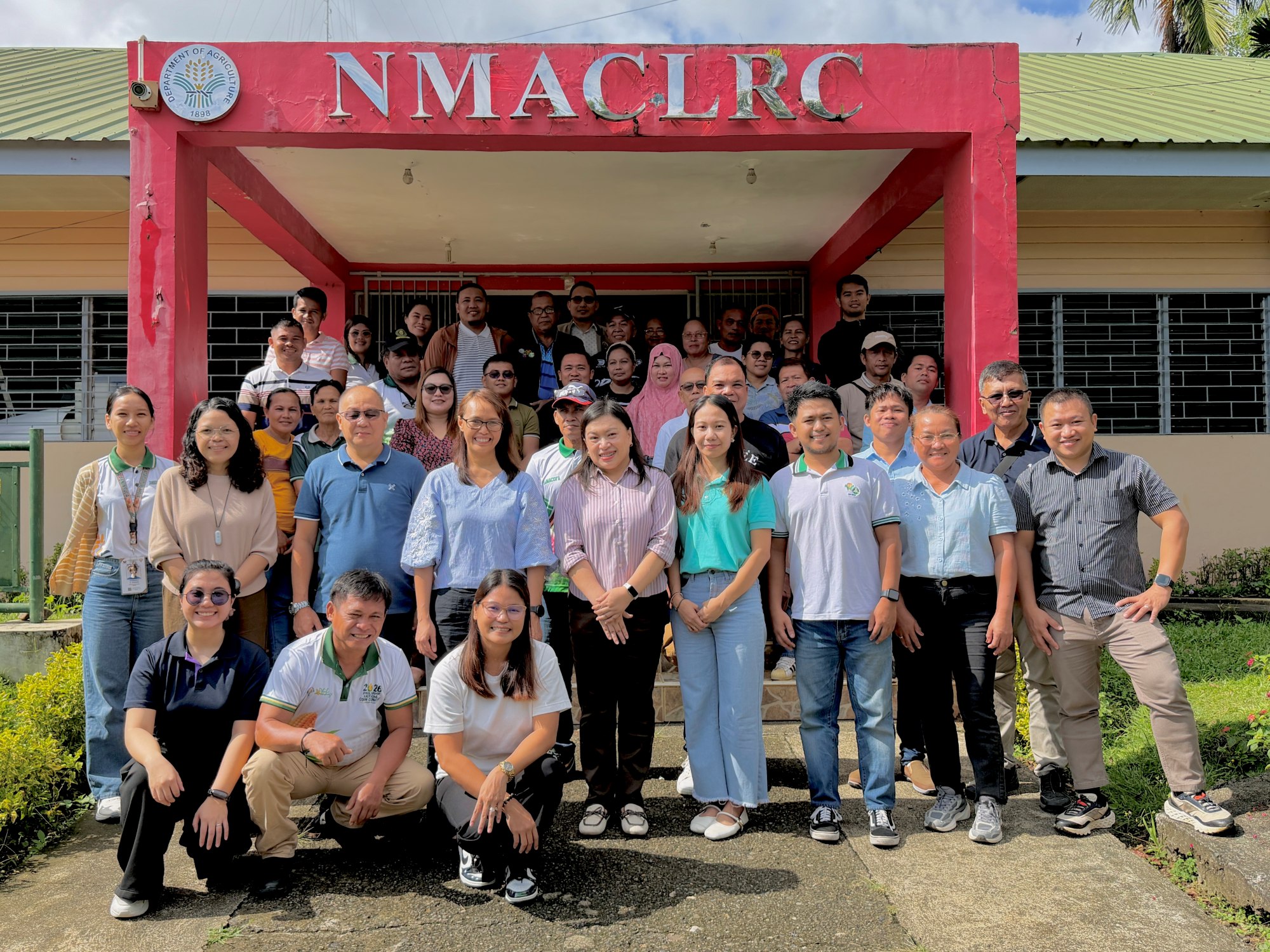
The activity was held at the Northern Mindanao Agricultural Crops and Livestock Research Center (NMACLRC) in Dalwangan, Malaybalay City, Bukidnon, with representatives from DA regional field offices (DA-RFOs), local government units (LGUs), farmer organizations, cooperatives, DA-BAR, and IRRI.
It was conducted with the support and coordination of regional project leaders John Paul F. Guadalupe of Region IX (Zamboanga Peninsula), Rosell P. Tuba-on of Region X (Northern Mindanao), and Armando G. Valiente of Agusan del Sur (Region XIII).
The IRRI EFFECT Project Team included Dr. Rica Joy Flor, Benedict Jardinero, Abigail Mabilangan, Jeny Raviz, and Jemie Carla De Leon, with DA-BAR representatives Kim Adrian Alexis Bregildo and Mira Luz Umandap.
The EFFECT Project is implemented by IRRI with funding support from DA-BAR.