‘Fertilize Right’ Project Showcases Digital and Precision Agriculture in Can Tho
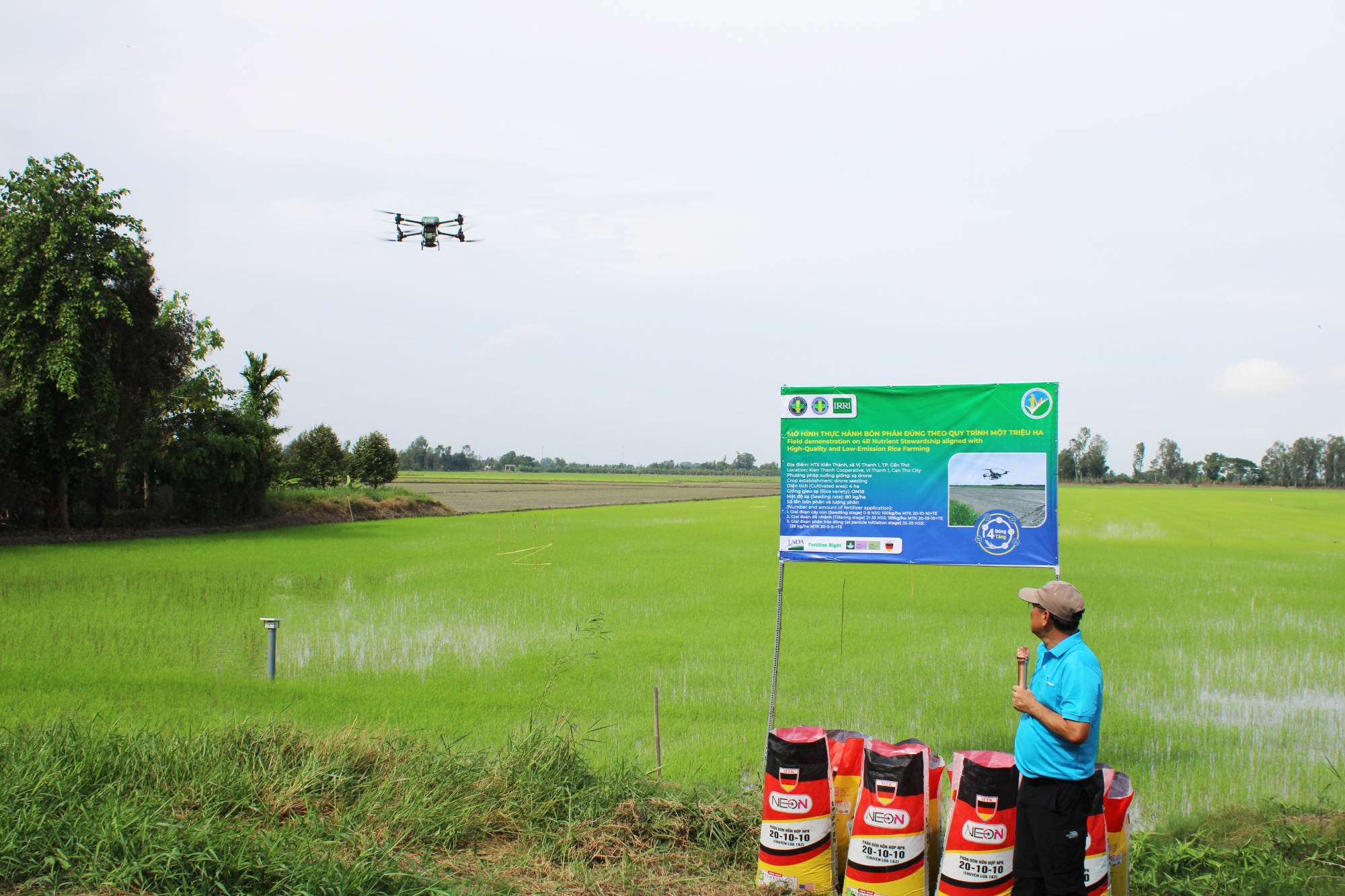
Can Tho, Vietnam (May 11, 2026) — As rice farmers confront the challenges of rising agricultural input costs and the urgent need to reduce greenhouse gas emissions, precision nutrient management has become an essential tool for maintaining productivity while promoting environmental sustainability. In response to these challenges, the International Rice Research Institute (IRRI) collaborated with the Can Tho Department of Agriculture and Environment and the MTK Huu Thanh Fertilizer Joint Stock Company to host a workshop and technology demonstration. This event took place at the Kien Thanh Agricultural and Service Cooperative in Can Tho City, as part of the Fertilize Right (FerRight) project, funded by the U.S. Department of Agriculture (USDA).
Mr. James Yi, Agricultural Attaché at the USDA, highlighted that rice farmers are under significant pressure to maintain productivity and minimize losses while managing rising costs. This necessitates a fundamental shift toward more efficient and precise fertilizer use. Science- and technology-driven solutions are proving to be effective. Dr. Nguyen Van Hung, a scientist at IRRI and head of the FerRight Project, explained that integrating region-specific digital fertilizer applications with practices such as row seeding with fertilizer incorporation, improved fertilizers, water management, and straw management can reduce nitrogen fertilizer use by up to 30%. These methods also allow for lower seed rates while maintaining or increasing yields, reducing post-harvest losses, and lowering emission rates.
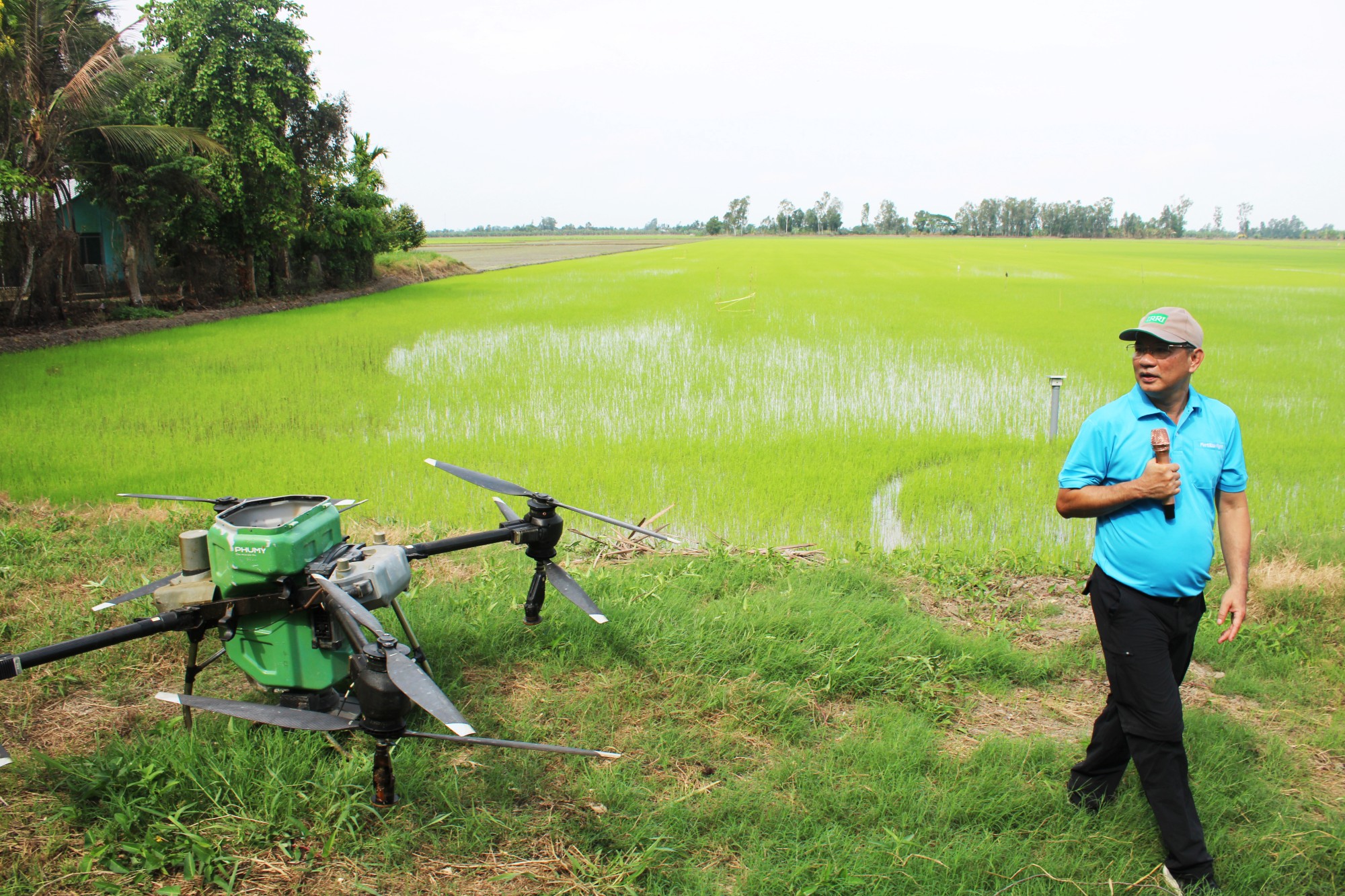
A key highlight of the workshop was a live field demonstration of drone technology for fertilizer application. This modern approach was showcased on a field utilizing a wide-narrow row arrangement for Direct Seeded Rice (DSR), combined with fertilizer deep placement techniques. This powerful combination of mechanization and precision allows for more efficient nutrient uptake by the rice plants, significantly reducing fertilizer waste and lowering production costs, which alleviates farmers' financial concerns amid global supply strains that threaten to drive up food prices.
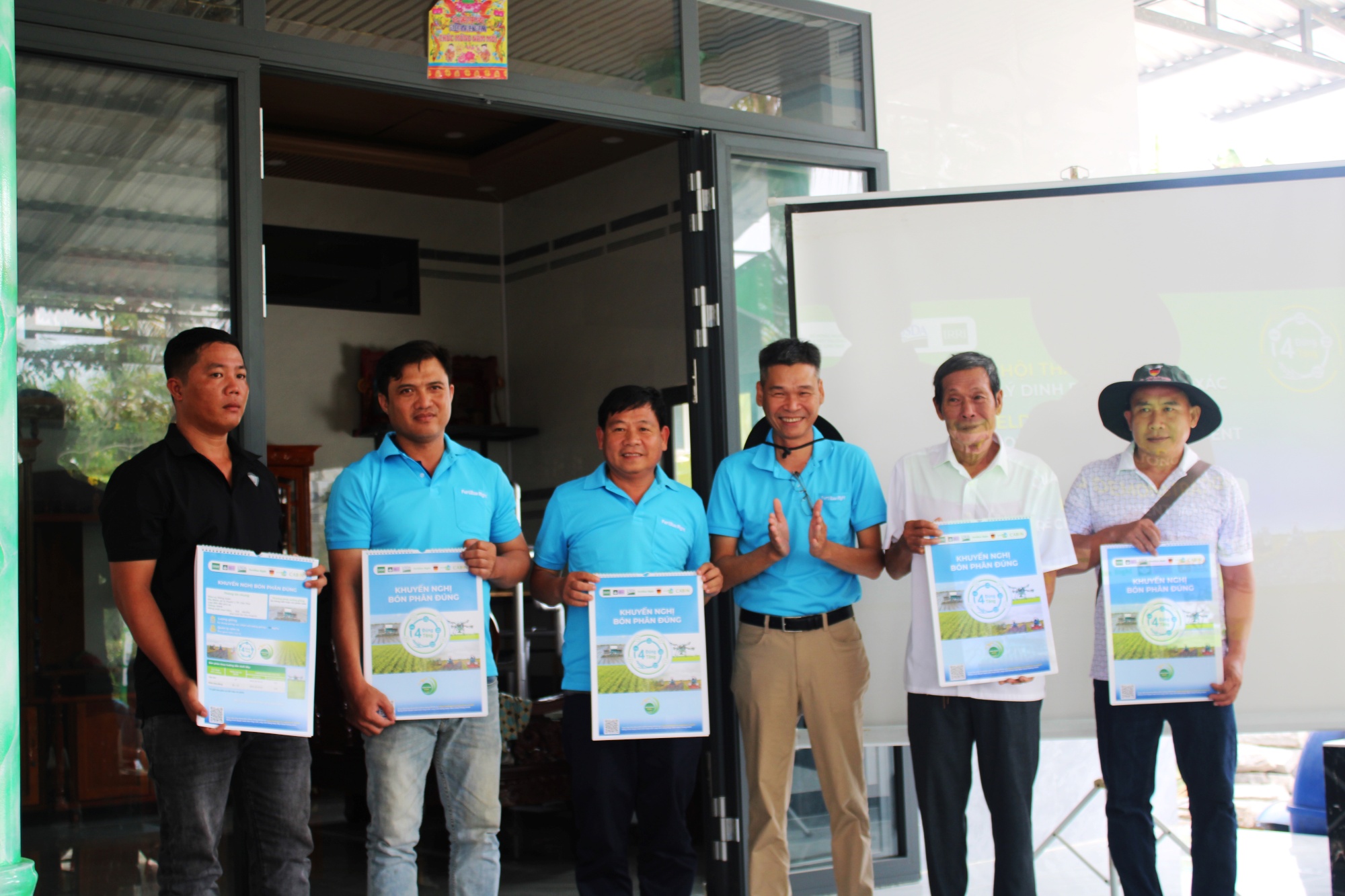
Workshop participants received a comprehensive, hands-on introduction to the Rice Crop Manager (RCM) digital application. Using their smartphones, attendees learned how to generate site-specific farming recommendations. Developed by IRRI scientists as a specialized version for Vietnam, the RCM app is a web-based platform designed to provide farmers with tailored information on crop and nutrient management. By analyzing specific farming conditions—including soil characteristics, crop seasons, and cultivation methods—the tool helps improve fertilizer-use efficiency, minimize nutrient losses, reduce input costs, and maximize farmer income. At the same time, it lowers greenhouse gas emissions while enhancing rice productivity, quality, and value. Rice farmers and extension workers can access the digital application directly at Rice Crop Manager.
In Can Tho City, the Sub-Department of Crop Production and Plant Protection has worked closely with IRRI to deploy the RCM app across many localities. The tool is considered a practical solution to promote digital transformation and precise nutrient management within Vietnam's ambitious One-Million-Hectare High-Quality, Low-Emission Rice Program (1mHa). Ms. Nguyen Thi Giang, Deputy Director of the Can Tho DAE, noted that innovation in farming methods, the application of science and technology, and digital transformation have been identified as key tasks for the city's agricultural strategy.
The city is currently implementing the scheme across 64 communes and wards, covering nearly 171,000 hectares through 171 cooperatives and cooperative groups. Pilot models have shown remarkable effectiveness, reducing nitrogen fertilizer use by over 30% and cutting pesticide spraying by two to three times. As a result, farmers’ profits have increased by VND 1.3 to 6.5 million per hectare compared to traditional farming methods, while greenhouse gas emissions have decreased by 6 to 12 tons of CO2 per hectare.
According to Ms. Giang, collaboration among IRRI, enterprises, cooperatives, and the local agricultural sector has helped bridge the gap between scientific research and practical production. In the near future, the Can Tho DAE will continue to work with international organizations, enterprises, and localities to support farmers and cooperatives in expanding advanced farming solutions and accelerating digital transformation, with the aim of developing a high-quality, low-emission rice industry in the Mekong Delta.
This innovative work under the 1mHa Program is made possible through the support of the USDA-Fertilize Right project, CGIAR Scaling for Impact program, and TaiwanICDF Capacity Building for Sustainable and Low-Carbon Rice Innovations in Southeast Asia (CABIN) project.