IRRI and Chinese partners discuss new five-year cooperation plan to advance rice innovation and South-South collaboration
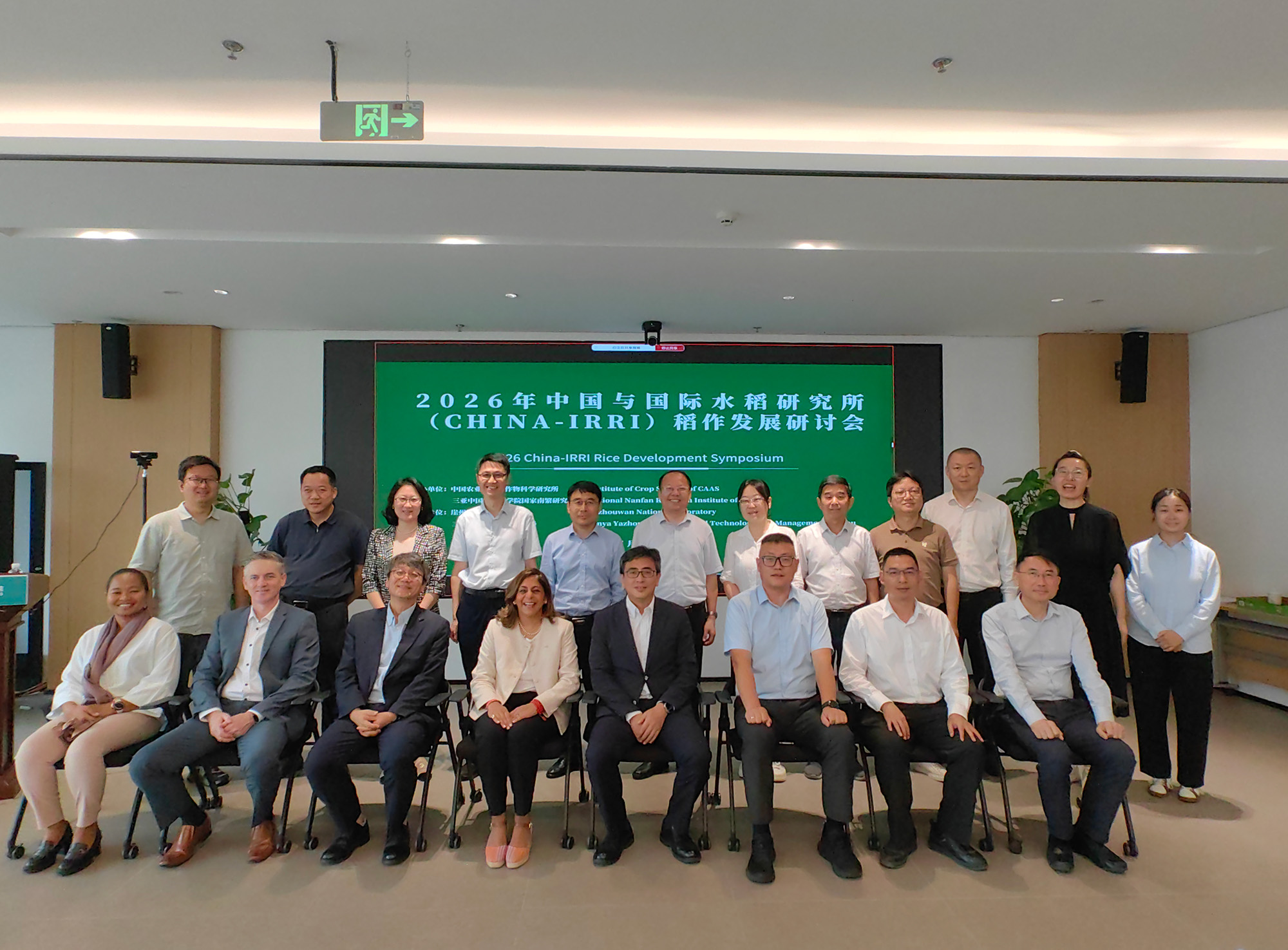
Sanya, Hainan, China, 14 May 2026 — The International Rice Research Institute (IRRI) and key Chinese partner institutions held a cooperation exchange symposium in Yazhou Bay Science and Technology City, Sanya, to review the foundation of long-standing collaboration and discuss priorities for a new five-year cooperation plan.
The symposium brought together representatives from Hainan Province, Sanya City, Yazhou Bay Science and Technology City Administration, the Chinese Academy of Agricultural Sciences, the National Nanfan Research Institute of CAAS, the China National Rice Research Institute, SDIC Seed Industry, the Shanghai Academy of Agricultural Sciences, and IRRI.
The meeting focused on deepening strategic cooperation between IRRI and Chinese partners, with particular emphasis on rice breeding innovation, germplasm resource evaluation, climate-resilient varieties, low-carbon production systems, talent development, and the transformation of research outcomes into practical impact.
Participants noted that cooperation between IRRI and Chinese institutions has built a strong foundation since the 1970s, covering germplasm exchange, genetic resource evaluation, varietal improvement, researcher training, international project cooperation, and platform development. The establishment of the CAAS–IRRI Sanya International Rice Breeding Center in 2022 was highlighted as an important platform for advancing joint research and international collaboration.
During the meeting, Chinese partners emphasized the strategic role of Hainan, Sanya, and Yazhou Bay Science and Technology City in supporting Nanfan research, tropical-zone field trials, international agricultural science cooperation, and the commercialization and extension of research outcomes. Hainan Province expressed support for the substantive operation of the Sanya International Rice Resources and Breeding Center, including joint research projects, seed resource introduction and evaluation, and collaborative research in frontier areas such as climate-resilient rice, smart breeding, biofertilizers, and low-carbon rice production.
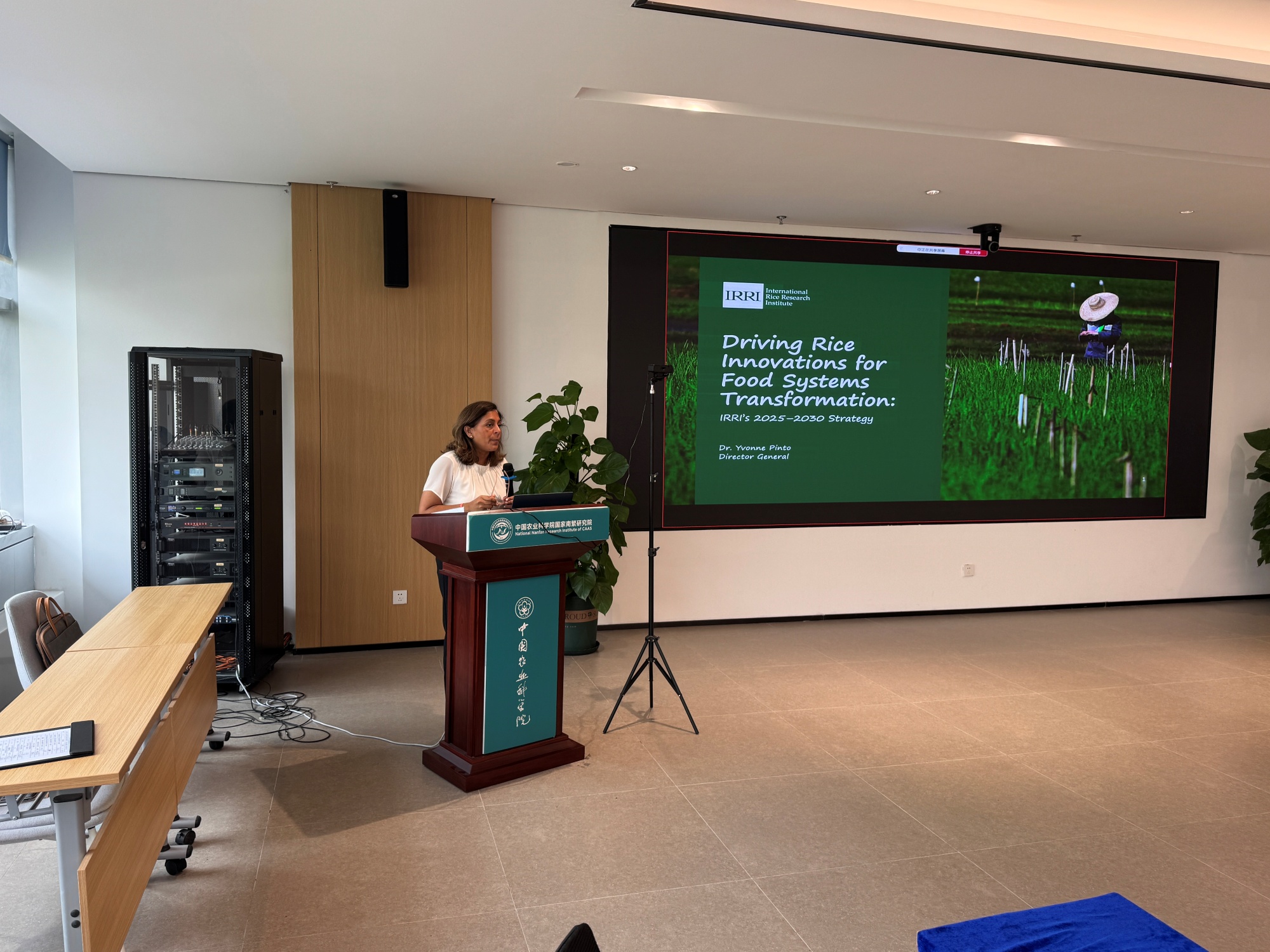
IRRI emphasized that future cooperation should be focused, practical, and measurable. Rather than dispersing efforts across too many areas, participants agreed to prioritize cooperation fields with strong strategic value, clear practical demand, and high potential for international impact. Breeding innovation was identified as a core direction, including the precise characterization of germplasm resources, discovery and utilization of important traits, integration of advanced breeding technologies, improvement of nutritional quality, development of climate-resilient varieties, multi-location testing, and regional adaptability evaluation.
A key consensus from the symposium was the need to establish a full-chain cooperation pathway linking research, breeding, multi-location testing, variety evaluation, commercialization, demonstration, and extension. Participants also discussed the importance of unified phenotypic evaluation standards, common check varieties, synchronized testing systems, and data-sharing rules to support AI-assisted breeding, precise evaluation, and joint breeding programs.
Chinese partner institutions also put forward specific cooperation needs. These included deeper collaboration in germplasm resource evaluation, varietal innovation, high-yield and high-efficiency production, green and low-carbon development, pest and disease resistance, international extension, tropical rice varietal innovation, digital decision-making, intellectual property mechanisms, enterprise participation, overseas market development, and integrated rice-fish farming technologies.
South-South cooperation was identified as an important future direction. Participants proposed strengthening collaboration in varietal extension, demonstration of green production technologies, technical training, young scientist exchange, and capacity building for developing countries in Asia and Africa.
The symposium concluded with a shared commitment to move cooperation from consensus to concrete projects, from agreements to actions, and from exchanges to measurable outcomes. Participants agreed to establish regular exchange mechanisms, including high-level strategic dialogues, thematic working groups, mutual visits by young scientists, short-term training programs, joint seminars, and coordinated project applications.
Through this renewed cooperation framework, IRRI and its Chinese partners aim to contribute to rice science innovation, food security, climate resilience, and sustainable agricultural development in China and beyond.