Improving Rice Crop Establishment through Japan’s Iron-Coated Rice Technology
By Kazuki Saito, Virender Kumar, Jerico Bigornia, and Iris Bugayong
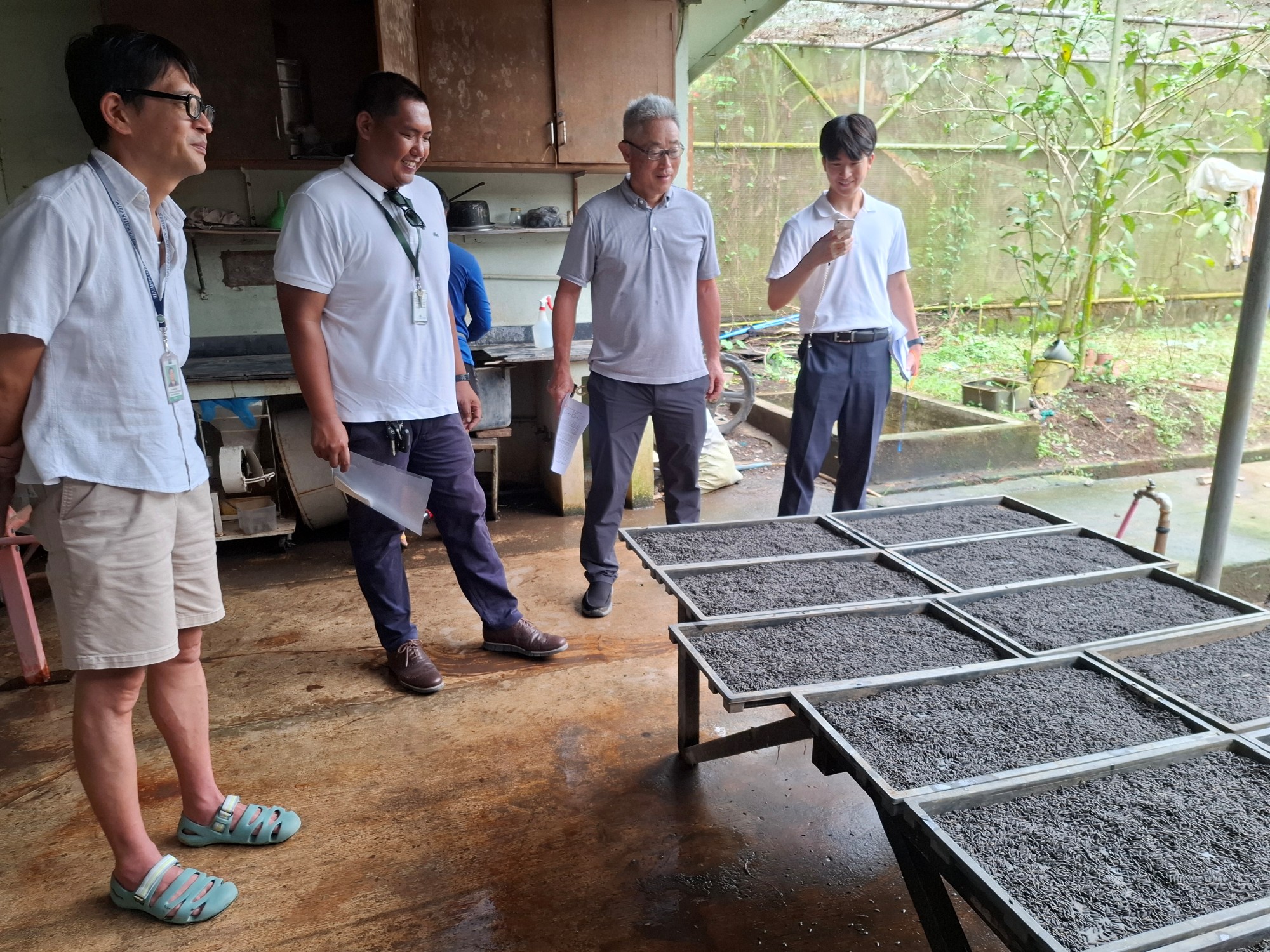
Through DSRC and a MAFF-supported project, researchers and partners are evaluating Japan’s iron-coating technology for improved crop establishment as well as reducing methane emissions.
Across Asia, rice farmers face mounting challenges: labor shortages, rising input costs, persistent weed pressure, stagnant water in poorly drained fields, early flooding during crop establishment due to unpredictable heavy monsoon rainfall, and the urgent need to reduce greenhouse gas (GHG) emissions from flooded systems. Conventional rice transplanting requires substantial labor input. On the other hand, wet direct seeding, although more time-efficient, frequently results in irregular crop stands and suboptimal establishment, especially under conditions of sudden flooding during the crop establishment phase or uneven field leveling. In wet-direct seeded rice (DSR), seeds that are sown on the surface of puddled fields are prone to drift if heavy rainfall occurs soon after planting. They are also more susceptible to biotic stresses such as bird predation and rodent damage, which often result in uneven and poor crop establishment.