Odisha Government, IRRI, and partners launch project to climate-proof ag system
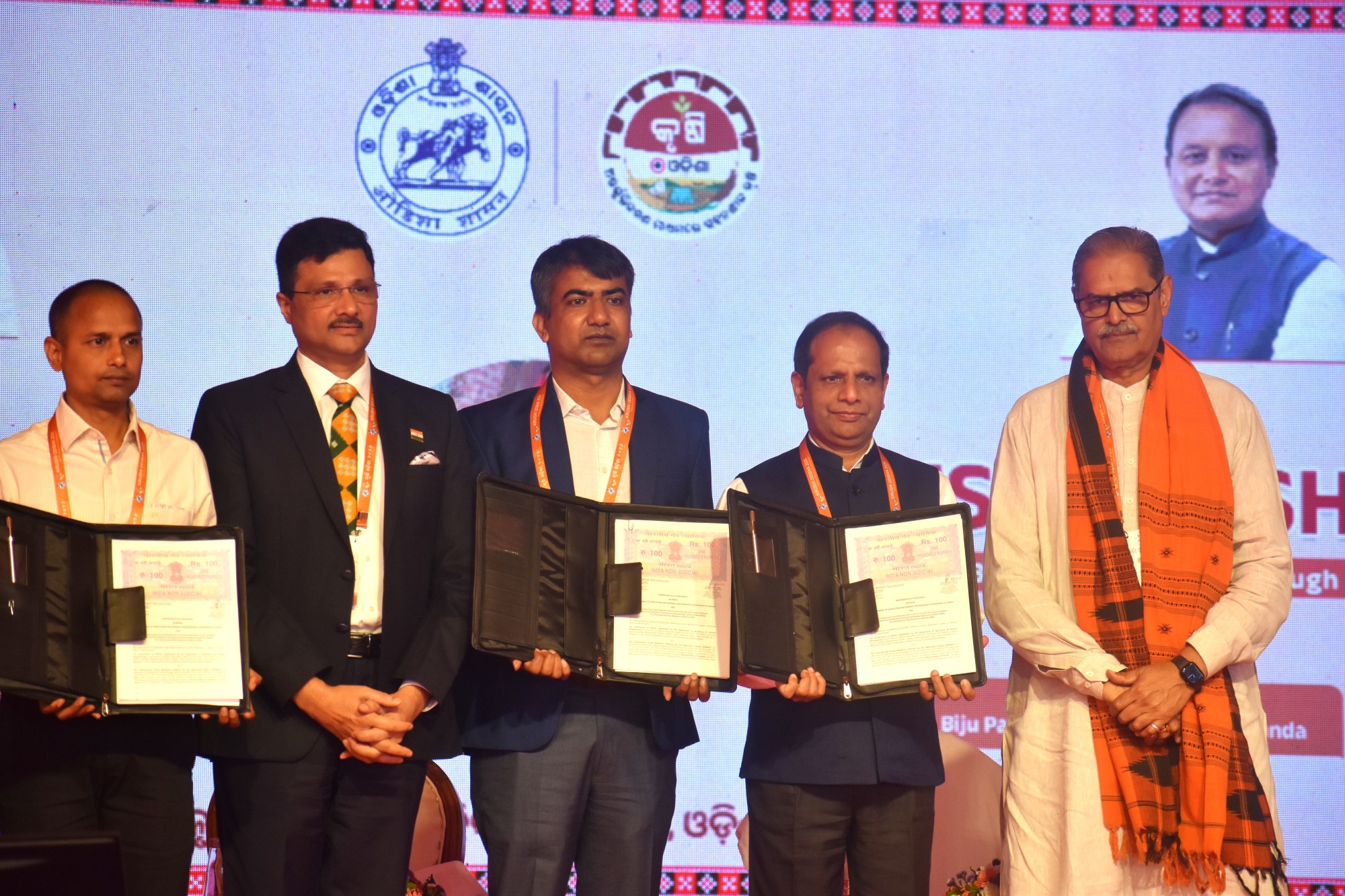
ODISHA, India (26 January 2026) -- In sincere efforts to climate-proof Odisha’s agricultural system, the Government of Odisha has taken a decisive step by launching the Odisha Agriculture Drought Mitigation Programme (OADMP).
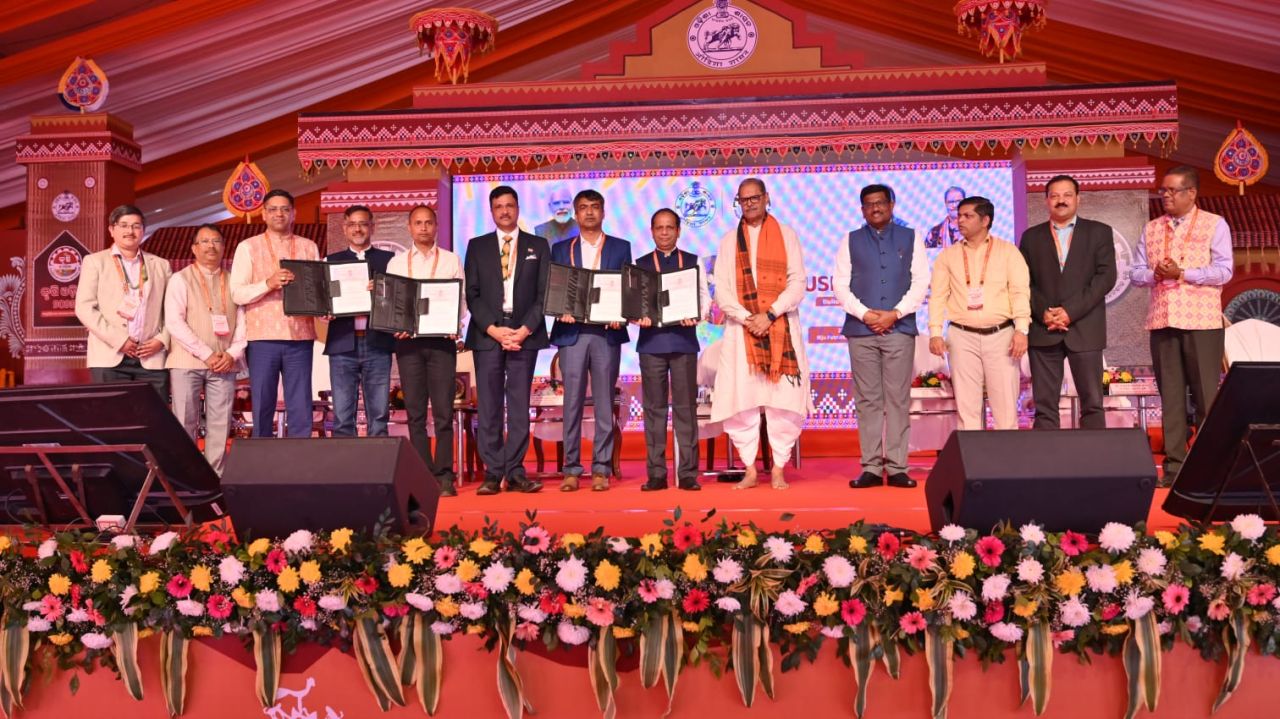
Established within the framework of the National Drought Mitigation Programme (NDMP), OADMP aims to build climate resilience, enhance productivity, and promote crop diversification across three districts in Odisha, including Nuapada, Nabrangpur, and Mayurbhanj. The program was formally announced during the inaugural session of Krushi Odisha 2026, where the International Rice Research Institute (IRRI) signed a Memorandum of Agreement with the Department of Agriculture & Farmers’ Empowerment (DA&FE), Government of Odisha, International Crops Research Institute for the Semi-Arid Tropics (ICRISAT), and ICAR-Central Research Institute for Dryland Agriculture (CRIDA).
Climate change has sharply heightened the fragility of agriculture in Odisha, where even small variations in weather patterns can disrupt crop productivity. Over the last 50 years, natural disaster has affected the region, with droughts predominantly affecting the planting and harvesting season (Kharif season), dealing a heavy blow to rice cultivation. The consequences are severe, as farmers face falling farm incomes, loss of rural employment, and deepening distress in agrarian communities.
In response to these challenges, the OADMP advances coordinated interventions through a holistic landscape approach rather than isolated schemes. The program specifically focuses on accelerating the adoption of climate-resilient crop varieties, strengthening the seed system, and addressing critical factors such as soil health, water resources, crops, livestock, and market linkages. By integrating these elements, OADMP aims to build resilience across farming practices and enhance rural livelihoods in a comprehensive manner.
Explaining the shift in approach, Dr. Arabinda Kumar Padhee, Additional Chief Secretary, DA&FE, Government of Odisha, noted that the program aims to create a durable, science-led system that strengthens the entire agricultural value chain, ensuring that interventions complement one another, rather than offering short-term relief.
"OADMP moves away from fragmented, scheme-based solutions. Instead, it follows a “landscape-first” strategy that integrates water, soil and crop management across entire village clusters,” he said.
At its core, OADMP seeks to stabilise yields and enhance cropping intensity through the promotion of drought-tolerant crop varieties and community-managed water recharge structures. Equally important is its focus on empowering Self-Help Groups (SHGs) and Farmer Producer Organizations (FPOs) with better access to farm mechanization and stronger linkages to high-value markets.
IRRI along with collaborators ICRISAT and ICAR-CRIDA, will lead implementation in three of the most climate-vulnerable blocks: Komna in Nuapada district, Kosagumuda in Nabarangpur, and Raruan in Mayurbhanj. The program is expected to directly benefit around 15,000 households, while its overall impact will be amplified through convergence with existing state and central government schemes. To ensure accountability and adaptive management, a real-time digital dashboard will track key indicators such as soil moisture, crop performance, and household incomes, enabling transparent, data-driven decision-making.
Dr. Swati Nayak, IRRI Scientist and South Asia Lead for Seed Systems, highlighted that the program will showcase stress-tolerant varieties and climate-smart technologies designed to cushion farmers against drought-related climate shocks.
She further emphasized that the “integrated and inclusive design of OADMP represents a significant advancement for climate-resilient agriculture in Odisha, with a strong potential for replication in other vulnerable regions across the globe.”