From Pilot to Proof: The Operational Success of Precision Rice Farming in Vietnam’s Red River Delta
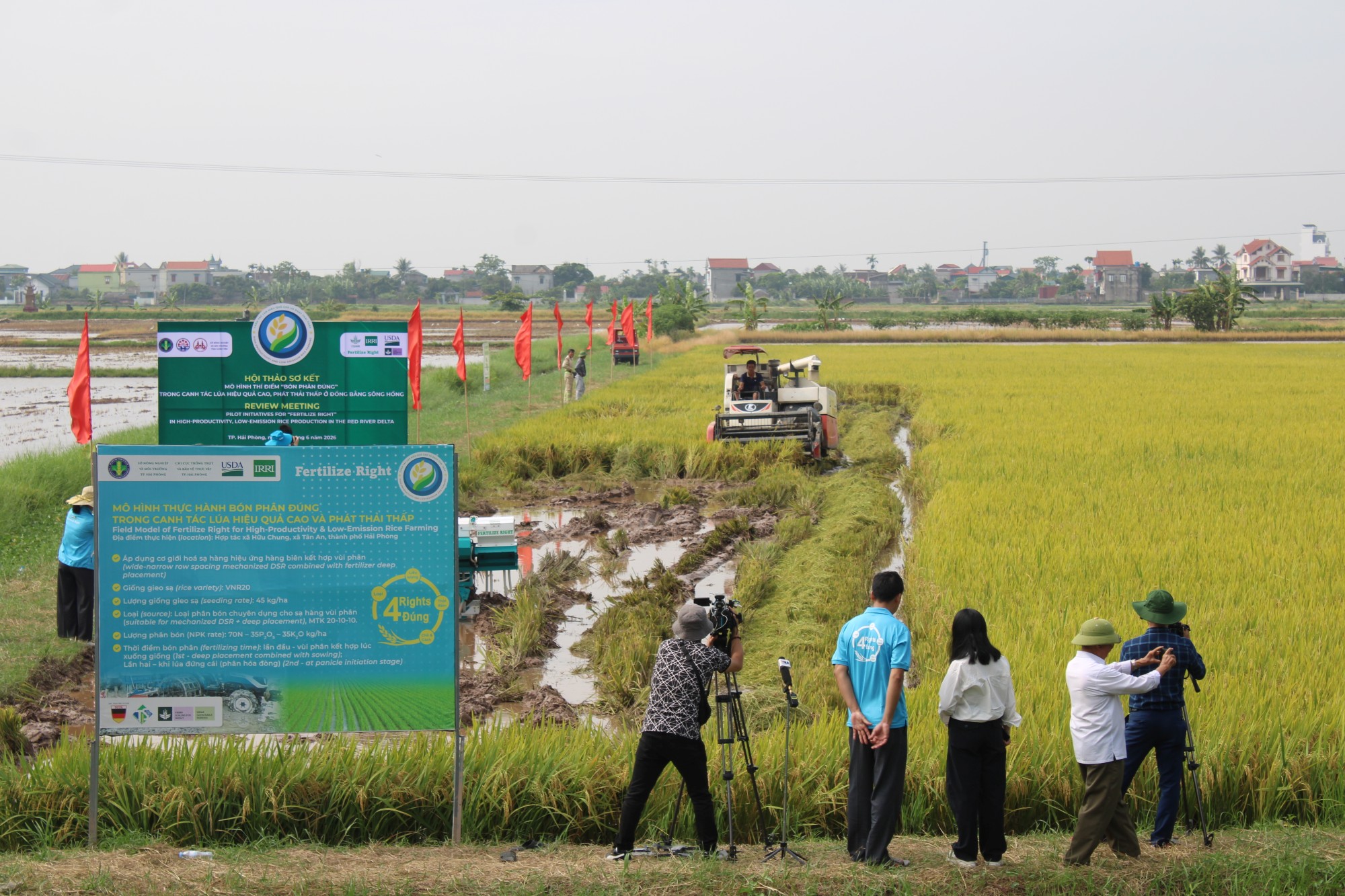
Hai Phong, Vietnam (10 June 2026) - The Plant Production and Protection Department, part of the Ministry of Agriculture and Environment, recently collaborated with the International Rice Research Institute (IRRI) to review pilot models for high-productivity, low-emission rice production in the Red River Delta. As part of the USDA-funded Fertilize Right (FerRight) Program, IRRI and its partners shared results from the 2026 Winter-Spring crop across four pilot sites located in the Red River Delta of Vietnam including Hai Phong, Ninh Binh, and Hung Yen.
Rice production in northern Vietnam faces challenging weather conditions, including low temperatures during crop establishment in the spring season (10–15 °C) and heavy rainfall in the summer season. As a result, rice is predominantly transplanted, leading to high production costs and labor shortages.
The FerRight initiative, introduced by IRRI, offers a variety of sustainable technologies. This includes improved rice varieties and mechanized direct-seeded rice (mDSR) with deep placement of fertilizers, which can effectively replace mechanized transplanting. Additionally, the technical package features a rice straw-based circular economy that incorporates composting and site-specific nutrient management. Dr. Nguyen Van Hung, IRRI scientist and FerRight project lead, reported that all three pilot sites that applied mechanized row-sowing technology combined with deep fertilizer placement significantly exceeded expectations.
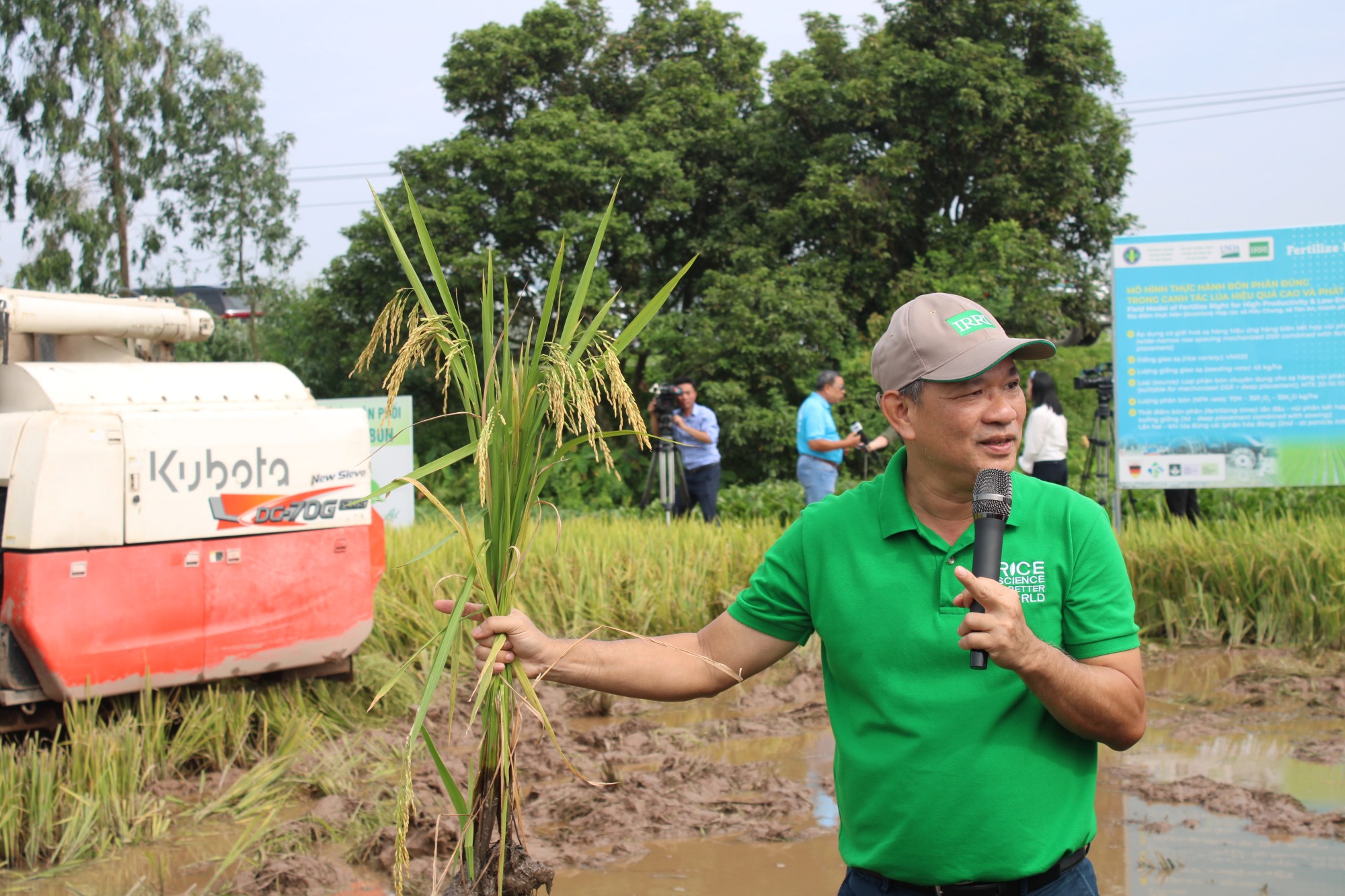
The pilot models yielded exceptional financial and agricultural returns across all three locations. Lien Hiep Cooperative in Hung Yen achieved a 30% yield increase, reaching 6.49 tons/ha (14% moisture content). Traditional farming methods, on the other hand, yielded almost no profit. The new model helped farmers earn 19.2 million VND/ha.
Meanwhile, Nam Cuong Cooperative in Ninh Binh saw a 28% yield increase to 5.65 tons/ha (14% moisture content), reversing a traditional loss of 3.1 million VND/ha into a comfortable 13.2 million VND/ha profit.
The most dramatic financial surge occurred at Huu Chung Cooperative in Hai Phong, where yields hit 7.62 tons/ha (14% moisture content), a 25% increase over traditional machine planting, generating a staggering 24.4 million VND/ha in profit. Meanwhile, the traditional farming methods yielded almost no profit in this area.The striking success of the model is driven by a combination of optimized resource access, targeted nutrition, and immense labor efficiency. By spacing the rice rows perfectly, mDSR ensures each plant receives optimal sunlight and nutrients for maximum growth. Furthermore, instead of broadcasting fertilizer across the surface, it deep places fertilizer directly in the root zone, a method that drastically cuts down on environmental runoff and resource waste.
This powerful combination has completely won over local communities; as Mr. Nguyen Van Khien, Director of Huu Chung Cooperative, observed, seeing machine sowing accomplish a week’s worth of manual transplanting in a single morning, paired with lower costs and booming yields, has shifted the conversation entirely. Farmers no longer need convincing—they are already asking to sign up for next season.
According to Ms. Luong Thi Kiem, Deputy Director of the Hai Phong Department of Agriculture and Environment, the program's greatest achievement is the transformation of the farming mindset.
Farmers have transitioned from using experience-based fertilizing methods to adopting the "4Rs" principle: applying the Right source (including innovative fertilizers) at the Right rate (optimized through precision deep placement), at the Right time (with two applications of fertilizer associated with mechanized Direct Seeded Rice combined with deep placement), and in the Right place (with deep placement during the first application). By shifting from a "yield-at-all-costs" mentality to a focus on economic and environmental optimization, these cooperatives are establishing a new standard for sustainable agriculture in Vietnam.
This innovative work under the Low Emission Agriculture Program of Vietnam is made possible through the support of the USDA-Fertilize Right project and the CGIAR Scaling for Impact program.