Rice Department of Thailand and IRRI discuss cooperation for advancing rice production in Thailand and Africa
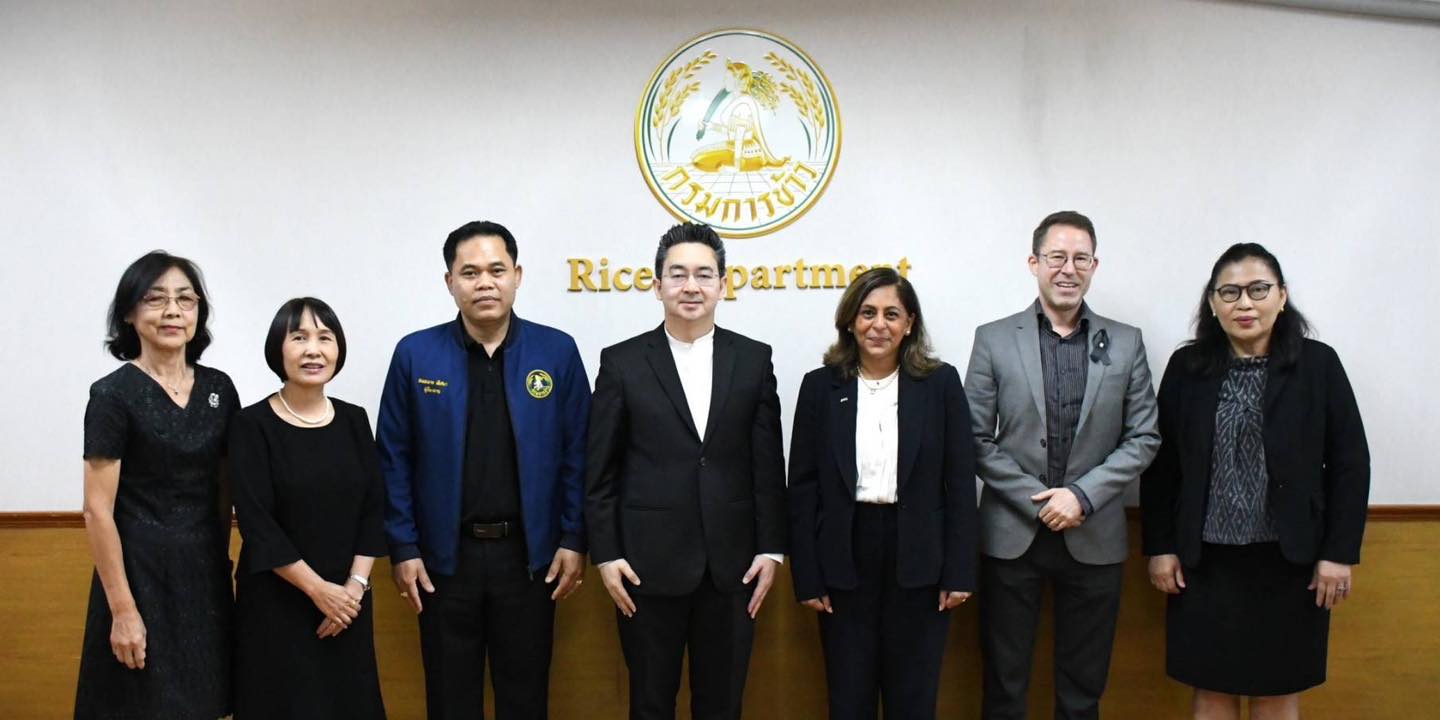
Bangkok, Thailand (12 February 2026) — In an open house meeting, Thailand’s Rice Department and the International Rice Research Institute (IRRI) held talks on a new cooperation agenda that draws on lessons from Tung Kula Rong Hai, Roi Et province, one of Thailand’s drought-prone rice areas.
Mr. Anon Nantri, Director-General of the Rice Department, welcomed Dr. Yvonne Pinto, IRRI Director General, and Dr. Bjoern Ole Sander, IRRI Country Representative to Thailand. The visit also marked congratulations on Mr. Nantri’s appointment.
Mr. Nantri acknowledged IRRI’s support to Thailand throughout the decades by means of research and technical cooperation, including work on low-carbon rice production, methane measurement methods, and technologies aimed at helping farmers cut production costs. Both sides pointed to shared priorities: reducing straw burning, lowering greenhouse gas emissions from rice farming, and using practical technologies to reduce rice production costs.
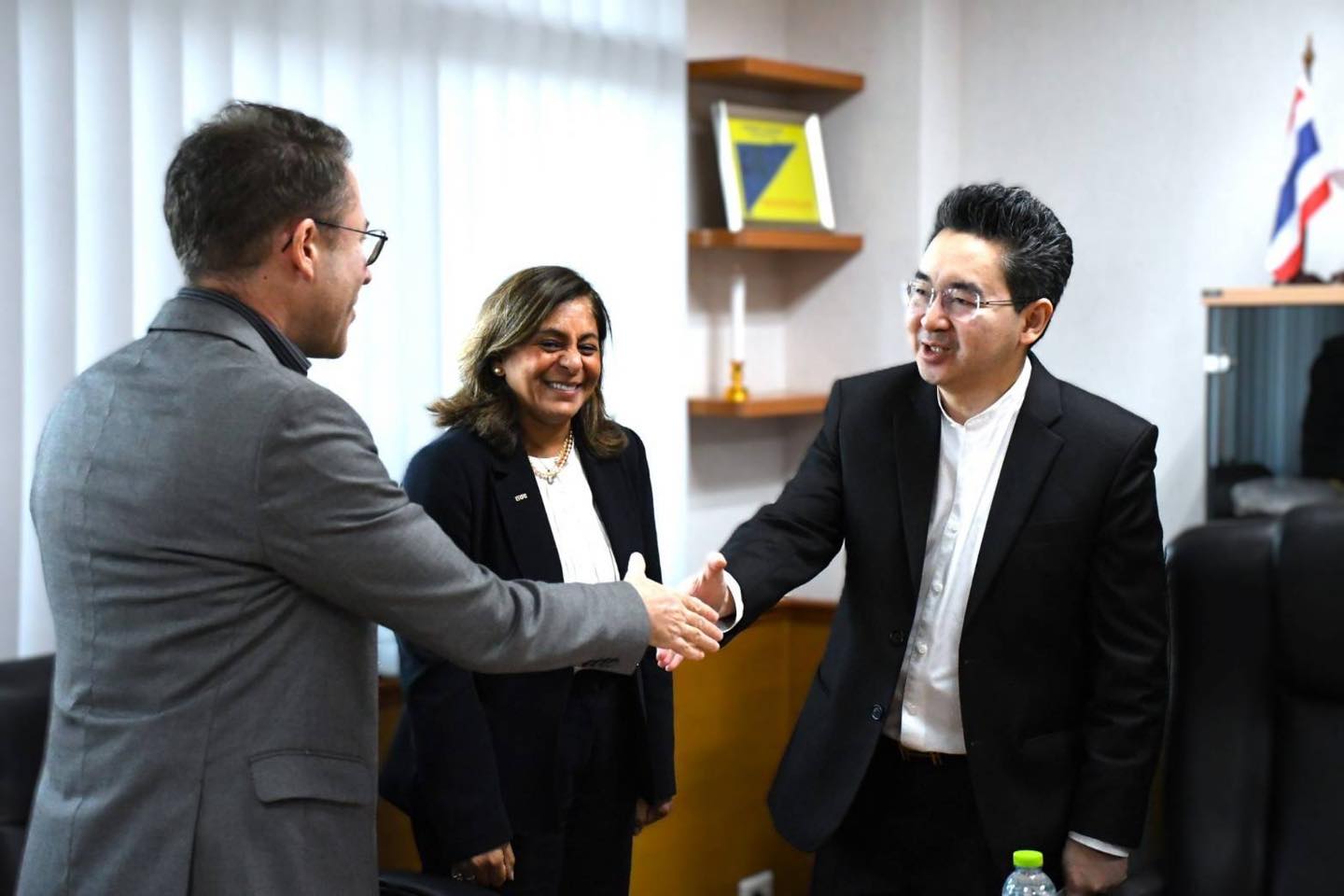
The conversation took place amidst efforts to increase Thailand’s capacity in low emission rice production and improving national Monitoring, Reporting, and Verification (MRV) for greenhouse gas emission reporting in the agriculture sector as part of ongoing IRRI projects in the country and the region of Southeast Asia.
Another topic of the high-level conversation was Africa. Mr. Nantri pointed to Thailand’s experience as a leading rice producer and exporter and that it could leverage its standing for research and development cooperation to the Sub-Saharan Africa region. Mr. Nantri proposed two directions: a food aid track to support crisis-affected countries in eastern Africa with respect to malnutrition and famine from drought, and a technology transfer track using the “Tung Kula Rong Hai model” for drought-prone farming.
The region is comparable with arid landscapes in parts of Sub-Saharan Africa where water shortages go hand in hand with food insecurity. During the dry spells, the land is parched and cracked, making rice cultivation challenging albeit not impossible.
The second track by means of lesson learned would focus on advancing water-saving rice systems in African countries to manage soil moisture rather than keeping fields continuously flooded, and thereby reducing water usage and lowering greenhouse gas emissions during farming activities. The approach also includes legume cover crops to protect soil, improve fertility, and provide an additional cash crop.
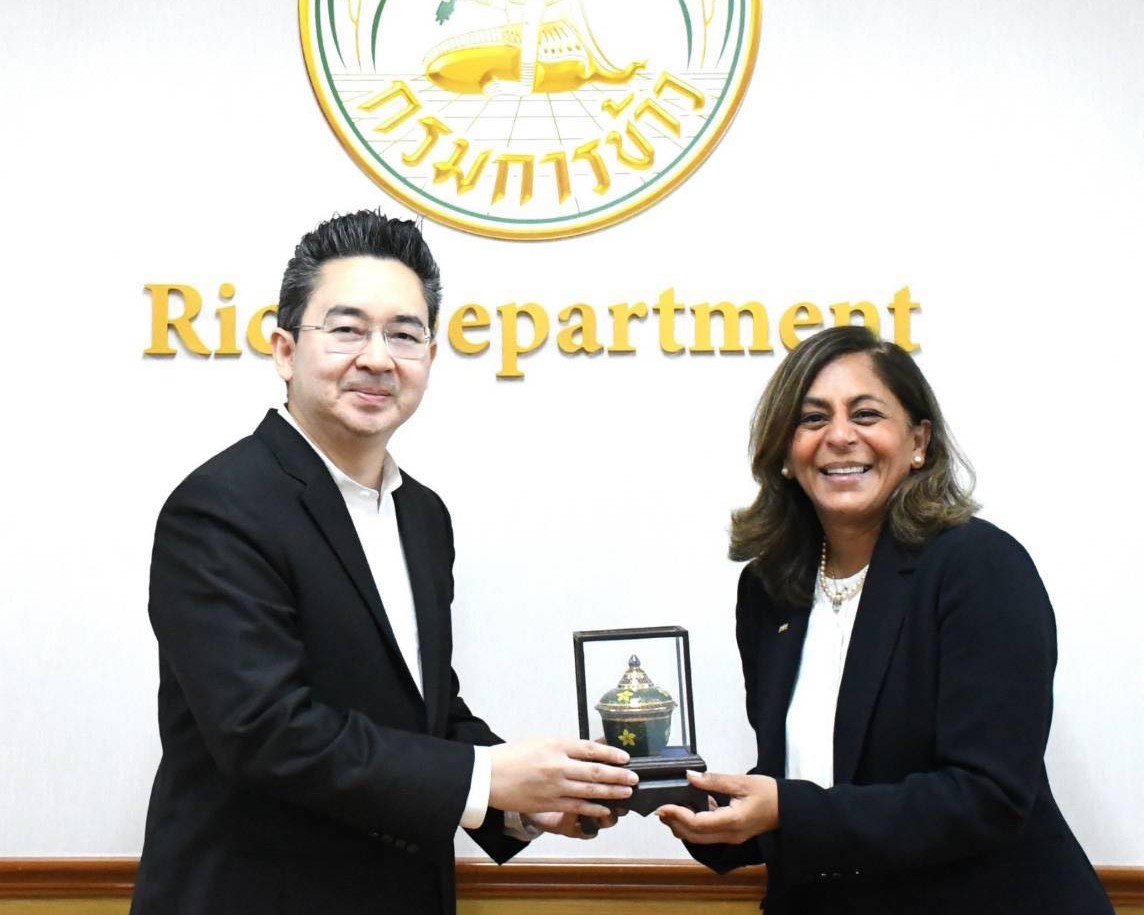
Both parties agreed to set up a joint working committee and to bring in the Ministry of Agriculture and Cooperatives and other national agencies to develop next steps in an effort of further stimulating a longstanding IRRI-Thailand collaboration.