Farmers assess nutritious rice varieties for new market opportunities in Odisha
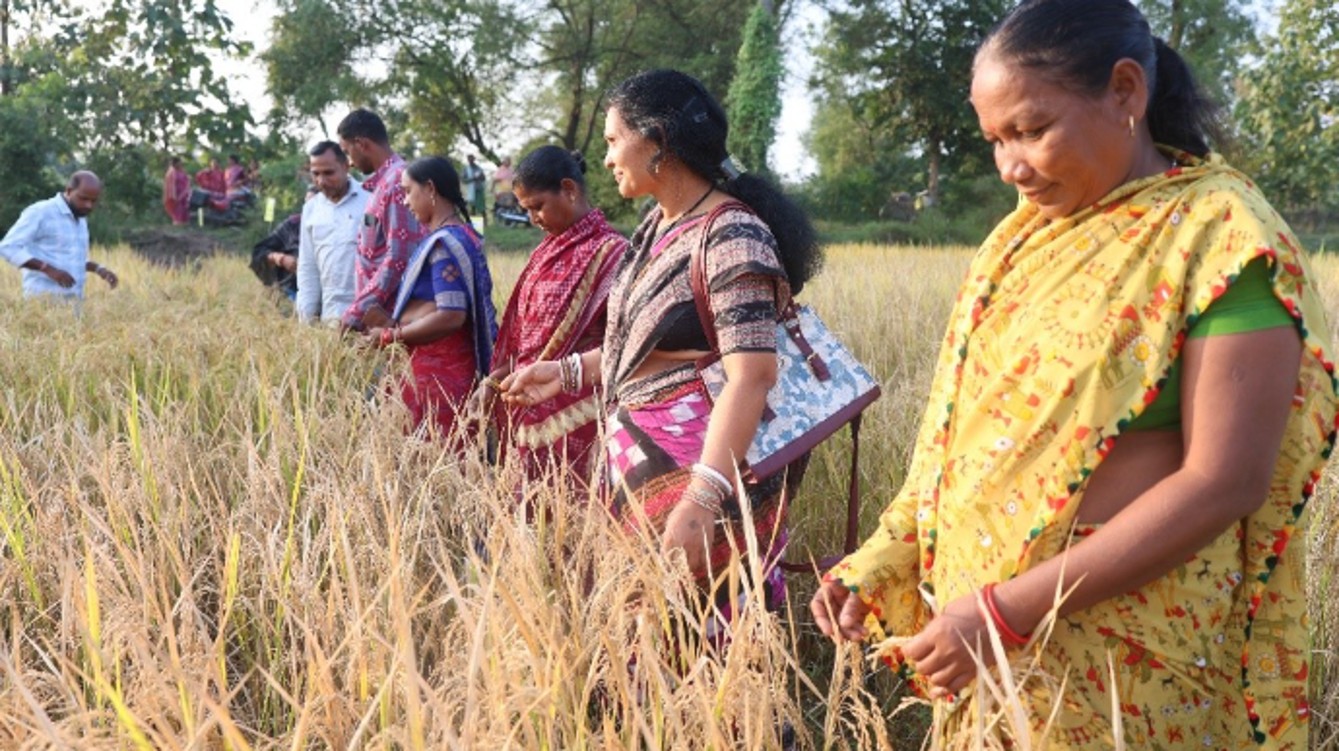
ODISHA, India (13 November 2026)—Women farmers are at the heart of Balangir’s agriculture, and improving their livelihoods remains a priority in the district. This was the cornerstone of a field day where farmers, researchers, and market stakeholders gathered in Nagaon-B, Agalpur, Balangir, to evaluate low glycemic index (GI) and other nutritious rice varieties being developed for potential adoption and commercialization.
Organized by the Loisingha Women Farmer Services Producer Company Limited (LWFSPCL), in collaboration with the International Rice Research Institute (IRRI), the event was held under the project Promoting Self-Help Group-Led Entrepreneurship through Rice Value Addition. The initiative aims to increase the income of women farmer collectives by supporting the processing of nutritious rice varieties and millets into value-added products, strengthening women-led enterprises and developing sustainable market linkages.
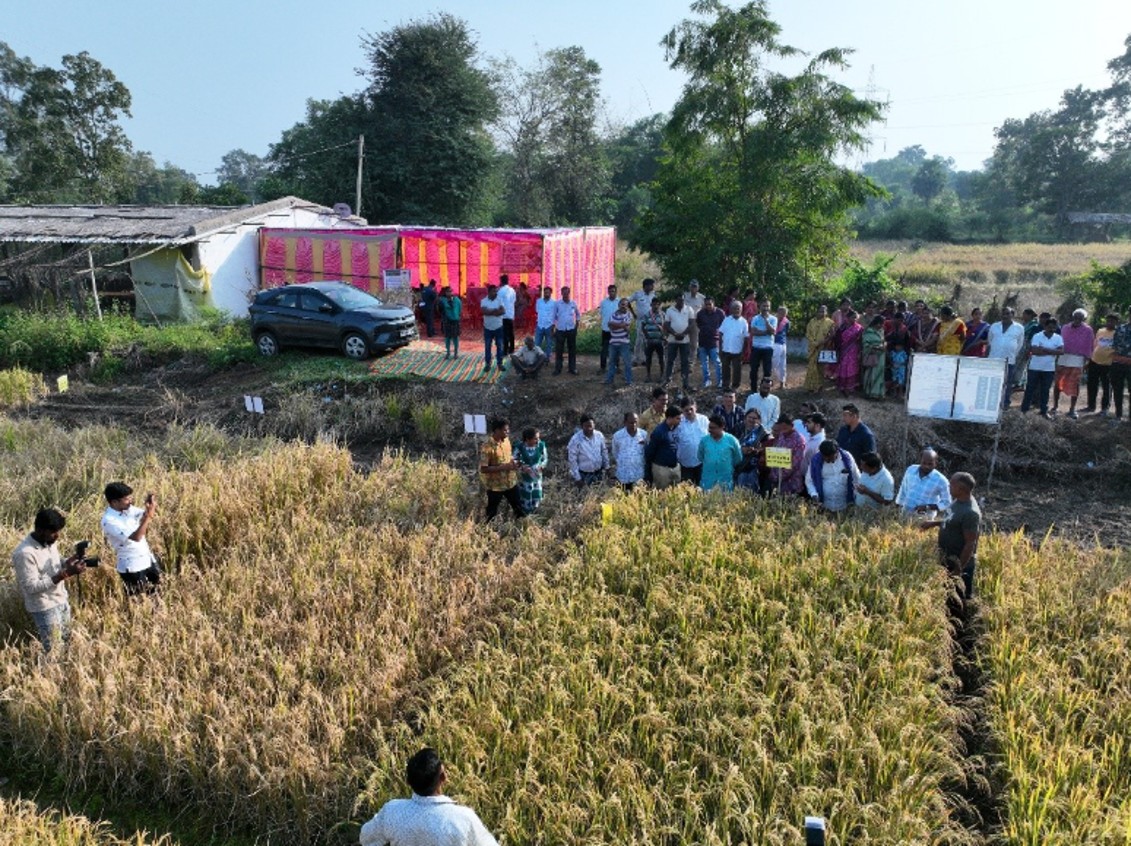
The field day began with a participatory evaluation of varietal trials, bringing together farmers, IRRI researchers, scientists from Krishi Vigyan Kendra (KVK), Department of Agriculture officials, representatives from the Department of Mission Shakti, millers, and prospective buyers. Specifically, the trials featured IRRI breeding lines with low GI, ultra-low GI, and high-protein traits, alongside popular varieties such as IR64 and RNR 15048.
Participants assessed crop characteristics and varietal performance, discussing their suitability for wider cultivation, processing, and market development. Feedback from farmers and prospective buyers also offered insights into varietal preferences and the commercial potential of these nutritious rice varieties.
Rita Gadua of Burda Village, who has cultivated Low GI rice for the past year, sees value in both its nutritional and economic benefits. She keeps part of her harvest for her family, particularly members who are prediabetic, and sells her surplus through the FPC at prices above the Minimum Support Price (MSP).
Meanwhile, Subash Prusti of Prusti Agro, a prospective buyer, noted increasing domestic interest in healthier food choices, saying, “Low GI rice varieties are selling like hot cakes, with substantial demand emerging from the domestic market. Through our engagement with FPCs, we can establish direct procurement linkages and pass on a share of the market premium to producers. This is a win-win situation for both farmers and the market."
During the program, the FPC and IRRI teams presented the project's objectives and highlighted opportunities to promote nutritious rice varieties through farmer-led enterprises. They discussed how Farmer Producer Companies (FPCs) and self-help groups (SHGs) could connect farmers with processors and buyers, creating opportunities for value addition and stronger market participation.
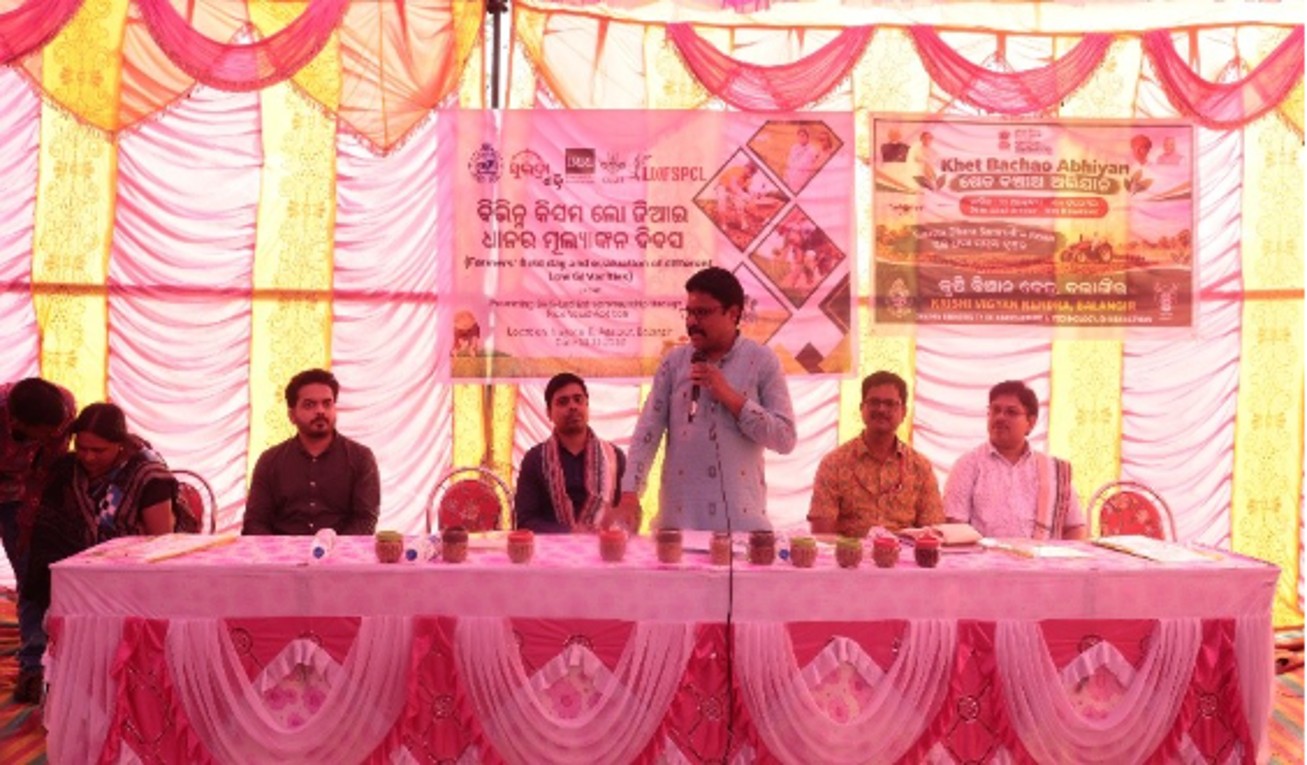
Dr. Satyamaya Sathpathy, Head of KVK Balangir, highlighted the collaboration between Odisha University of Agriculture and Technology (OUAT) and IRRI, emphasizing that continued collaboration among research institutions, KVKs and other stakeholders is essential to evaluate and validate low GI and ultra-low GI rice varieties for potential release and wider dissemination among farmers.
Chief Guest Dr. Mukesh Mahaling, Minister for Health and Family Welfare, Parliamentary Affairs, and Electronics and Information Technology, Government of Odisha, highlighted the role of agricultural research in addressing nutritional challenges, particularly the rising incidence of non-communicable diseases such as diabetes. He also highlighted opportunities to integrate nutritious rice varieties and other nutrient-rich grains into government nutrition programs and market opportunities.
“Strong and sustainable market linkages are essential to help farmers and Farmer Producer Companies secure better prices and increase their income. I encourage women-led FPCs and self-help groups to pursue processing, value addition and entrepreneurship to connect agricultural production with market demand,” he said.
Dr. Gyandip Pandia, Senior Associate Scientist at IRRI, emphasized the importance of connecting research innovations with farmer organizations and markets to deliver nutritional and economic benefits, saying, “Our goal is to build an ecosystem that connects farmer collectives with premium markets and supports SHG-led value addition, improving farmers’ incomes while advancing nutrition and health."
He also acknowledged the collaboration with the Government of Odisha, OUAT, and other research institutions in scaling these innovations and supporting farming households and women-led enterprises.
The field day highlighted the importance of bringing together research, farmers, and market stakeholders to assess new rice varieties and explore opportunities beyond production. Through partnerships with women-led farmer organizations, initiatives such as this aim to transform advances in rice research into nutritious food products, viable enterprises, and improved livelihoods for farming communities.
The program was also attended by representatives from the Department of Agriculture and Mission Shakti, public representatives, FPC members, farmers, millers, and market stakeholders.