Mapping the Potential of Rice Straw Management: Vietnam Pilots New Framework for Low-Emission Agriculture
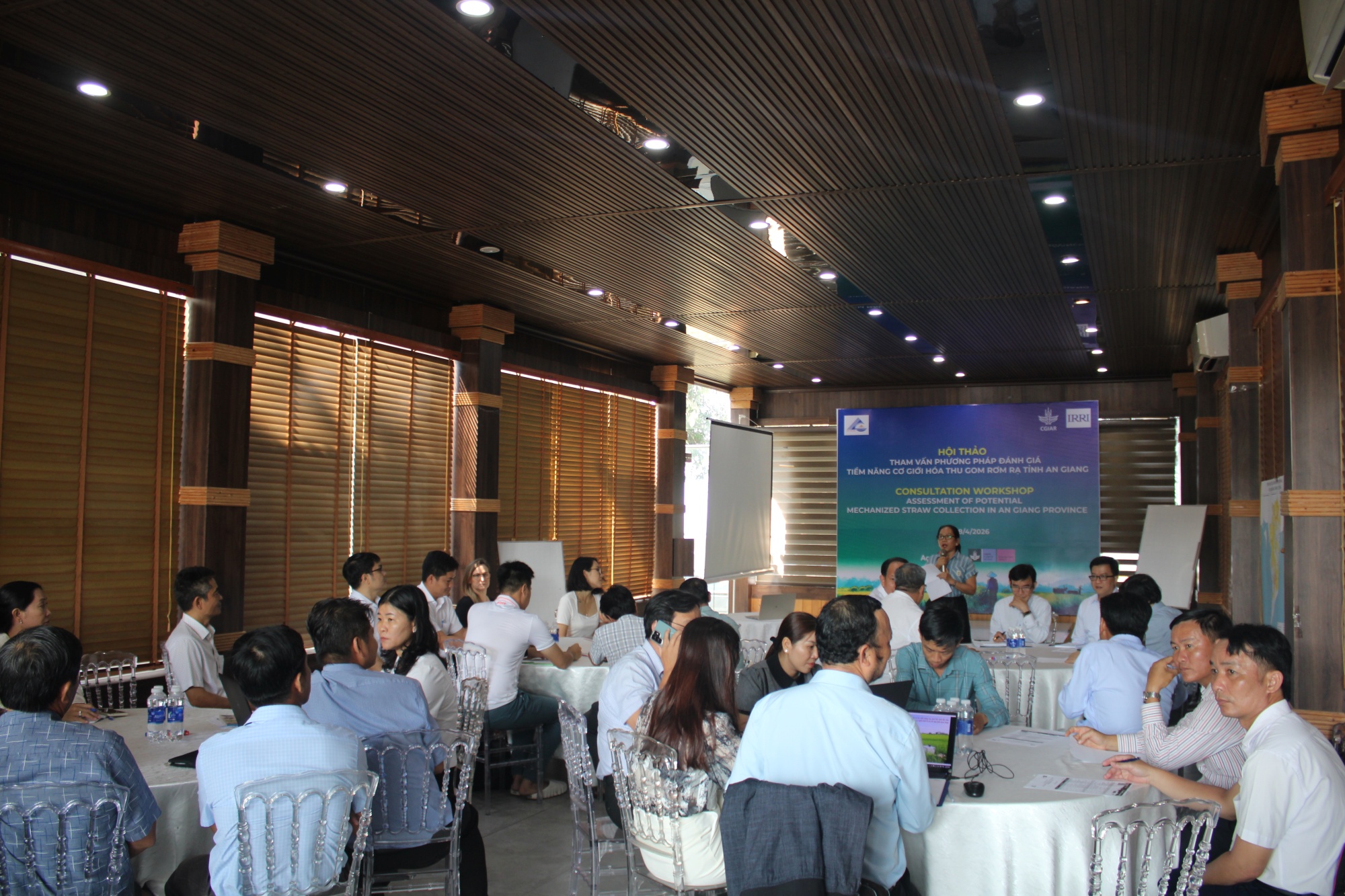
An Giang, Vietnam (April 8, 2026) — The An Giang Provincial Department of Agriculture and Rural Development, in collaboration with the Sub-Department of Crop Production and Plant Protection and the International Rice Research Institute (IRRI), recently hosted a consultation workshop the introduced a pioneering approach to identify optimized zones for mechanized straw collection.
Called the "Methodology for Assessing the Potential of Mechanized Straw Collection in An Giang Province", it is the first-of-its-kind initiative in Vietnam. The methodology leverages spatial mapping to help policymakers and investors pinpoint strategic "hotspots" for investment, supporting the nation’s greenhouse gas (GHG) emission reduction targets within the rice sector.
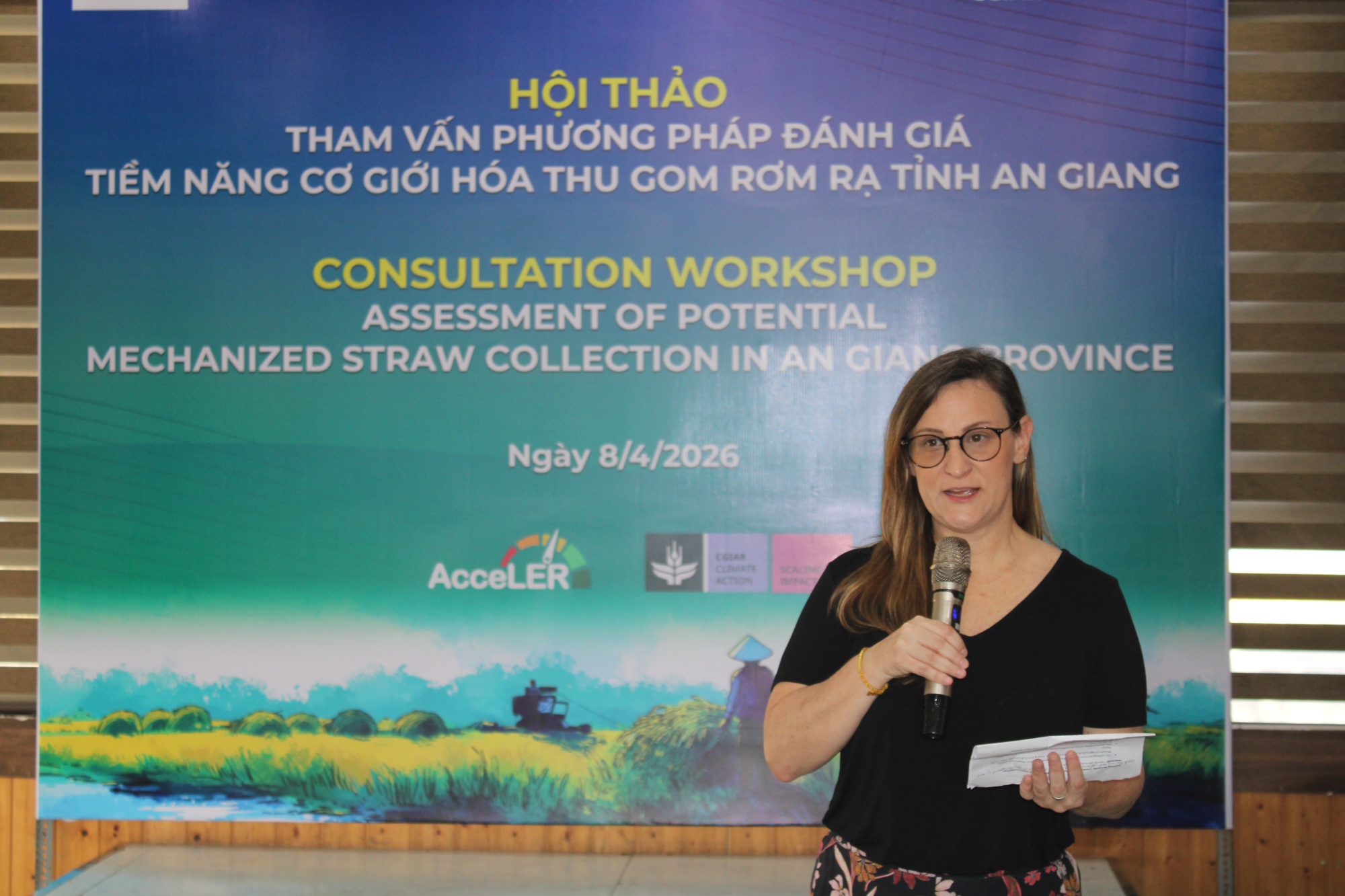
During the opening remarks, Dr. Katherine Nelson, climate change specialist at IRRI scientist, highlighted the scale of the task. Vietnam generates approximately 45–50 million tons of rice straw annually, with nearly half originating in the Mekong Delta. "To address these challenges and meet our climate commitments, we must view straw as a resource rather than a waste product," Dr. Nelson emphasized. "Moving toward mechanized collection is a key solution for Vietnam."
Mr. Hoang Anh Tuan, government officer at the Plant Production and Protection Department (PPPD) of the Ministry of Agriculture and Environment, spoke on the national policy landscape. He noted that integrated rice straw management could allow farmers to boost their income while slashing GHG emissions by more than 30%.
"Rice straw management is a cornerstone of Vietnam’s strategy to reduce methane emissions and reach Net-Zero by 2050," Mr. Tuan added. He stressed that while policy frameworks are emerging, such as the decree on carbon credit exchange, success hinges on stronger multi-sectoral coordination and the development of stable value chains.
Dr. Bui Tan Yen, climate change specialist at IRRI, presented the strategic framework for mapping collection potential, noting that success is primarily driven by machinery availability, soil and climate conditions, and infrastructural accessibility. While the winter-spring season offers the highest collection potential, environmental factors like flooding and rainfall limit operations during the Summer-Autumn and Autumn-Winter seasons. Strategic investment in mechanized collection is viewed as a critical path toward fulfilling the government’s program for low-emission rice production.
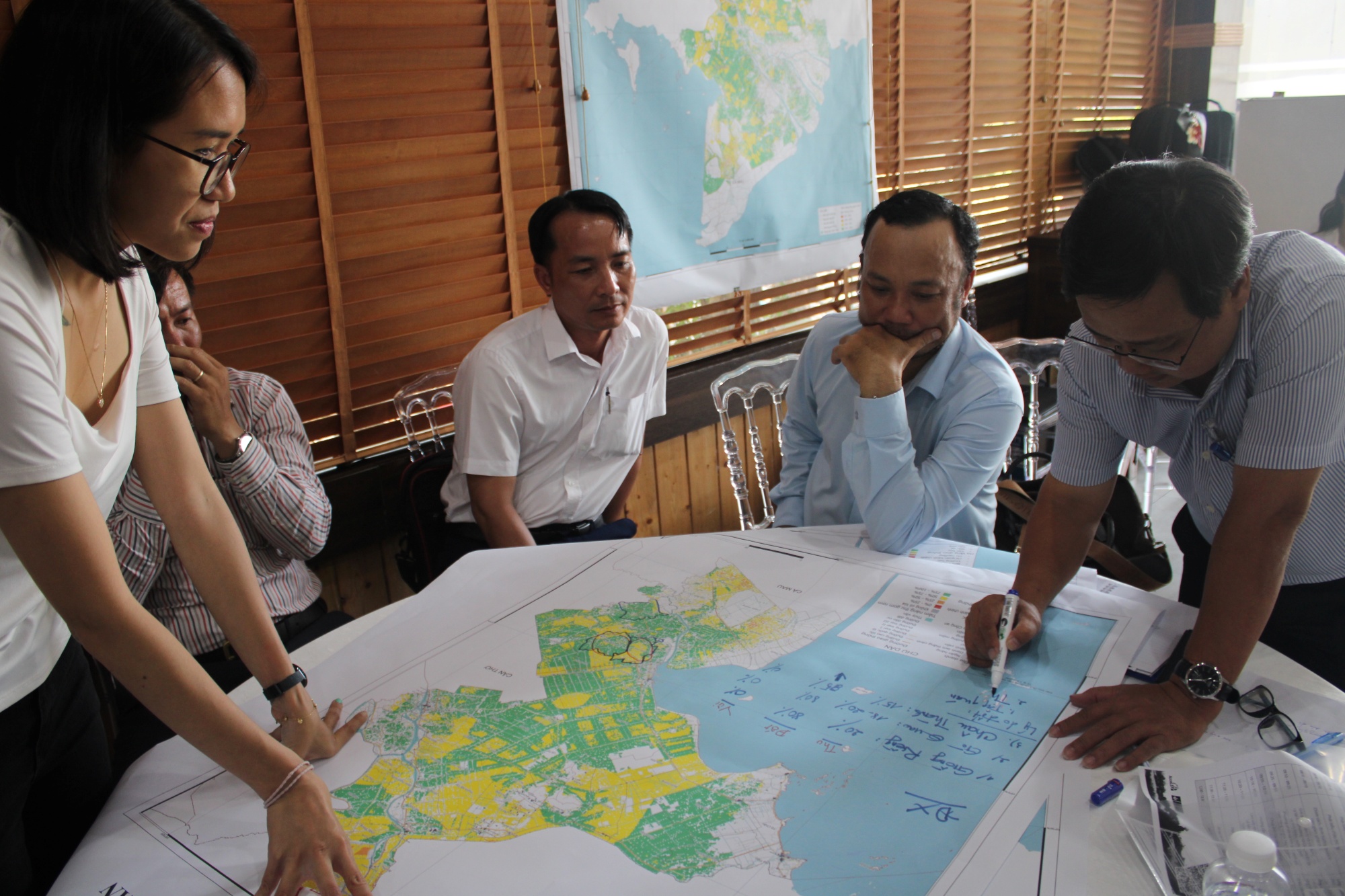
Local representatives and enterprises collaborated to refine the model by evaluating seasonal factors and validating potential maps. They observed that the ratio of straw management practices vary widely, with mechanized collection reaching 90% in some areas while others see less than 5%, as burning remains common in hard-to-reach zones and burying is prevalent in rainy regions.
Participants discussed rainfall, machinery access, collection windows, distance limits, and soil moisture as the most important factors for straw collection potential. However, the groups also highlighted significant challenges including low straw prices, a lack of stable markets, and the traditional habit of burning.
In the final open discussion, stakeholders agreed with the mapping results and suggested considering a storage warehouse and cooperative model to maximize straw value chains and stabilize trade. Private sector representatives noted that cooperatives own machinery to stay proactive. Mr. Le Thanh Tung, Vice Director of the Vietnam Rice Sector Association, recommended adding economic factors and specific acreage statistics to the maps to better reflect local realities.
The workshop concluded that the assessment method is practical and effective, with next steps involving analysis at national level and the development of a policy framework to support the straw value chain.