New rice sowing technology shows promise for low-emission farming in Vietnam
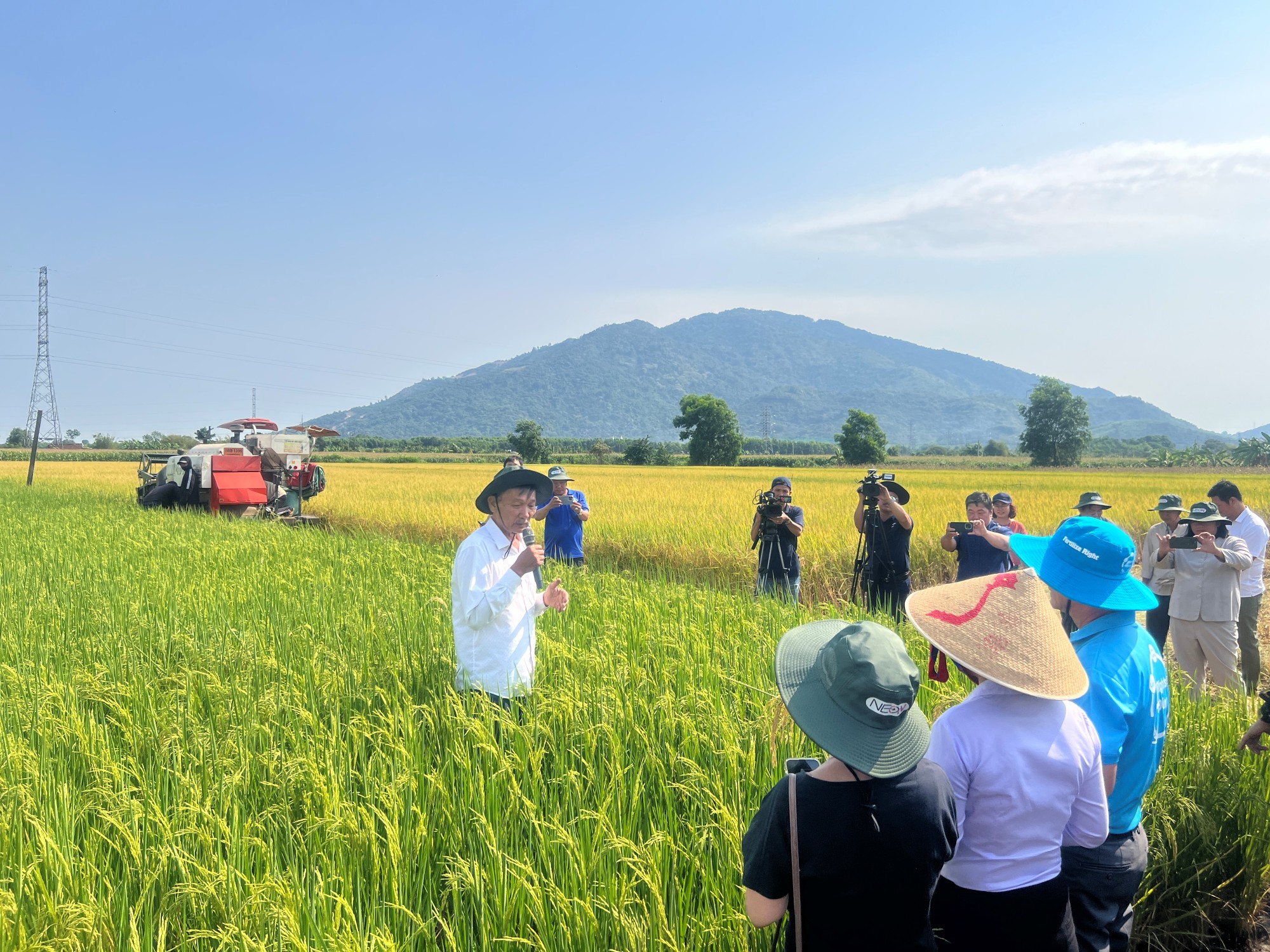
DONG NAI, VIETNAM (March 21, 2026) — The International Rice Research Institute (IRRI), in collaboration with national partners, recently organized a high-level workshop to evaluate the performance of mechanized dry direct seeding combined with fertilizer deep placement.
This event brought together key stakeholders, including representatives from the National Agricultural Extension Center (NAEC), the Vietnam Rice Industry Association, and the Department of Agriculture and Rural Development of Dong Nai Province, alongside experts and farmers from the Xuan Tien Agricultural Cooperative.
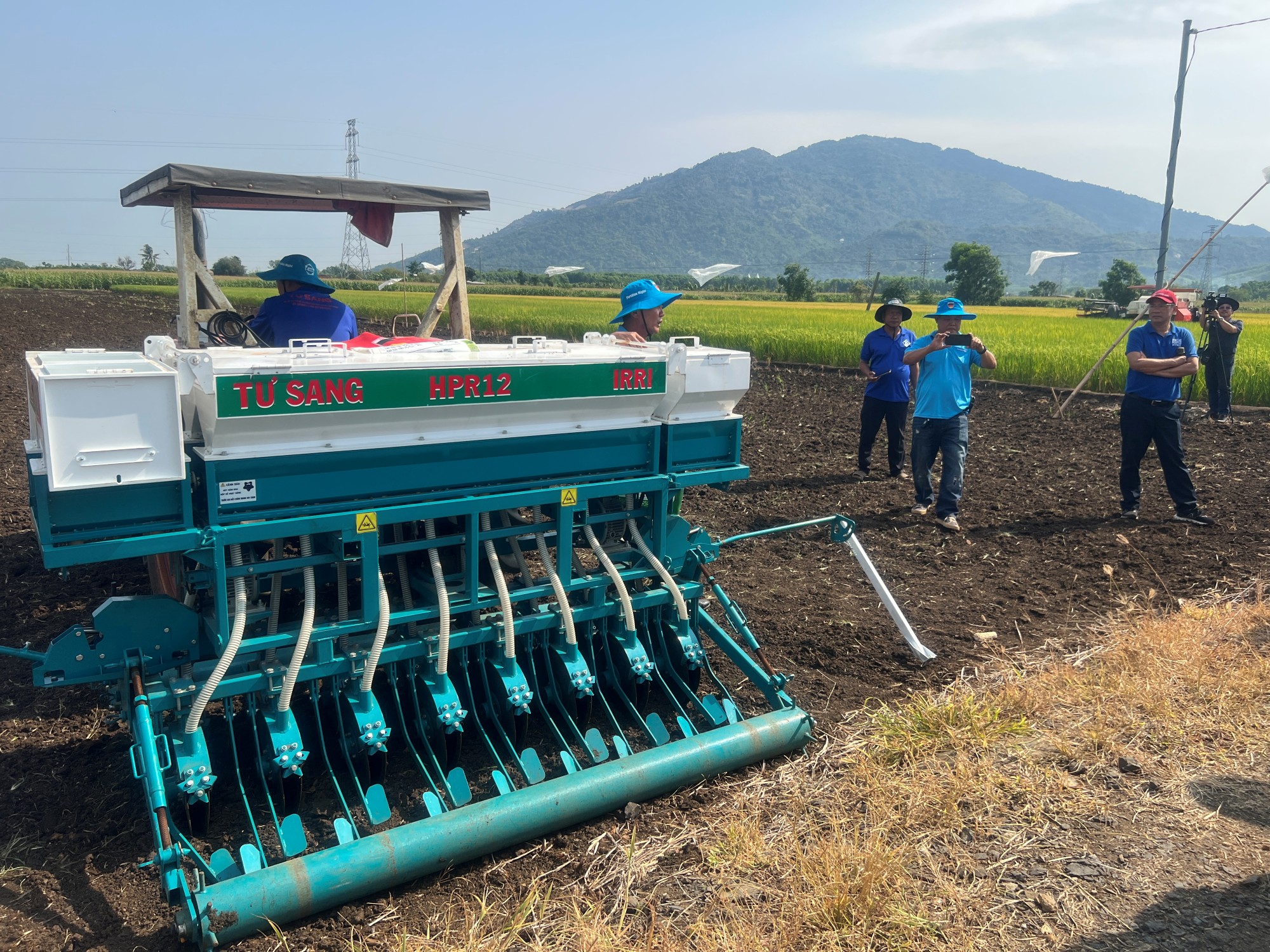
The pilot model was launched in December 2025 for the 2025–2026 Winter–Spring season to address the urgent need for sustainable rice production. Initial results demonstrate significant technical, economic, and environmental advantages, marking a milestone for the region. By utilizing mechanized dry direct seeding and fertilizer deep placement, the model successfully reduced seed rates by approximately 25%, which is equivalent to a reduction of 20 kg/ha compared to traditional broadcast seeding methods.
Beyond reducing inputs, the technical precision of the model has fundamentally improved crop health. Through an aerodynamic seed placement mechanism and optimized row spacing, the crop canopy became more aerated, leading to more uniform plant establishment and improved photosynthetic efficiency. These structural improvements resulted in a lower incidence of pests and diseases as well as a significant reduction in lodging rates, which often plague traditional broadcasted fields.
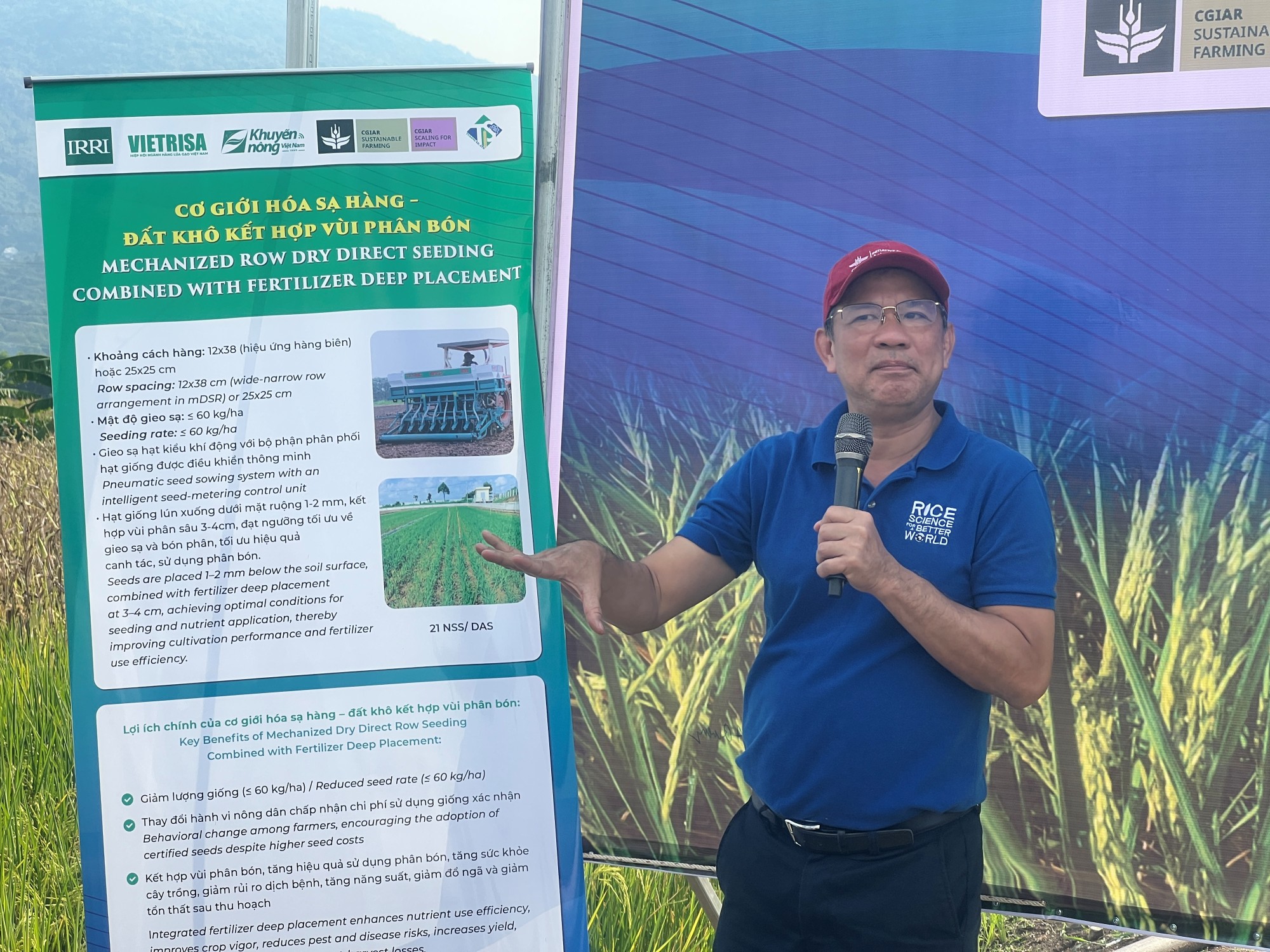
Dr. Nguyen Van Hung, scientist at IRRI, emphasized that mechanized dry direct seeding is a transformative solution specifically for water-scarce regions. He noted that this method eliminates the requirement for field flooding at the time of sowing, which enables irrigation water savings of over 20%. Furthermore, the implementation of this technology has the potential to reduce greenhouse gas emissions by up to 30% while simultaneously increasing overall yields by up to 20%.
The director of Xuan Tien Cooperative, Mr. Tran Quang, shared that while the cooperative has focused on high-quality ST25 rice varieties and organic practices since 2017, the integration of IRRI’s mechanized model has provided a breakthrough in productivity. He reported that the first harvest delivered promising results with high yields that have greatly encouraged local farmers. According to Mr. Quang, the model not only lowers production costs but also increases yields by 15–20% compared to conventional methods, prompting many local farmers to register for expansion in upcoming seasons.
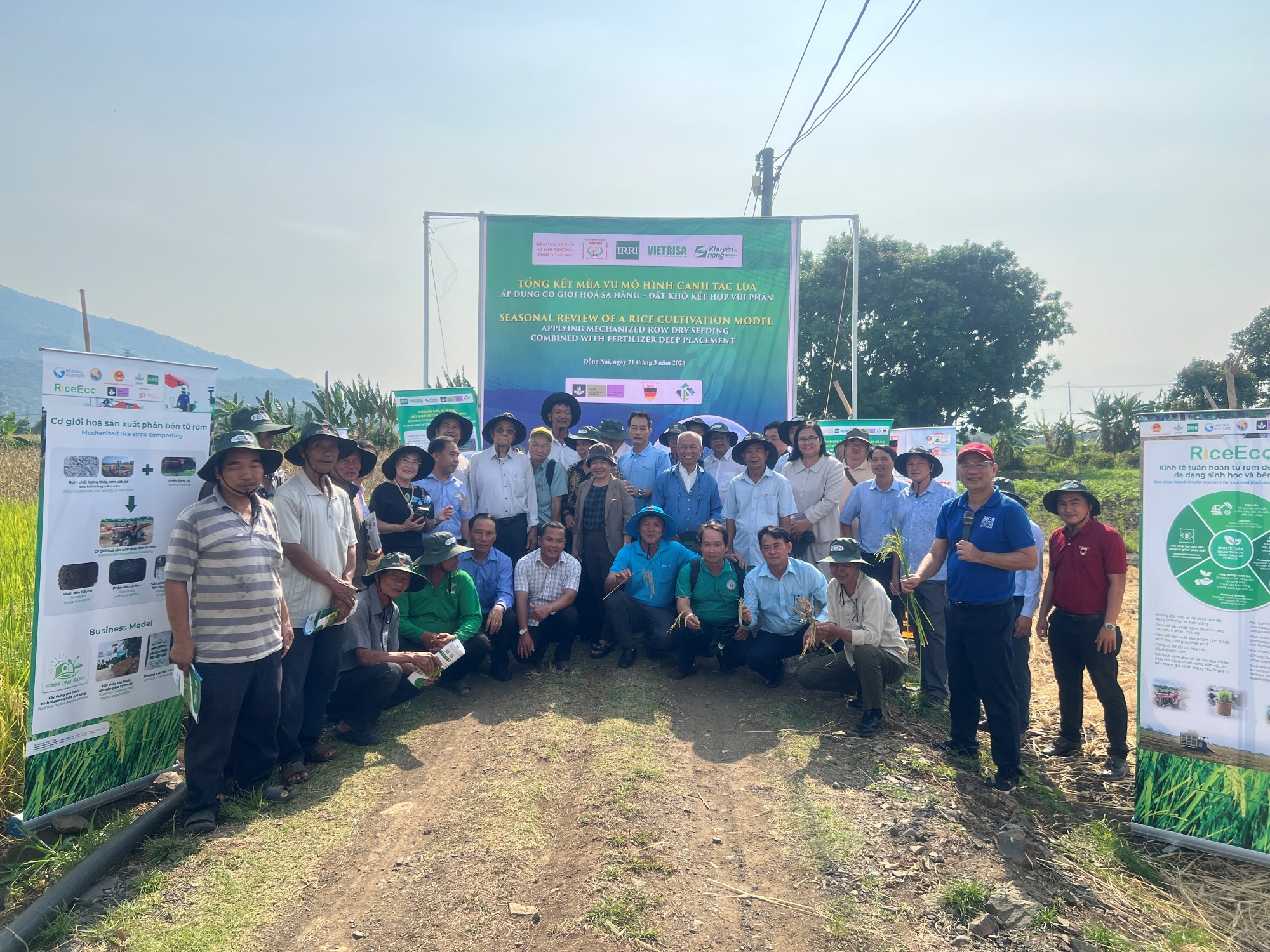
In closing the workshop, Ms. Huynh Kim Dinh of NAEC affirmed that the results are highly positive and align perfectly with Vietnam’s national direction toward green, low-emission agricultural development. She stated that the center will consider integrating this technology into its official programs and will coordinate with local authorities to gradually scale up the model across the country.
This innovation was supported by the CGIAR Sustainable Farming and Scaling for Impact science programs, and the Direct-Seeded Rice Consortium (DSRC).