From Research to Implementation: Cambodia Discusses Roadmap to Reduce Methane Emissions in Rice Production
PHNOM PENH, Cambodia (12 May 2026) - Cambodia is making significant progress in its climate commitments for 2030 and 2050. As part of these efforts, the country is focusing on transitioning from national methane reduction targets to practical implementation, particularly in the rice sector.
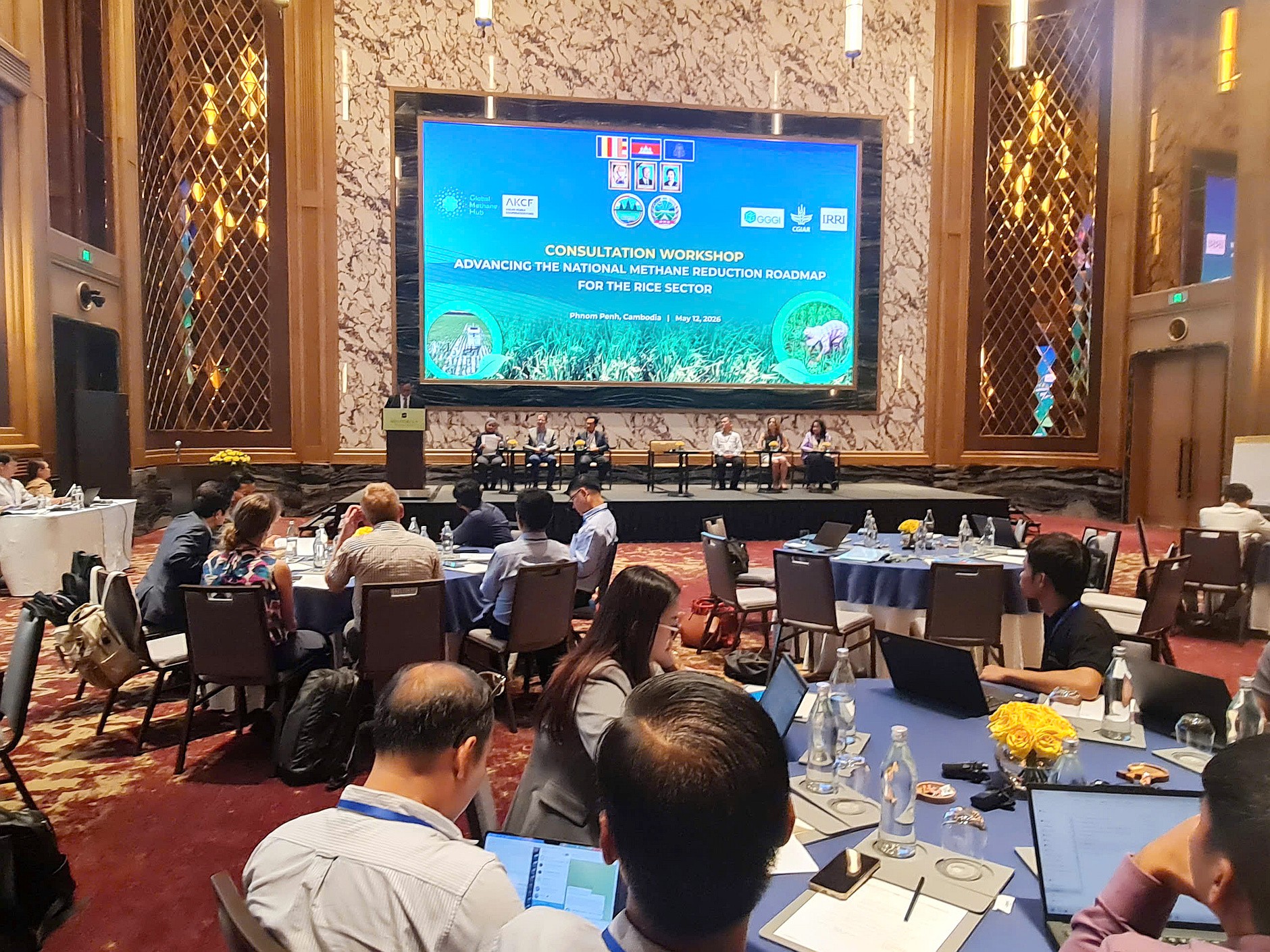
To support this objective, the International Rice Research Institute (IRRI), in collaboration with the Global Green Growth Institute (GGGI), organized a consultation workshop to help convert the National Methane Reduction Roadmap for the rice sector into actionable implementation pathways.
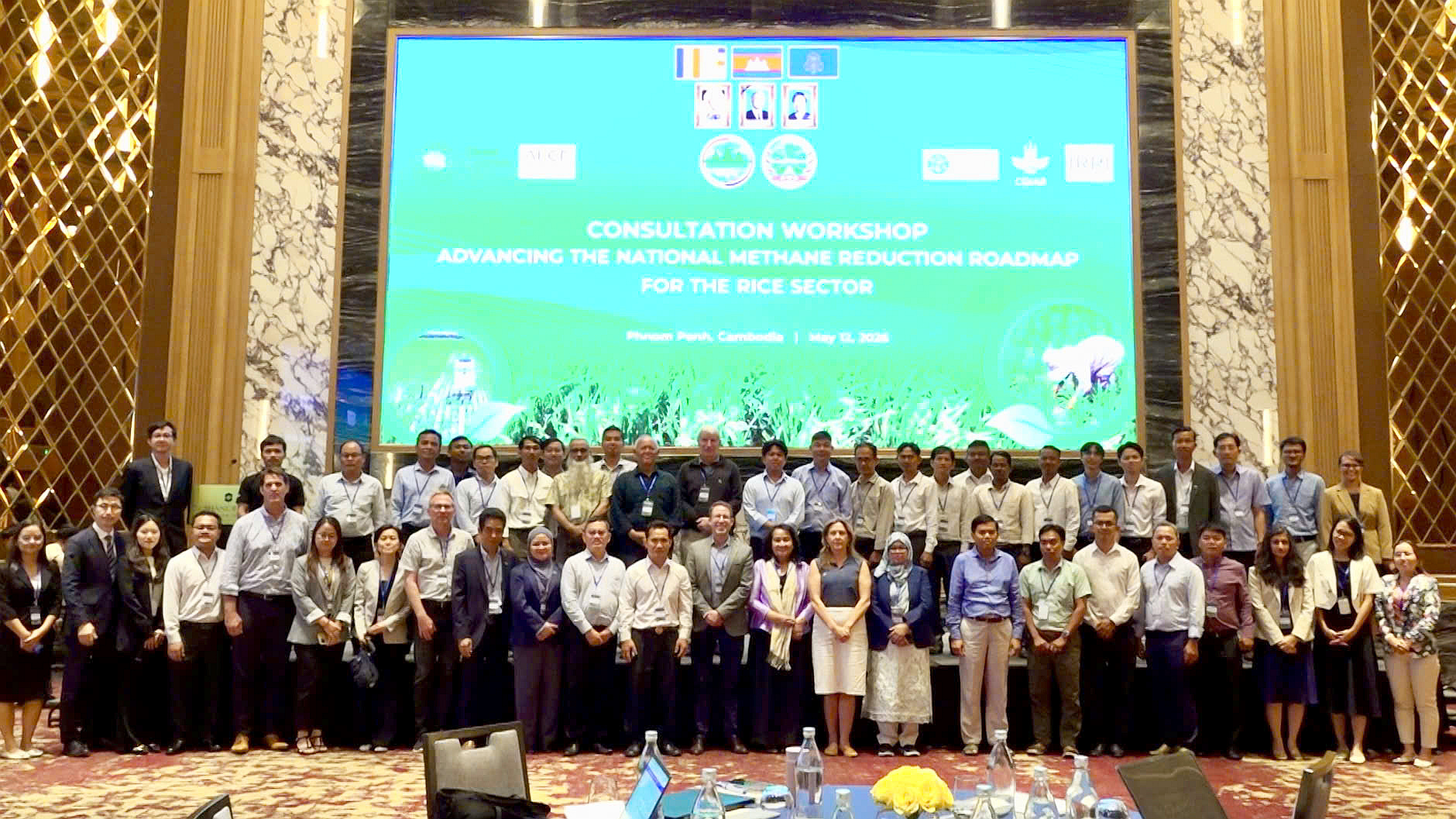
The event brought together 60 representatives from Cambodian government institutions, research organizations, development partners, private sector actors, carbon project developers, and participants from Bangladesh and Indonesia. Key Cambodian institutions included the Ministry of Agriculture, Forestry and Fisheries (MAFF), the Ministry of Environment (MoE), and national academic and research institutions.
Cambodia’s Methane Reduction Roadmap sets ambitious targets of around 20 percent methane reduction by 2030 and 50 percent by 2050. Since rice cultivation is a major source of agricultural methane emissions, the discussions helped connect the country’s national methane reduction ambitions with the practical choices needed for implementation in the rice sector.
New studies evaluating the methane reduction potential and cost-effectiveness of different rice farming practices, as well as the scaling potential of intermittent irrigation practices and mechanized rice straw collection across Cambodia’s rice-growing regions were presented.
Discussions also highlighted low-emission practices such as Alternate Wetting and Drying (AWD) and improved straw management as promising approaches for scaling, with closer public and private actors, supported by a national MRV framework to track progress.
The studies developed five methane reduction scenarios ranging from conservative adoption pathways to maximum adoption scenarios. They highlighted that the feasibility of mitigation measures depends heavily on local conditions, which reinforced the importance of identifying suitable regions and cropping seasons for scaling low-emission rice production practices.
His Excellency Dr. Yang Saing Koma, Secretary of State of MAFF Cambodia, highlighted that practical and cost-effective mitigation measures such as AWD and improved rice residue management can help reduce methane emissions while maintaining productivity and strengthening farmers’ incomes.
Dr. Nurmi Pangesti, IRRI Country Representative to Cambodia, noted that the country has strong potential to become a regional leader in low-emission rice production.

Following the workshop, IRRI, GGGI, and national partners are expected to further refine Cambodia’s rice-sector methane reduction roadmap and strengthen the proposed MRV framework. The discussions will support the implementation of Cambodia’s mitigation actions and help identify practical pathways for scaling low-emission rice practices in line with national climate commitments.
The workshop was part of IRRI’s support to rice-growing countries in developing and implementing methane reduction roadmaps aligned with Nationally Determined Contribution targets and long-term carbon neutrality strategies. It was supported through Accelerating scaling of Low Emission Rice (AcceLER), funded by the Global Methane Hub, and the ASEAN-Korea Cooperation for Methane Mitigation (AKCMM), funded by the ASEAN-Korea Cooperation Fund (AKCF).