UPAGREES showcases climate-smart agriculture for rice-based livelihoods during World Bank visit
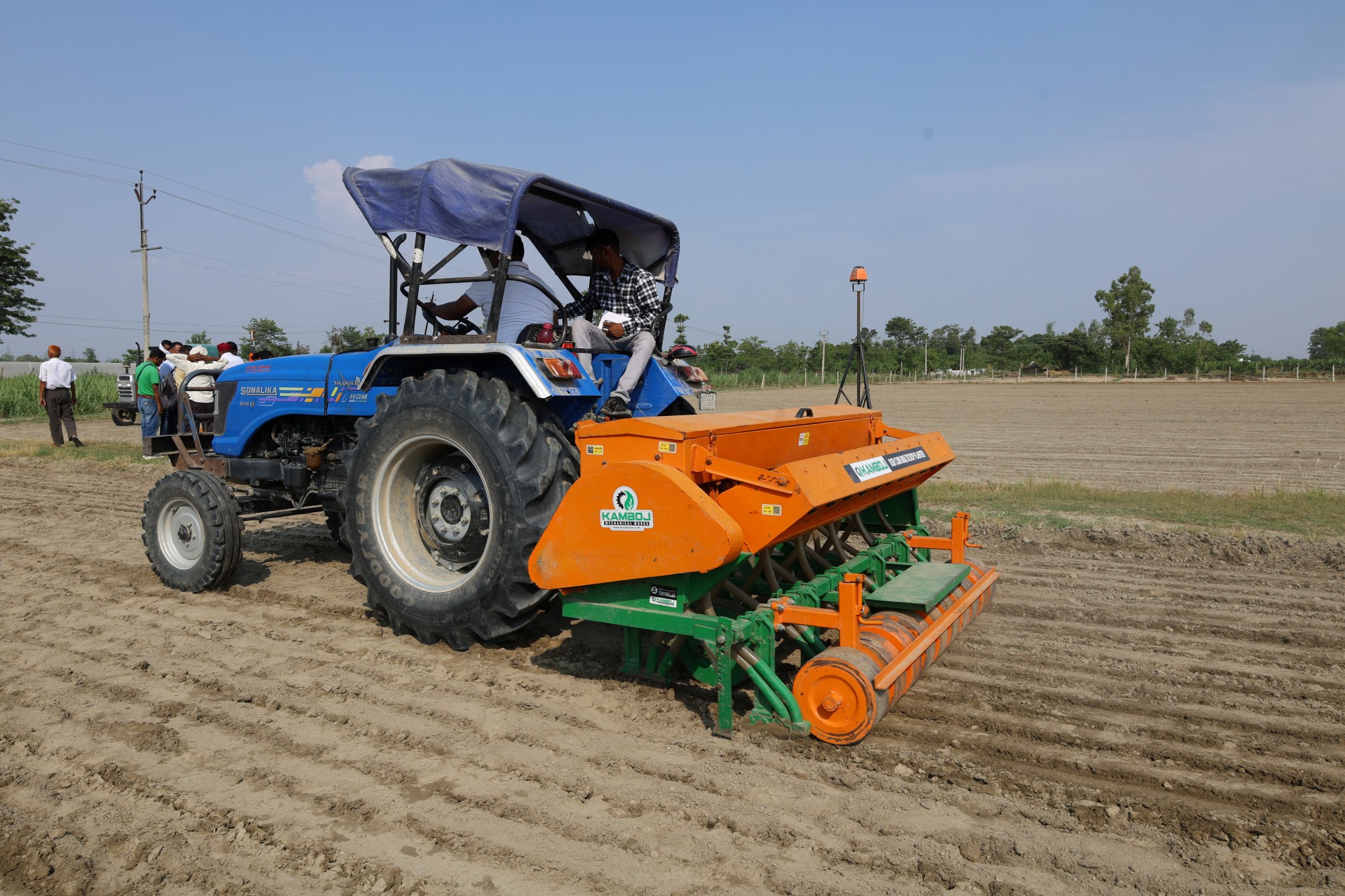
UTTAR PRADESH, India (1–2 June 2026) – More farmers in Eastern Uttar Pradesh are shifting to climate-smart rice technologies that help protect harvests against changing weather patterns while boosting incomes and reducing water use.
This transformation is part of a larger effort under the Uttar Pradesh Agriculture Growth and Rural Enterprise Ecosystem Strengthening (UPAGREES) project, showcased during field visits of the World Bank Implementation Support Mission team in its project sites. The project is implemented by the Uttar Pradesh Diversified Agriculture Support Project (UPDASP), Government of Uttar Pradesh, in collaboration with the International Rice Research Institute (IRRI) and the Department of Agriculture (DoA).
The UPAGREES project has been helping farmers improve farm productivity, reduce cultivation costs, and increase profits through scale-appropriate mechanization, climate-resilient and traditional varieties, such as ‘Kalanamak,’ and value chain support by promoting best management practices in rice-based cropping systems.
During the visit, Dr. Vikram Patil, IRRI Scientist and Project Lead, underscored IRRI’s role as a knowledge partner, providing technical expertise and implementation support to ensure the successful delivery of project interventions. He noted that the initiative seeks to equip farmers with improved technologies and practices that enhance productivity, profitability, and resilience in the face of climate change.
Among the notable progress showcased by project is the rollout of Direct-Seeded Rice (DSR) in Uttar Pradesh. DSR involves sowing seeds directly into the soil using specialized machinery, overcoming labor shortages while significantly reducing water consumption and production costs. At the Gurehoo Village in Chandauli District, and Gajpatipur of Tejwapur block in Bahraich District, the project team featured the live demonstrations of mechanized DSR, mechanical weeding operations along with initial field preparatory activities.
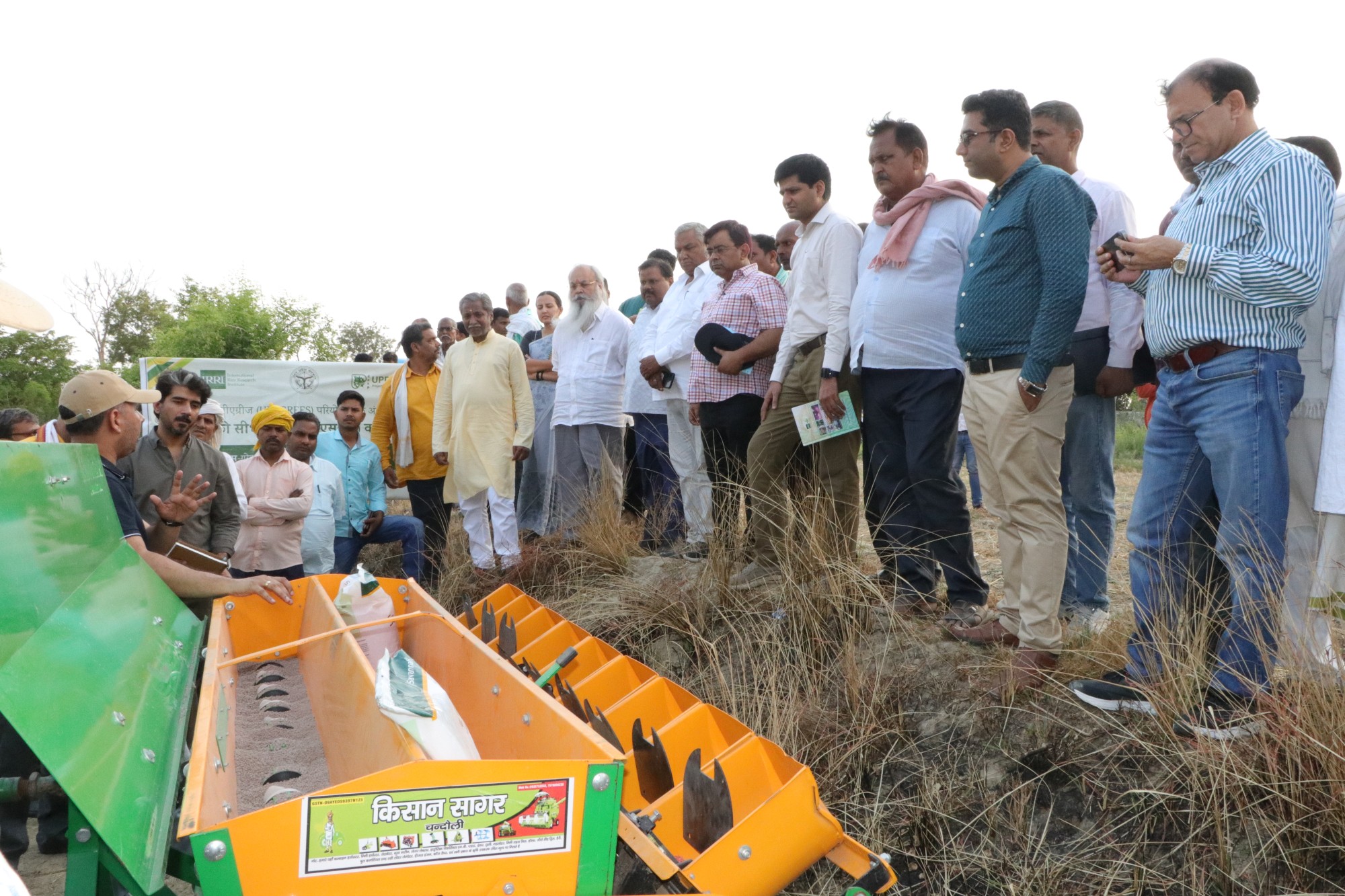
During field interactions, a participating farmer from Dhanapur Block in Chandauli noted DSR helped reduce production cost and improve income. However, he mentioned that its successful adoption depends on following the recommended package of practices, particularly timely weed management and proper crop care.
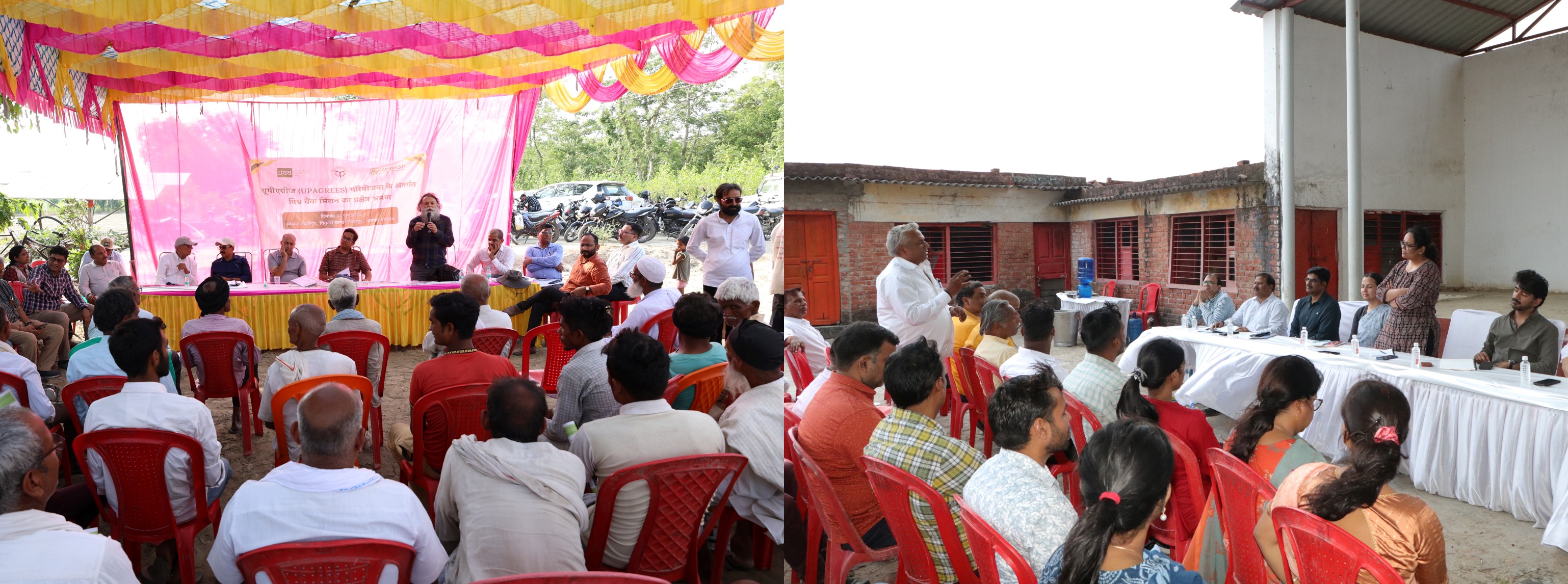
In Chanduali, World Bank Agriculture Specialist Mr. Paramveer Singh emphasized that initiatives such as UPAGREES are generating valuable field evidence that can guide future investments and scale up sustainable, resource-efficient rice production.
The following day, World Bank Project Task Team Leader Mr. Vinayak Ghatate discussed soil health and nutrient management with farmers at the Gajpatipur Village in Bahraich District. He highlighted the area’s relatively low soil organic carbon content was lower side and further discussed the importance of balanced nutrient management for improving crop productivity under DSR.
The visit at both the sites highlighted the collaborative efforts being undertaken under the UPAGREES project to accelerate the adoption of sustainable agricultural technologies and strengthen resilient rice-based cropping systems in the eastern Uttar Pradesh.
The UPAGREES project is implemented under the support of the World Bank.