Scaling Low-Emission Rice through Pilot Models that Showcase the Future of Vietnam’s Mekong Delta
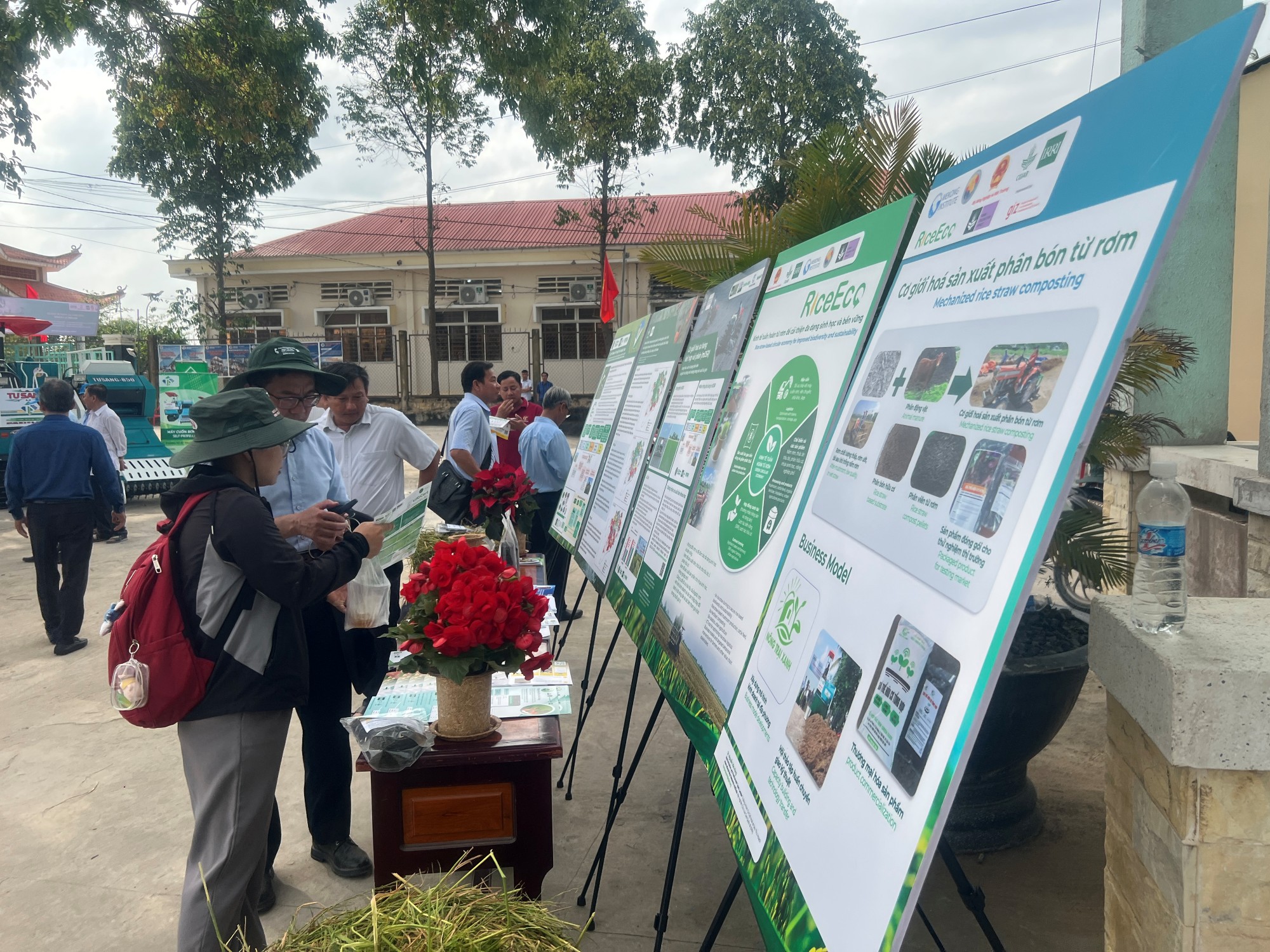
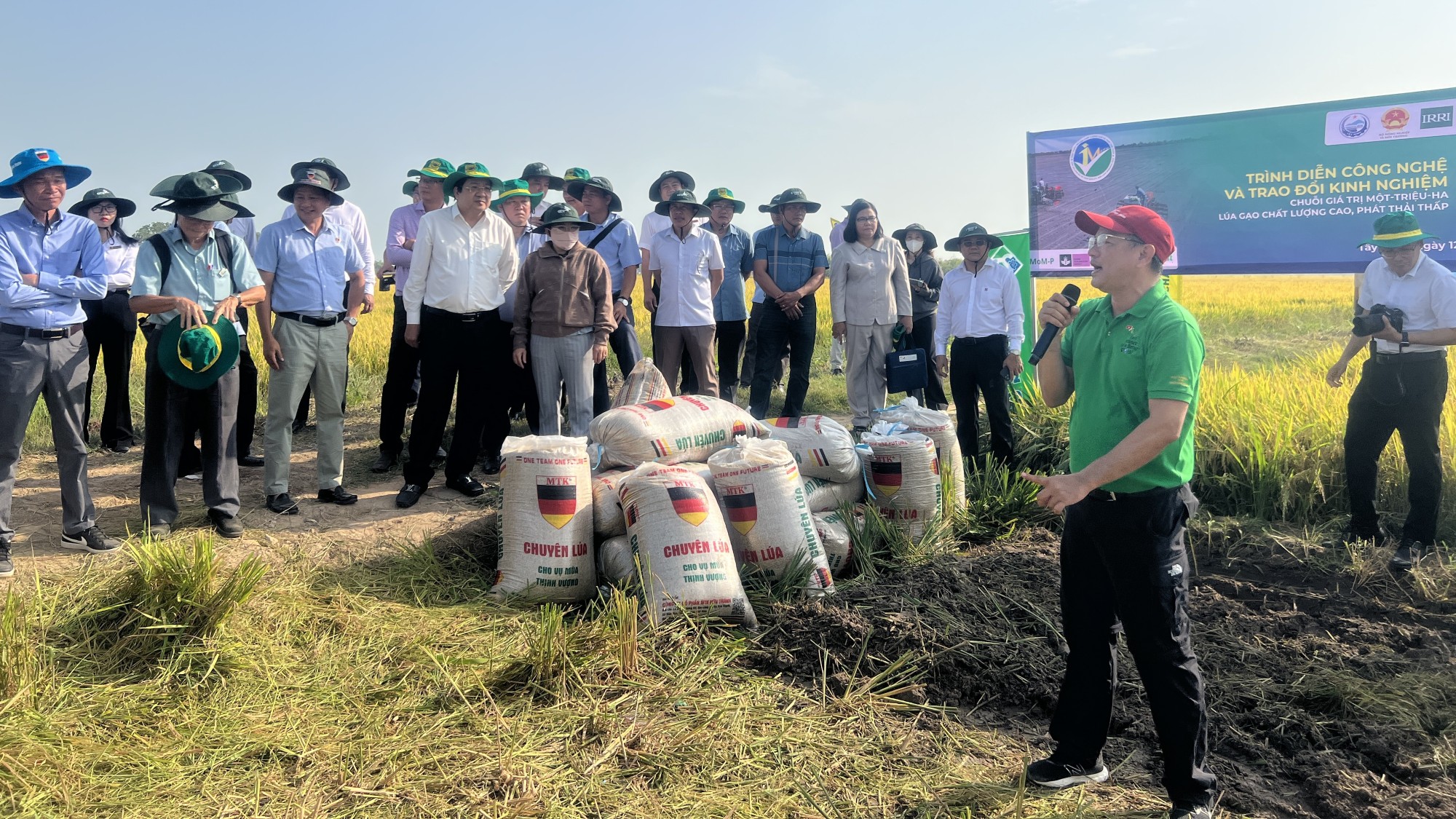
TAY NINH, VIETNAM (March 12, 2026) – The International Rice Research Institute (IRRI), in collaboration with the Tay Ninh Provincial Department of Agriculture and Rural Development and the Vietnam Rice Sector Association, recently held a technology demonstration and knowledge-sharing event. This event aimed to support Vietnam's "One Million Hectare High-Quality and Low-Emission Rice Program" in the Mekong River Delta.
A highlight of the event was the establishment of partnerships and public-private connections among research institutions, technical providers, and the private sector. Participants included Tu Sang, a machine manufacturer, and several fertilizer companies such as Con Co Vang, MTK Huu Thanh, and Binh Dien. These collaborations are intended to ensure the long-term sustainability of climate-smart interventions.
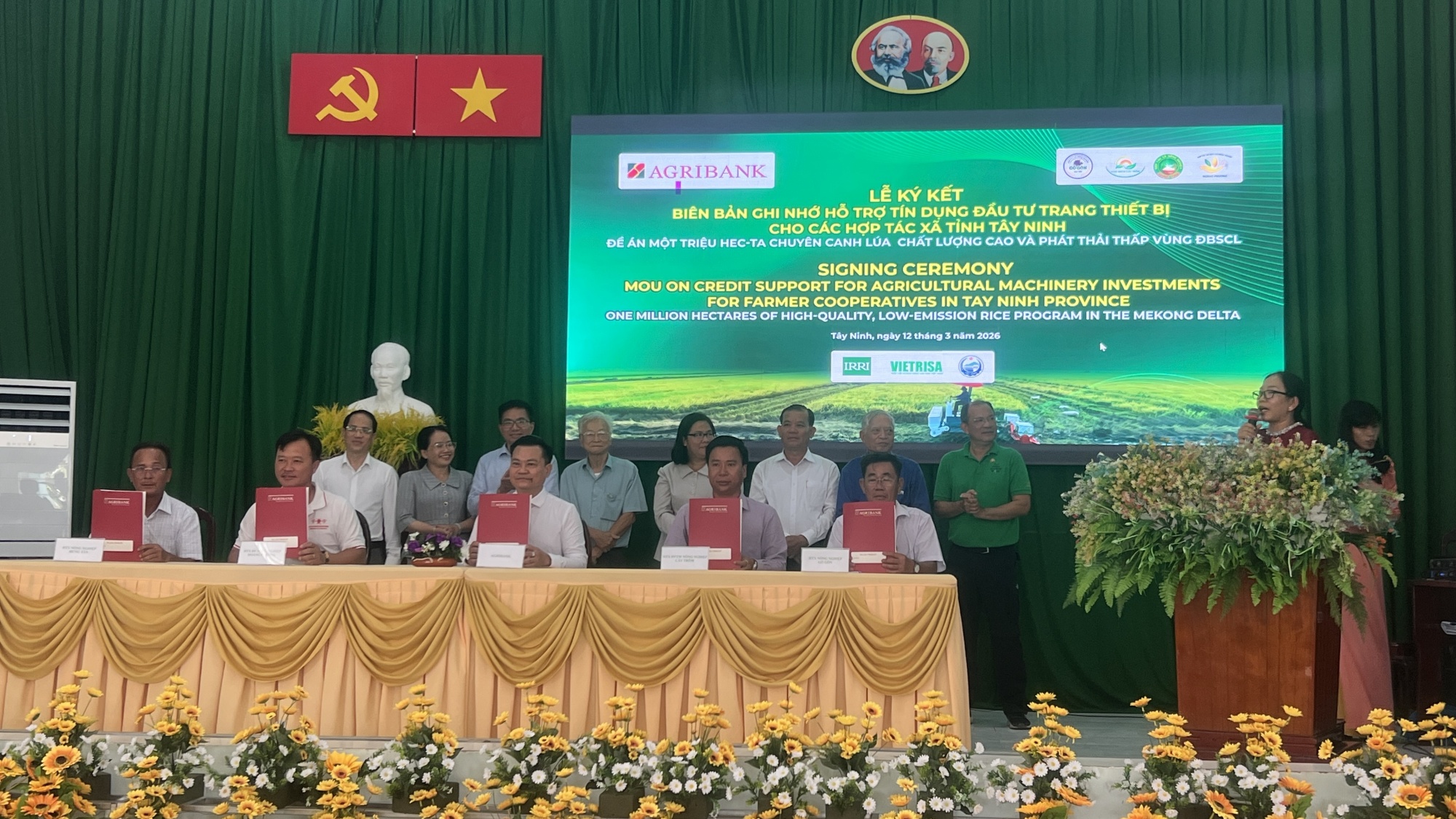
As part of these growing value-chain linkages, the Go Gon Cooperative signed cooperation agreements to receive specialized equipment for mechanized row seeding and fertilizer deep placement from one of the partner fertilizer companies. They also committed to adhering to the rigorous standards of the One Million Hectare program. This spirit of collaboration defined the entire event, which took place at a pilot field in Tay Ninh Province and showcased the "Making One Million Hectare Transformation – Piloting Phase" (MOM-P) project, supported by the World Bank.
The demonstration showcased a comprehensive suite of advanced machinery designed to optimize resource use and minimize environmental impact. Central to the display were mechanized harvesting and rice straw management innovations, including combine harvesters and self-propelled rice straw balers, alongside circular economy solutions such as mechanized rice straw incorporation integrated with inoculant application to enhance soil health. Additionally, the event featured precision agriculture innovations, highlighting mechanized direct-seeded rice (DSR), drone technologies, and the application of innovative fertilizer formulations to improve field efficiency.
The event brought together a diverse group of stakeholders, including government officials, private sector partners, and representatives from cooperatives across the four MOM-P pilot provinces: Tay Ninh, An Giang, Ca Mau, and Dong Thap.
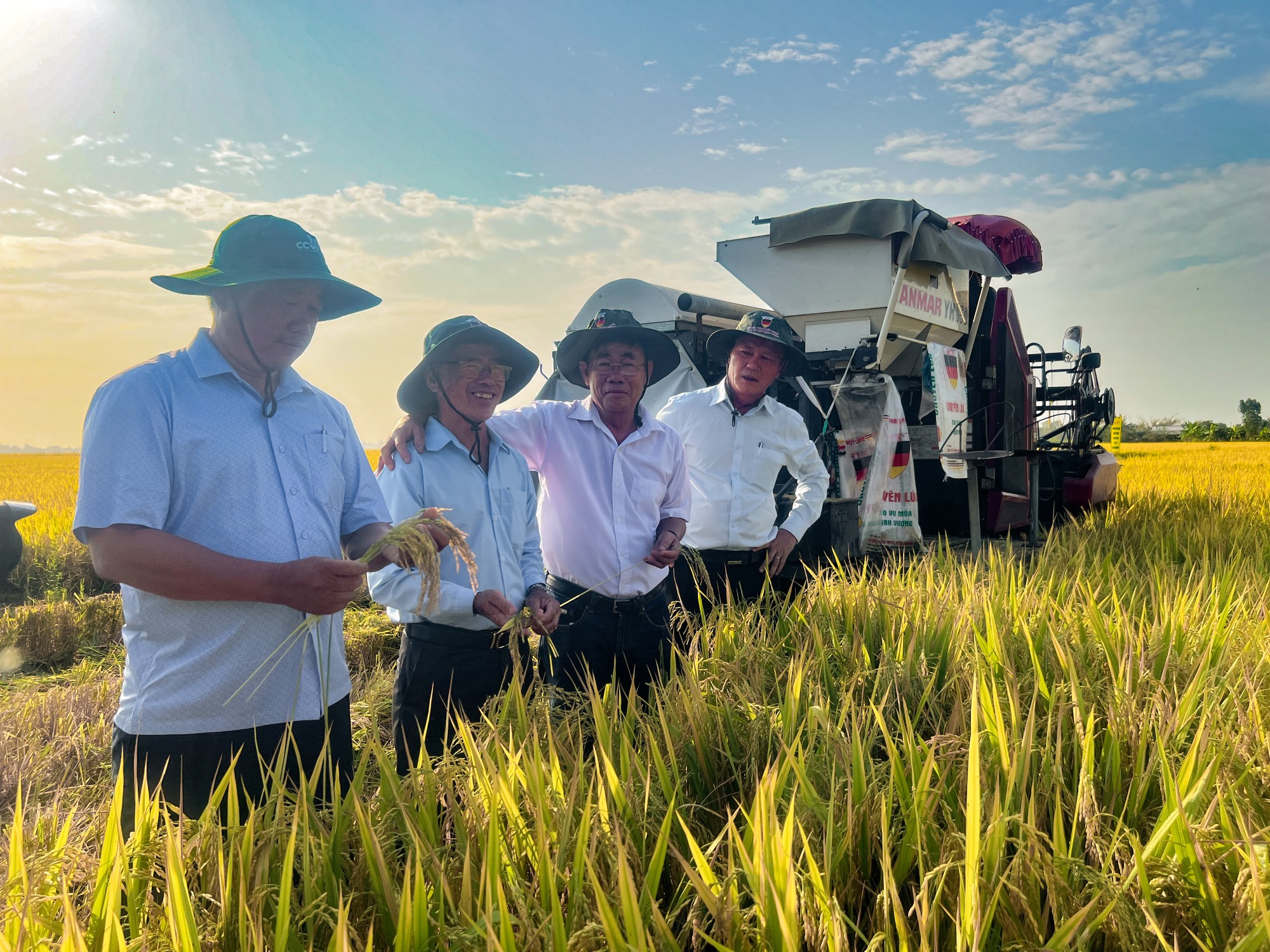
During the Summer–Autumn 2025 and Winter–Spring 2025–2026 seasons, the MOM-P project implemented four 50-hectare pilot models across key regions in the Mekong Delta. These models were established at Hiep Xuan Phu Cooperative in An Giang, Hong Phat Cooperative in Ca Mau, My Thanh Bac Cooperative in Dong Thap, and Go Gon Cooperative in Tay Ninh, with each site serving as a critical hub for testing integrated technical practices.
Dr. Nguyen Van Hung, IRRI Scientist and lead of MOM-P, highlighted: When compared to conventional farming practices, the integrated technical package, which includes mechanized row seeding, fertilizer deep placement, and 4R nutrient management, delivered significant and measurable improvements. These advancements resulted in substantial input reduction, with seeding rates dropping by 40–60% (60–100 kg/ha) and nitrogen fertilizer use decreasing by 20–30%. These efficiencies led to a clear economic gain as production costs were lowered, driving a profit increase of VND 8–15 million per hectare. Furthermore, the transition to these climate-smart practices achieved a positive environmental impact by reducing greenhouse gas emissions.
Furthermore, Agribank (Long An Branch) committed VND 1 billion in credit support to Go Gon Cooperative, facilitating investment in the machinery required for value-chain-based production. In a significant milestone for local farmers, the Go Gon, Hong Phat, and My Thanh Bac cooperatives were officially certified for adhering to technical standards for high-quality, low-emission rice.
The success of these pilot models demonstrates that integrated climate-smart rice practices are both technically feasible and economically superior. By improving productivity and profitability while simultaneously reducing the carbon footprint of rice production, these results provide a clear roadmap for scaling up the 1mHa Program across the Mekong River Delta.
The innovation suite for 1mHa rice production was supported by the MOM-P project, USDA-Fertilize Right, and the CGIAR Scaling for Impact program.