Project Details

Vikram Patil
Scientist I - Agricultural Economics, Inclusive Markets & Value Chains Research
SDG

Background
The rice-wheat cropping system of Uttar Pradesh is vital to India’s food security, with the state contributing nearly 31% of the country’s wheat production and 13.8% of rice production. However, Eastern Uttar Pradesh (EUP) continues to face major agricultural challenges, including low productivity due to climate stress, delayed crop establishment, and limited access to mechanization. While the rice-wheat system in the Northwestern Indo-Gangetic Plains achieves productivity levels of around 12 t/ha, in EUP, it remains significantly lower at nearly 7 t/ha. Several districts in the region still continue to perform below the national average productivity levels for both rice and wheat.
Despite these challenges, EUP has strong potential to improve agricultural productivity due to its fertile soils, abundant natural resources, and adequate rainfall. The project aims to enhance the productivity, profitability, and climate resilience of rice-wheat farming systems by addressing key structural, agronomic, and institutional constraints that currently limit agricultural performance and farmer incomes.
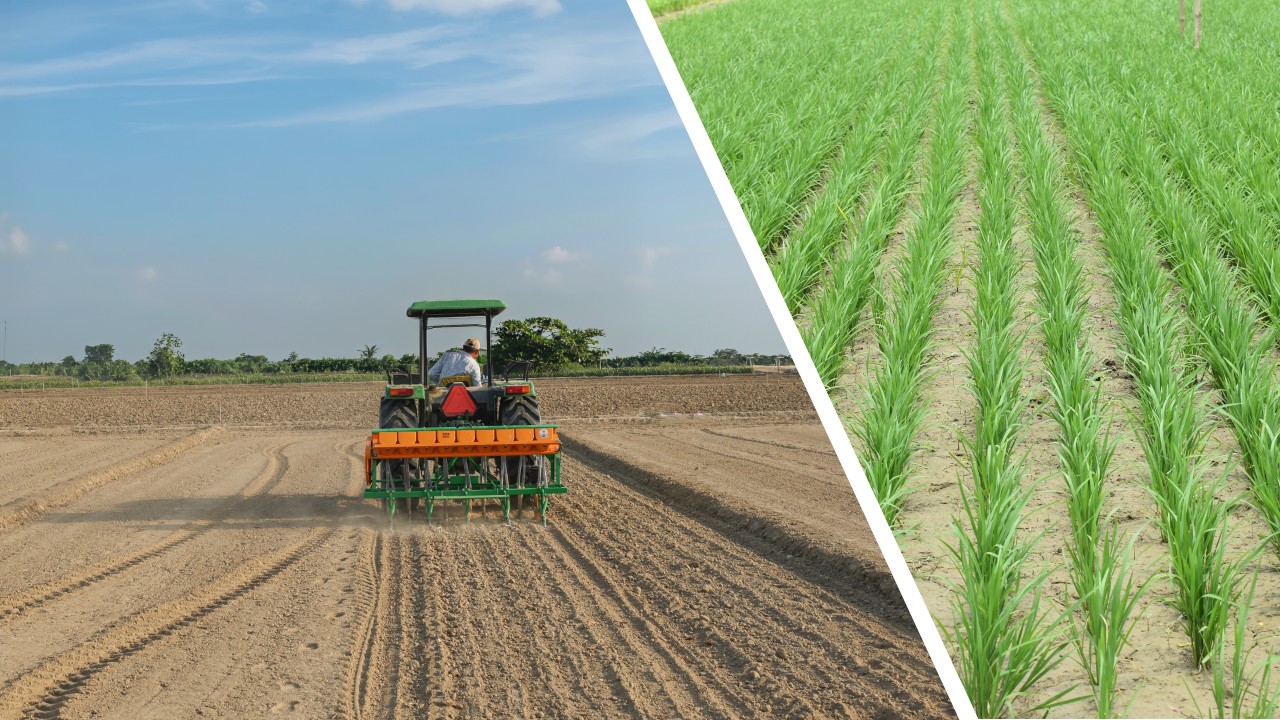
The Government of Uttar Pradesh (GoUP) launched the World Bank-supported UPAGREES project, which aims to introduce practical and evidence-based interventions aimed at promoting sustainable agricultural growth and improving livelihoods, particularly among smallholder farmers. As part of this initiative, the GoUP has partnered with the International Rice Research Institute (IRRI) as a knowledge partner to scale sustainable and climate-resilient rice-based cropping systems across 21 districts of EUP. Key interventions include early establishment of rice, timely sowing of wheat, promotion of healthy rice nurseries, and adoption of short- and medium-duration high-yielding and stress-tolerant rice varieties (STRVs), along with climate-resilient wheat varieties. The project will also promote direct seeded rice (DSR), zero/reduced tillage wheat cultivation, improved crop and resource management practices, soil and water management, regenerative agriculture practices, scale-appropriate mechanization, residue management, and entrepreneurship development.
In addition, the project will strengthen seed systems, promote crop diversification, and support cultivation of traditional high-value rice such as Kalanamak to enhance value-addition and farmers’ incomes. Implemented across 21 districts in six divisions of EUP, the initiative seeks to close yield gaps, improve resilience to climate risks, and strengthen long-term food and livelihood security.
Objectives
The project targets the following key areas to strengthen sustainable and climate-resilient rice-wheat systems in Uttar Pradesh:
- Improve the productivity, profitability, sustainability, and climate resilience of rice-wheat cropping systems in Uttar Pradesh through climate-smart and farmer-centric interventions. It focuses on
- Promotion of Direct Seeded Rice (DSR), Zero/reduced Tillage wheat, timely sowing, RNE, scale-appropriate mechanization, residue management, and adoption of suitable varieties and best management practices to enhance system efficiency while reducing production cost, water-need and methane emissions.
- Strengthening climate resilience in stress-prone ecologies through identification of vulnerable zones, promotion of stress-tolerant rice and wheat varieties, improved seed systems, nursery entrepreneurship, and actionable extension advisories.
- Supporting the conservation and commercialization of Kalanamak and other traditional rice landraces through participatory selection, regenerative agriculture practices, value-added rice products, and entrepreneurship development.
- Developing and disseminating comprehensive, location-specific knowledge-materials and advisories to support farmers, extension workers, and stakeholders across all stages of rice cultivation.