Vietnam Pioneers Digital 'Scoring' Tool for Nation’s Low-Emission Rice Program
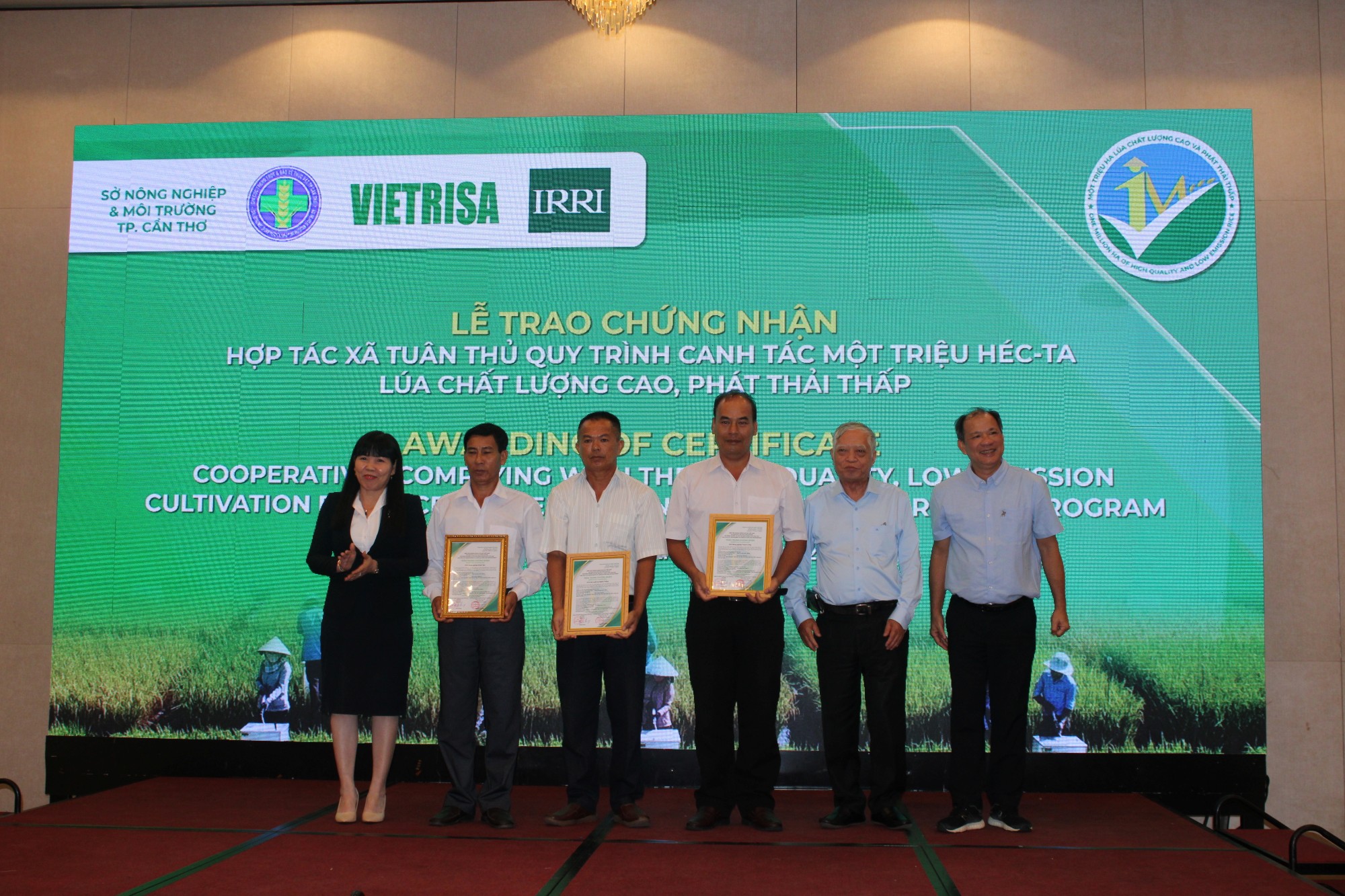
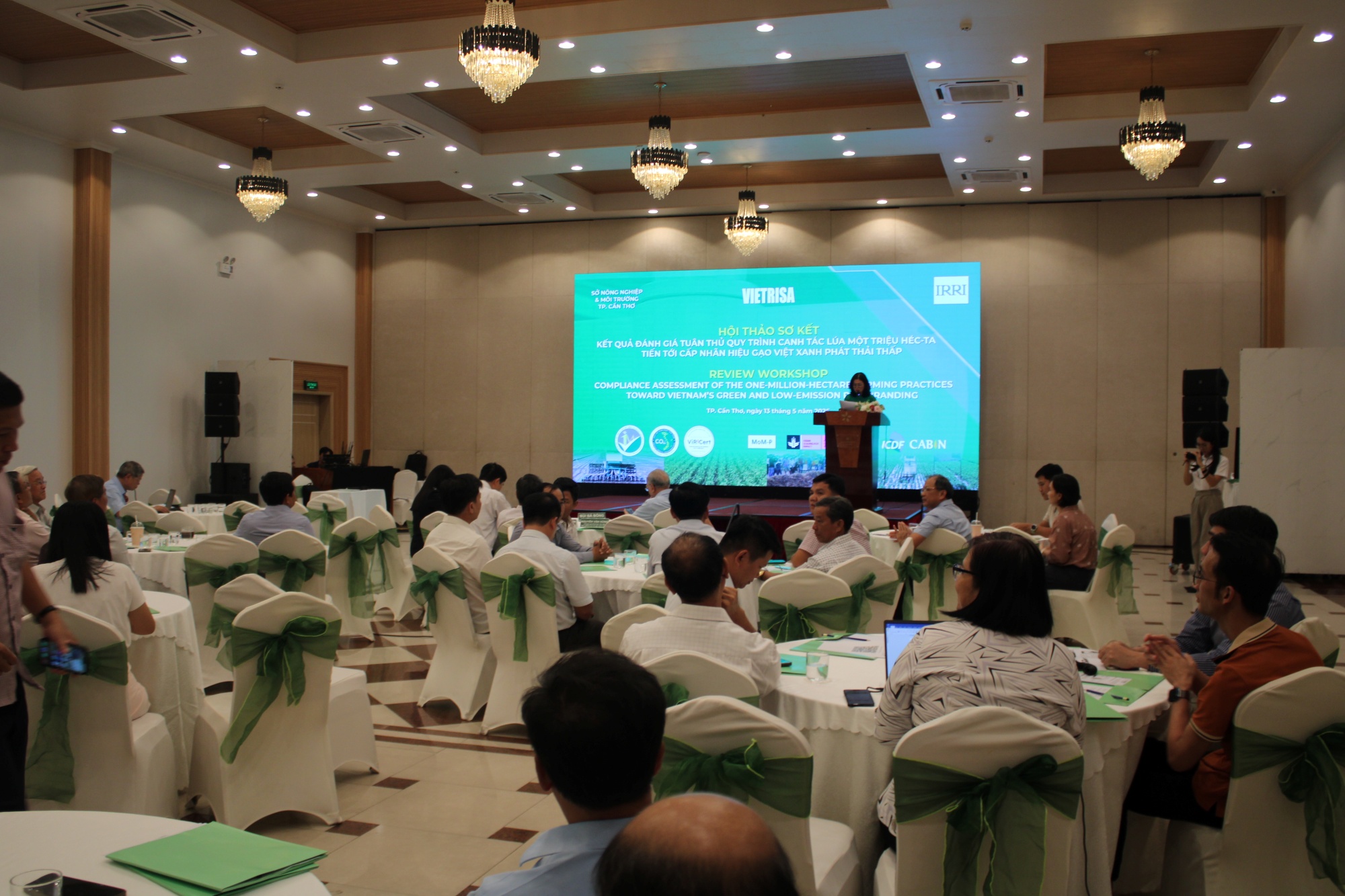
Can Tho, Vietnam (May 13, 2026) — The International Rice Research Institute (IRRI), in collaboration with the Vietnam Rice Industry Association (VIETRISA) and the Department of Agriculture and Environment (DAE) of Can Tho City, recently conducted a preliminary review of the compliance assessment for the farming practices associated with the 1-Million-Hectare (1mHa) Program. This program aims to promote Vietnam’s green and low-emission rice branding. The assessment utilizes the ViRiCert digital tool, co-developed by VIETRISA and IRRI. This tool not only evaluates and grants the "Vietnam Green and Low-Emission Rice" trademark but also helps establish production unit codes and develop a sustainable certification mechanism.
During the 2024–2025 period, regions in the Mekong Delta began implementing high-quality, low-emission rice cultivation techniques provided by the Plant Production and Protection Department (under the Ministry of Agriculture and Environment).
Can Tho City notably became the first locality in the Mekong Delta to apply the ViRiCert digital tool to assess the effectiveness of process implementation for the Vietnam Green and Low-Emission Rice trademark.
The assessment was piloted across 11 cooperatives by the Can Tho Sub-Department of Plant Production and Protection, in collaboration with VIETRISA and with technical support from IRRI. These cooperatives are characterized by large-scale operations, strong production capabilities, and a commitment to the goals of the 1mHa Program and the green and low-emission rice initiative.
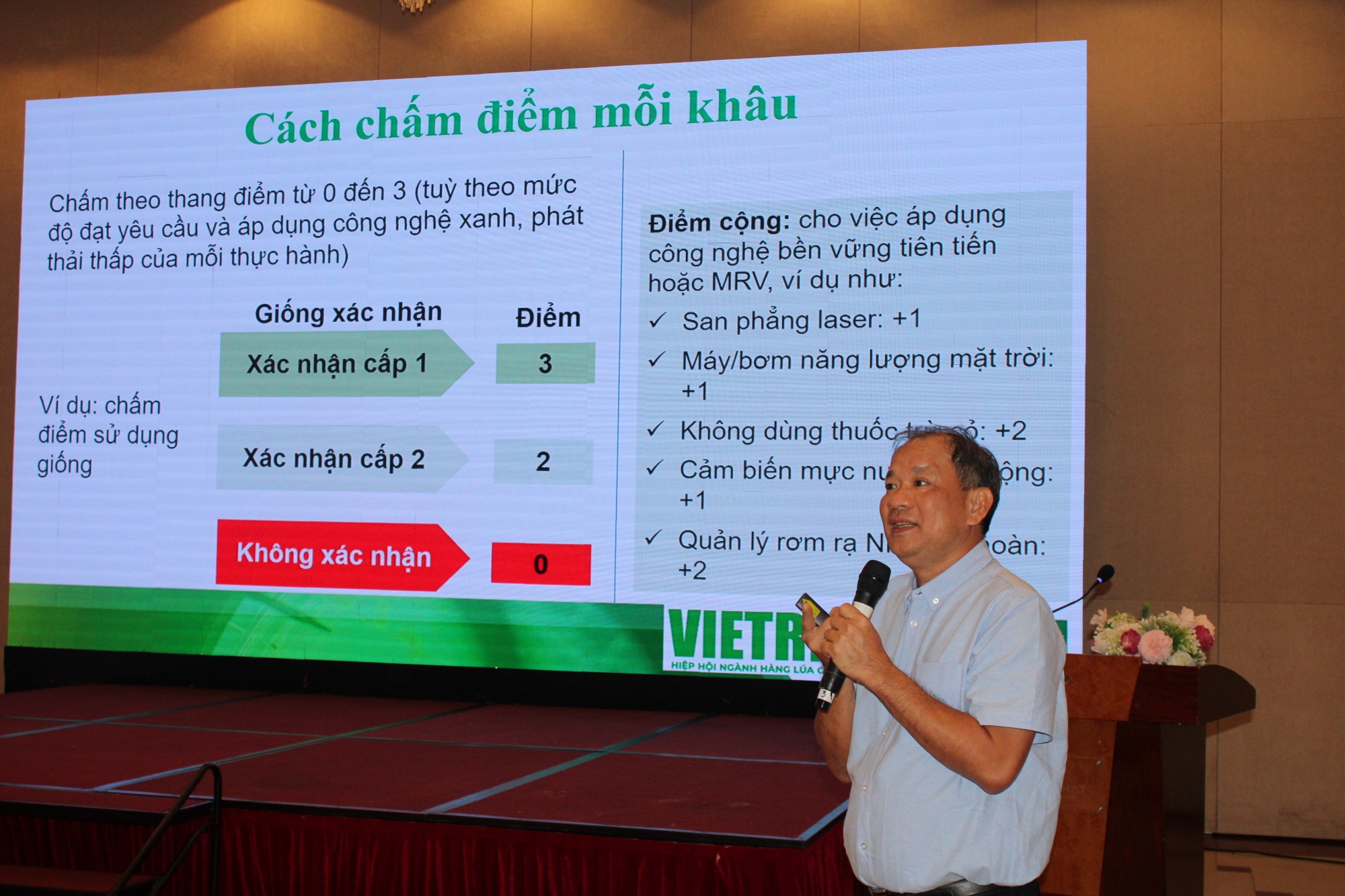
Using the ViRiCert tool, farming data from farmers and cooperatives is updated, managed, and verified according to the 1mHa Program's technical criteria. The evaluation process employs a scoring system to assess compliance at multiple stages, including: pre-season water management, mechanized land preparation, seed usage and seeding rates, mechanized sowing, fertilizer application, mid-season water management, pest management, and harvesting and straw management.
Preliminary results indicate that Can Tho City has recognized three cooperatives for their innovative spirit and commitment to applying sustainable farming practices in collaboration with local farmers. These cooperatives are the Thanh Cong Agricultural Cooperative (Truong Khanh Commune), Nghia Thang Rice Production Cooperative (My Xuyen Ward), and Khiet Tam Agricultural Cooperative (Thanh An Commune).
Ms. Nguyen Thi Giang, Deputy Director of the Can Tho DAE, noted that digitizing data through the ViRiCert tool not only supports monitoring and assessment but also lays the groundwork for traceability, the issuance of growing area codes, and the development of a certification mechanism for Vietnam's Green and Low-Emission Rice in the near future.
According to Ms. Giang, for low-emission rice to tap into high-value-added, competitive markets, it is essential to provide proof of "green production" practices.
The assessment process reveals that cooperatives and farmers are gradually shifting their production mindset, focusing more on data recording, adherence to technical protocols, and increased environmental responsibility.
Based on data from ViRiCert, the specialized sector in Can Tho City aims to establish production unit codes for rice to standardize production processes, improve traceability, and ensure quality and food safety.
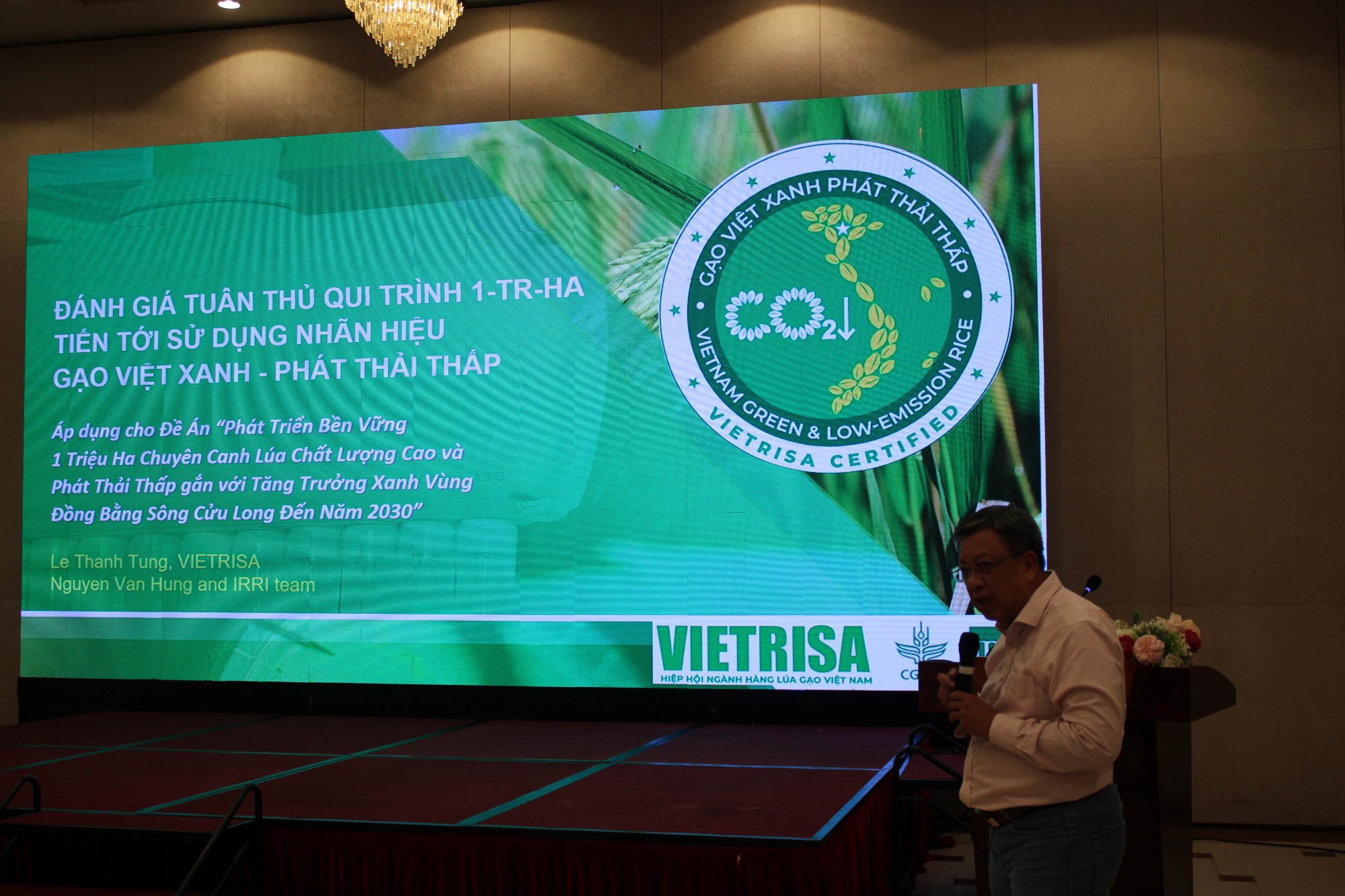
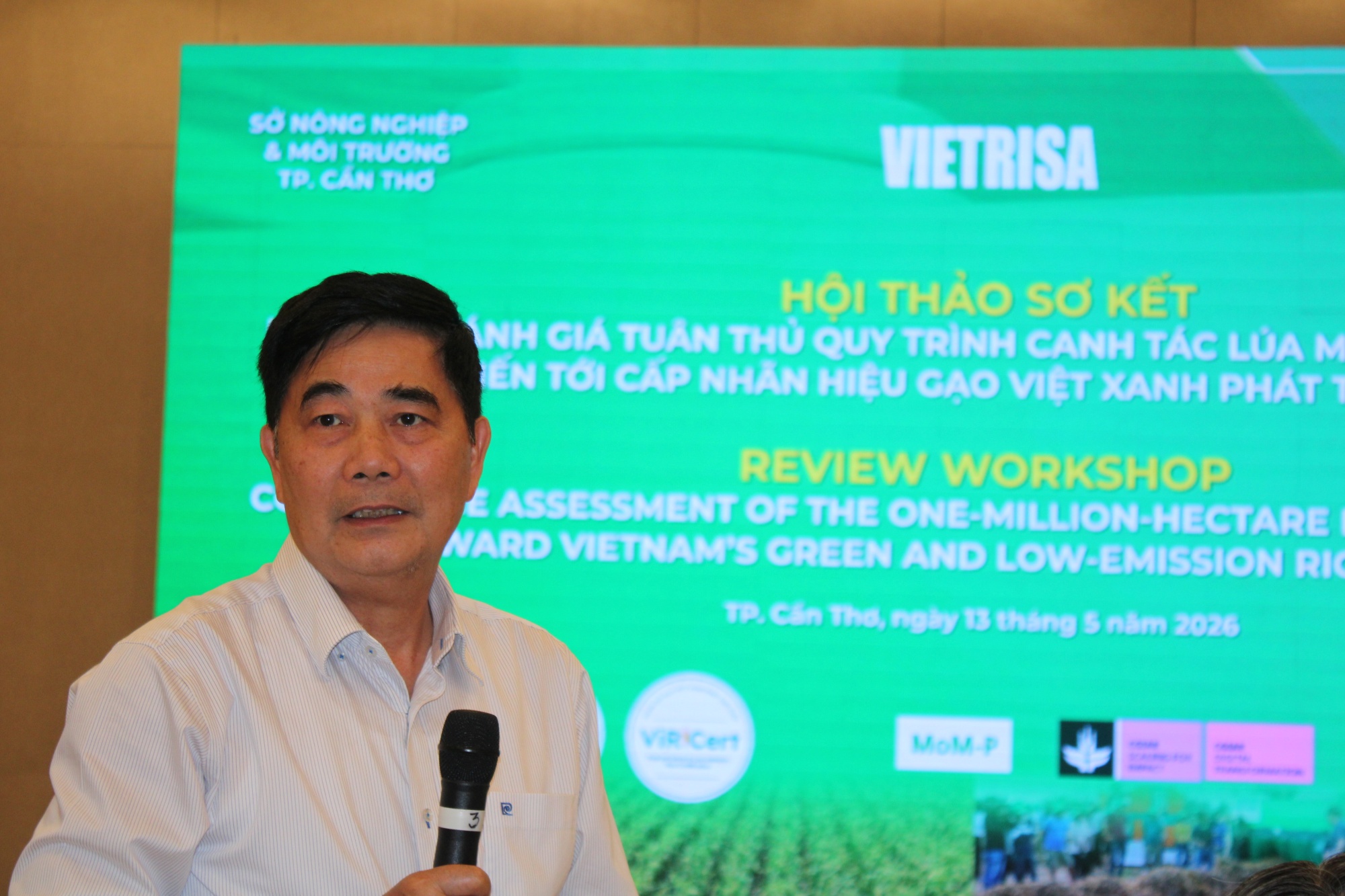
Mr. Le Thanh Tung, Vice President and General Secretary of VIETRISA, emphasized that all localities participating in the 1mHa Program need to obtain the Vietnam Green and Low-Emission Rice trademark. The ViRiCert tool has been designed to align with the Program's technical processes, facilitating the application and assessment process.
Cooperatives and enterprises that want to register for the trademark must be members of VIETRISA. The association currently grants the trademark free of charge to entities that meet production process requirements and achieve the necessary assessment scores using the ViRiCert tool.
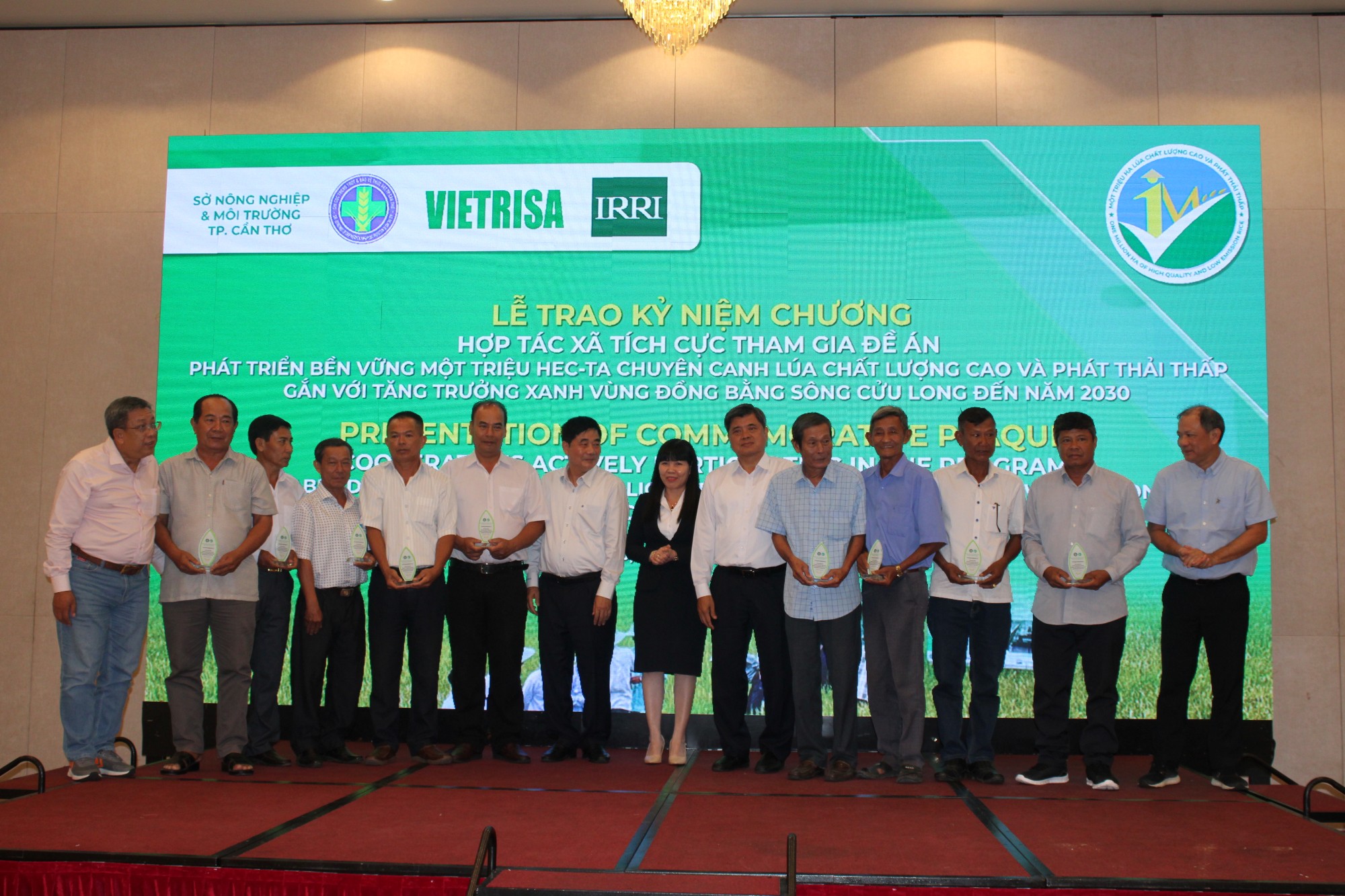
To date, VIETRISA has awarded the trademark to about 70,000 tons of exported rice destined for markets such as Japan, Europe, and Australia. Mr. Tung noted that when the certified export volume reaches between 500,000 and 1,000,000 tons under the Vietnam Green and Low-Emission Rice trademark, the association will consider implementing a licensing fee structure for the trademark.
This innovative work under the 1mHa Program is made possible through the support of the World Bank MOM-P Project, CGIAR Scaling for Impact (S4I) and Digital Transformation Agriculture (DTA) programs, and TaiwanICDF Capacity Building for Sustainable and Low-Carbon Rice Innovations in Southeast Asia (CABIN) project.